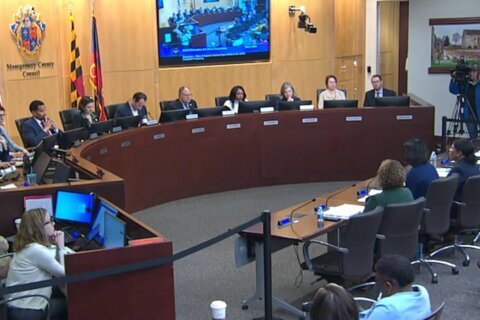
A new bill to prevent people convicted of human trafficking and prostitution-related charges from opening new establishments in Montgomery County, Maryland, has been introduced.
“Human trafficking and labor trafficking doesn’t always occur or look the way people expect it to,” council member Dawn Luedtke said. “It often occurs in businesses that appear perfectly legitimate until you look a little deeper.”
Luedtke’s bill aims to reduce repeat offenders in Montgomery County.
“From June 2024 to February 2026, police issued 40 civil citations to 25 spas, and charged 13 spa owners with felony offenses related to illegal operations,” Luedtke said.
Despite the increased enforcement, operators of the illegal businesses have exploited a loophole.
“Here’s the problem: Some of the same individuals who get cited and shut down that particular business, they just pop up as a new LLC in a different part of the county, and apply for another license, and the cycle starts over again,” Luedtke told the council.
Her new bill would involve collaboration between police and the county’s department of health and human services to close the loophole.
The bill would require applicants for a bodyworks establishment to disclose all corporate officers and business managers to HHS, which would be prohibited from issuing a license if an officer or manager has been convicted of human trafficking or prostitution-related charges.
In addition, applicants would be ineligible if they previously owned or managed a bodyworks establishment whose license was revoked.
“Working to close that gap is in the best interest of our public and those who are being victimized by trafficking,” Luedtke said.
The bill was developed in consultation with county police, members of the county’s Human Trafficking Prevention Committee and the health and human services department.
A public hearing on the bill will be held Sept. 15.
Get breaking news and daily headlines delivered to your email inbox by signing up here.
© 2026 WTOP. All Rights Reserved. This website is not intended for users located within the European Economic Area.