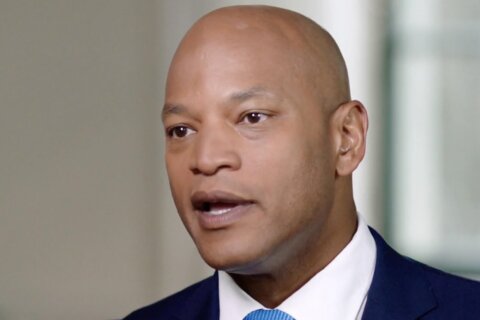
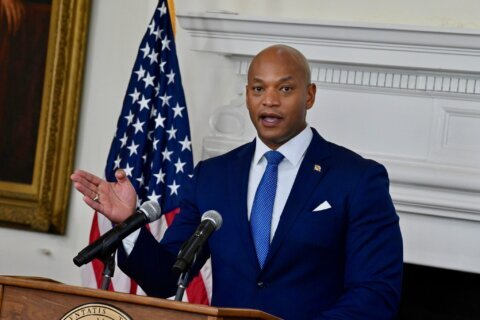
Maryland Gov. Wes Moore held a bill signing ceremony Wednesday as he signed the state’s 2027 budget bill into law.
“We said that we were going to invest in things that matter,” Moore said, ticking off priorities, such as public safety, education and energy cost relief. “And we said we were going to do it without raising taxes and without raising fees on the people of Maryland.”
“We said what we were going to do, and today, we’re thankful to stand on partnership and say — we did it,” he added.
Not only did the Moore administration avoid raising taxes or fees to balance the nearly $71 billion operating budget, but lawmakers in Annapolis were also able to come up with a plan that closed a $1.4 billion budget shortfall.
The ceremony came less than a week before the end of the Maryland General Assembly session is set to end.
“This is the fastest that we have moved a budget out of the Senate in recent years, a reflection of both the challenge in front of us and our continuing commitment to meeting it,” Senate President Bill Ferguson said.
House Speaker Joseline Peña-Melnyk mentioned features in the budget that are designed to meet the concerns of Marylanders, including the high cost of energy.
“Thirty-seven million dollars will partially offset ratepayer costs in the limited income program. And we are including more than $300 million for the Office of Home Energy Program and $82 million for Maryland’s Energy Assistance program,” Peña-Melnyk said.
The spending plan did employ “cost containment” strategies, such as cutting $127 million from the Department of Disabilities’ budget.
Members of the Republican Caucus commented on the spending plan signed by the governor, with House Minority Leader Jason Buckel explaining while he did vote for the budget, “Any budget that’s $71 billion has some things in that you like and some things in it that are really important, and probably has some things in it that you don’t like.”
He added the spending plan is “not a budget that any Republican ever would have crafted.”
While Moore touted that his plans avoided tax increases or new fees, the document doesn’t address the state’s structural deficit. And there are indications things may be tougher in what lawmakers refer to as the “out years,” or future spending plans.
In January, an analysis by the Department of Legislative Services indicated that without action, the state’s shortfall could balloon to as much as $4 billion by 2031.
Get breaking news and daily headlines delivered to your email inbox by signing up here.
© 2026 WTOP. All Rights Reserved. This website is not intended for users located within the European Economic Area.