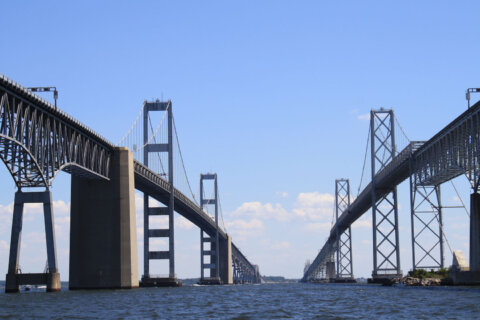
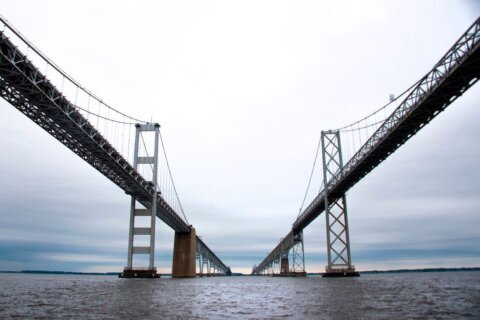
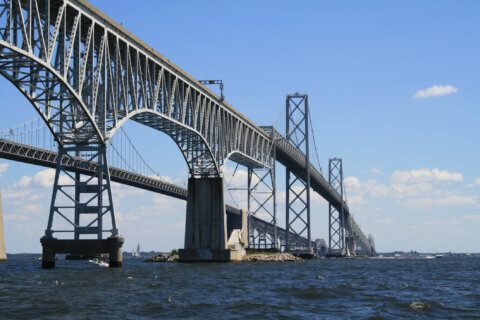
The Maryland Transportation Authority will vote Thursday on a recommendation for new, four-lane Chesapeake Bay Bridge spans.
There were seven alternative bridge plans proposed, researched and presented to the public by the Chesapeake Bay Crossing Study. Local, state and federal officials are now proposing that the MDTA board move forward with “Alternative C,” according to a Tuesday news release.
Alternative C includes the construction of two new, four-lane bridges and the removal of the existing Bay Bridge spans. This would nearly double the amount of traffic currently allowed on the bridge.
“Of the build alternatives, it is the most cost-effective, impacts the least amount of natural, socio-economic and cultural resources,” MDTA Executive Director Bruce Gartner said of the plan in a news release.
The new lanes will have full shoulders across the entire bay, which the report said will improve safety and add more “capacity, reliability and mobility” for transportation.
The plan would widen the U.S. Routes 50/301 in certain areas, with four lanes in each direction to accommodate transitions to the new crossing.
“It would enhance safety with full shoulders and wider lanes, bring between $17 to $23 billion into the local economy, and create 61,300 to 75,600 jobs with 76% direct employment of construction workers,” Gartner said.
The MDTA is still evaluating whether a bicycle and pedestrian path should be included.
If Alternative C is accepted, this would be the predicted construction sequence:
- A new eastbound span would be constructed first, south of the existing road.
- The new eastbound span would open, leading to the removal of the old eastbound lanes.
- A new westbound span would be constructed between the two existing bridge spans.
- The new spans would open, allowing for the removal of the old westbound lanes.
There will be public hearings held on Alternative C in February.
The alternative plans were created by the Bay Crossing Study, which started its research in 2022, when officials decided to move forward with plans for reconstruction. In 2024, the public was presented with seven alternative bridge plans.
If Alternative C is accepted, the MDTA will move forward in collaboration with the Federal Highway Administration and other regulatory agencies to strategize on construction designs. The Final Environmental Impact Statement and Record of Decision is expected to be determined in November 2026.
If everything goes according to plan and funding is secured, then the final design is predicted to begin in 2028, and construction of the bridge is anticipated to start in 2032.
Get breaking news and daily headlines delivered to your email inbox by signing up here.
© 2025 WTOP. All Rights Reserved. This website is not intended for users located within the European Economic Area.