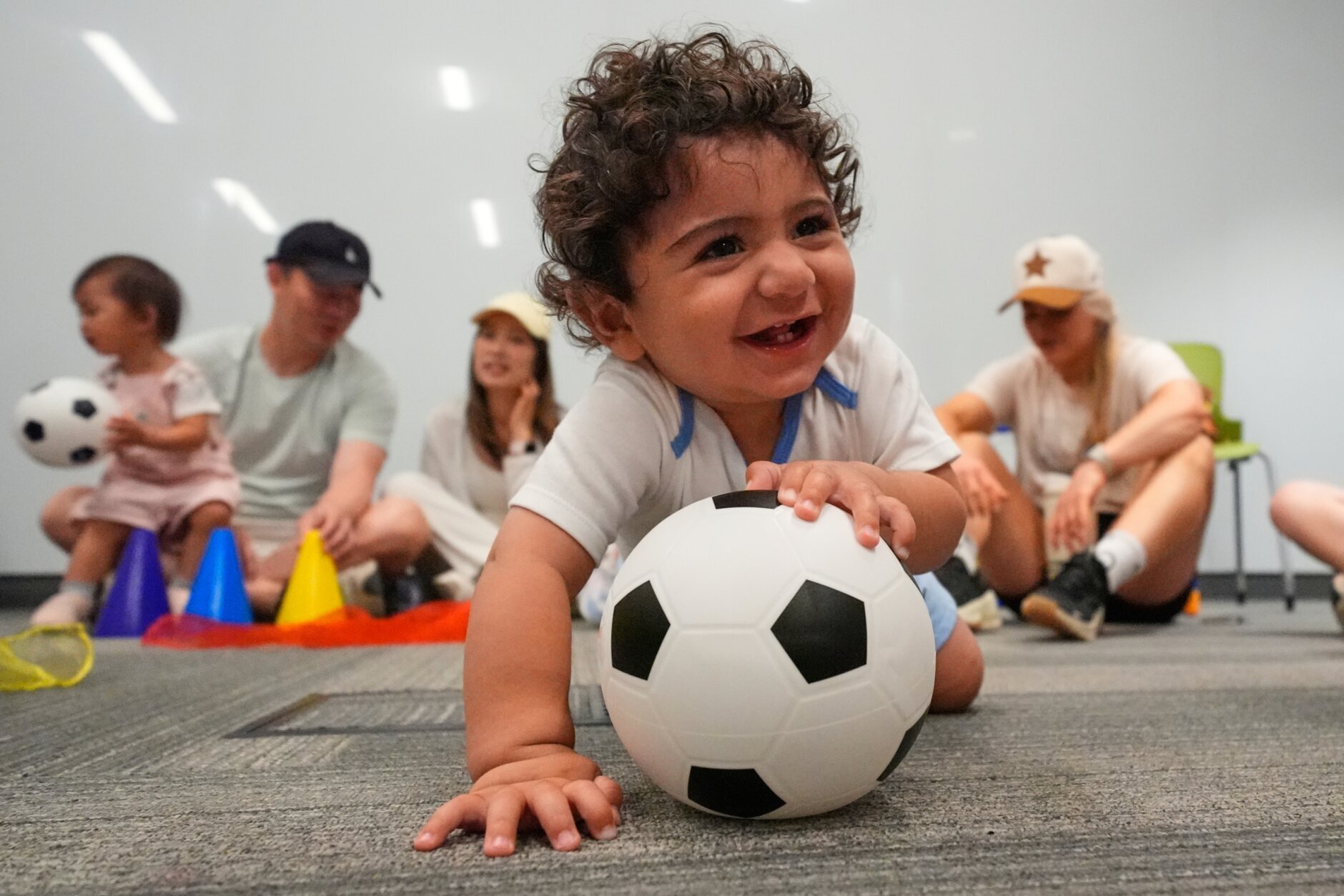
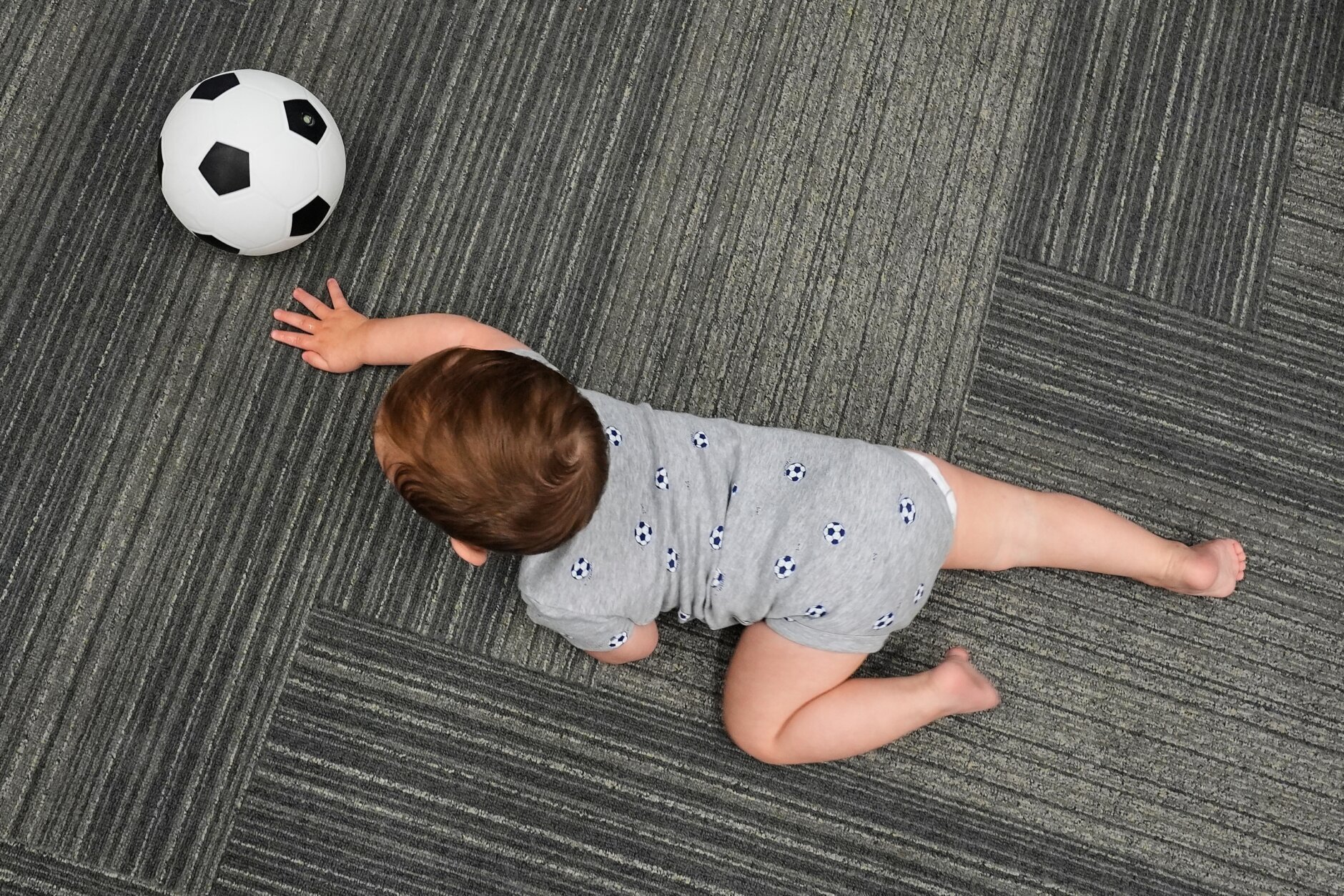
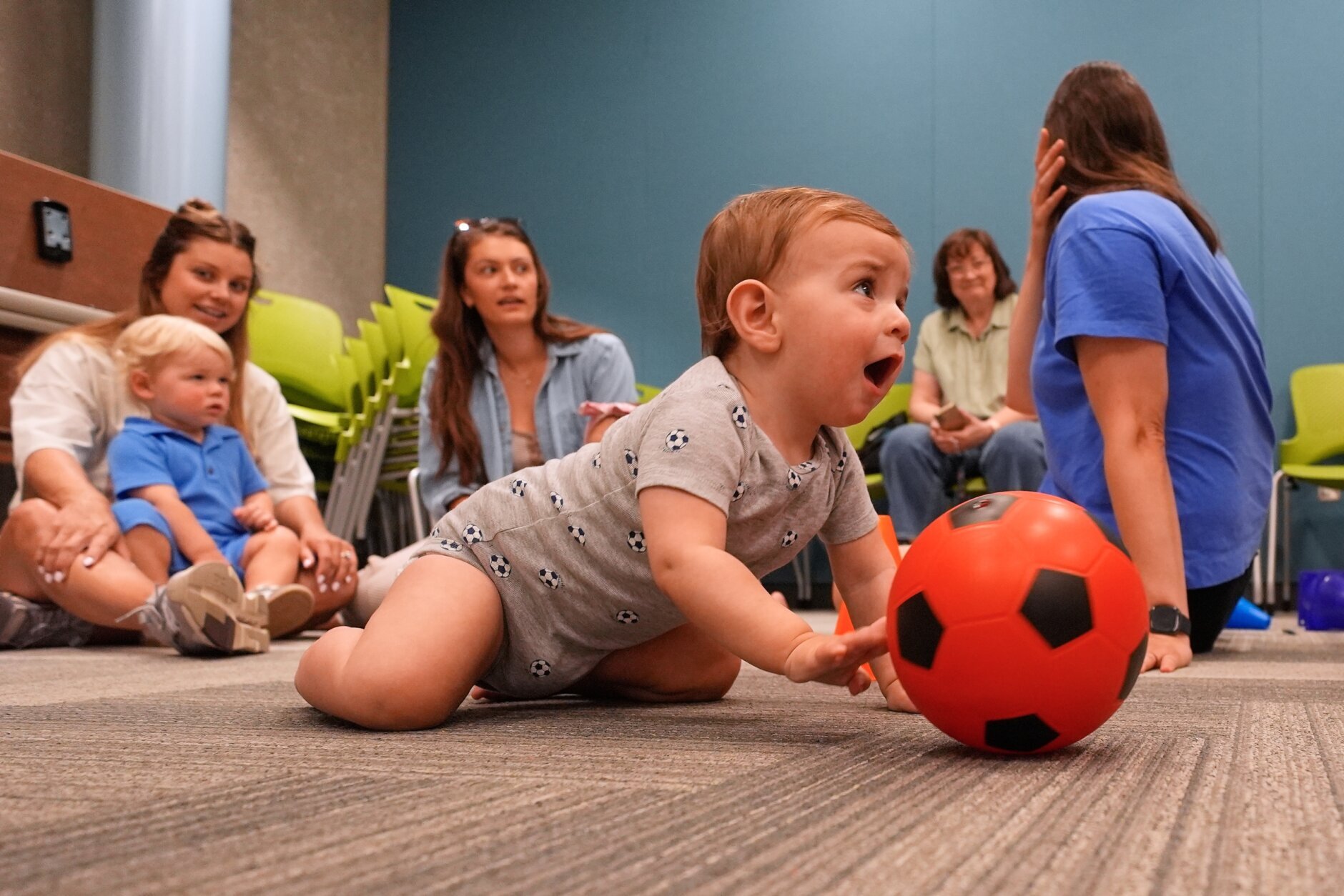
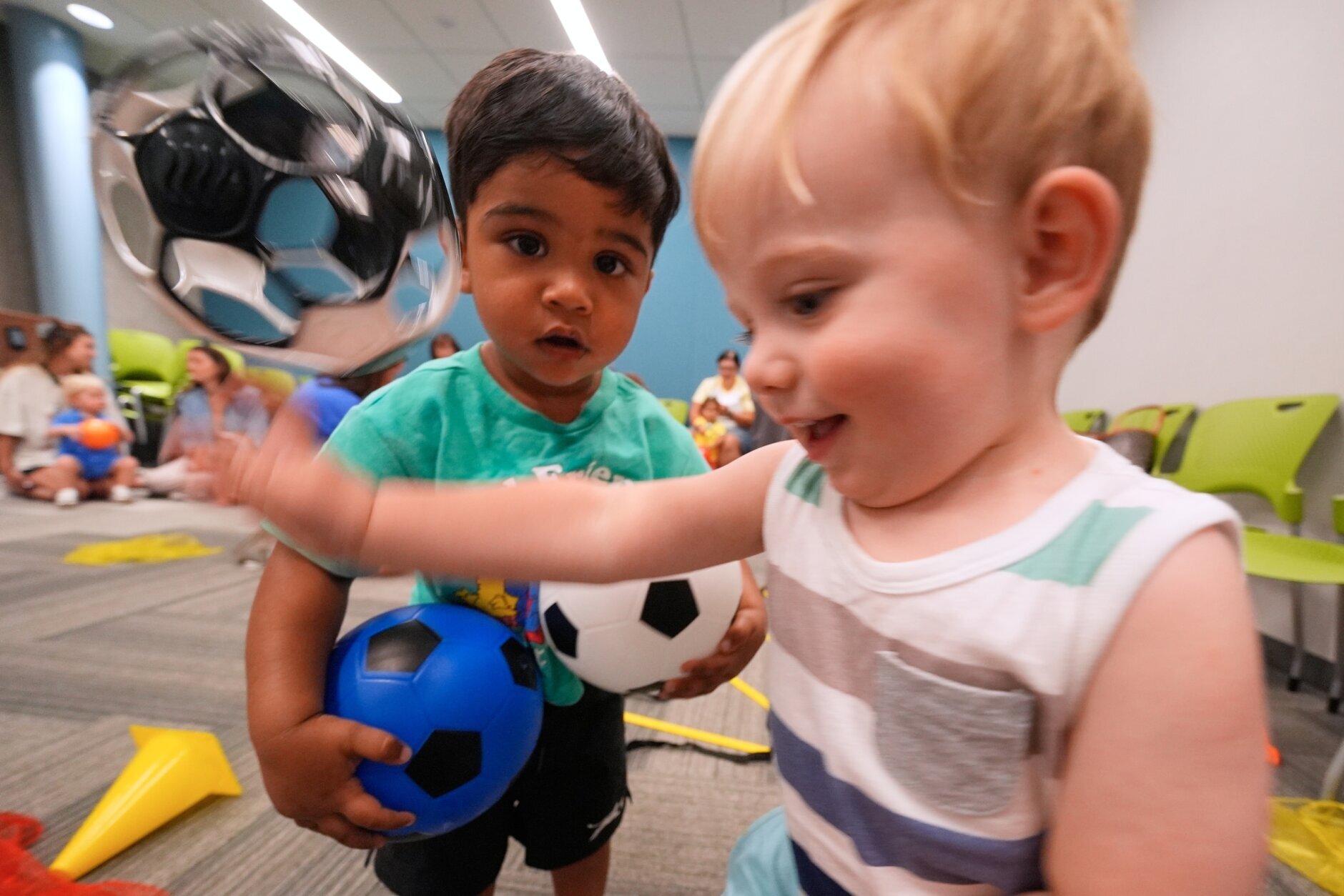
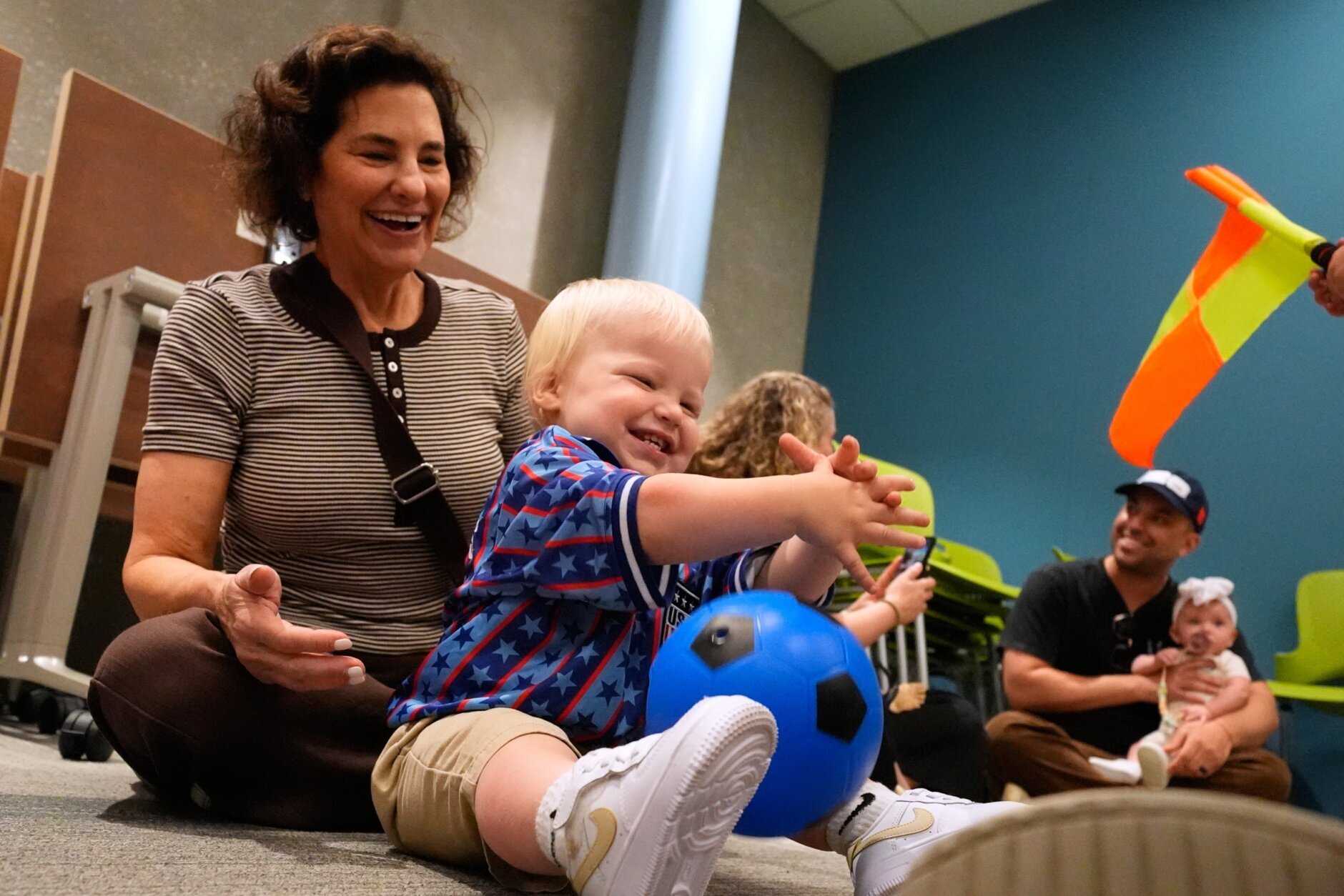





LENEXA, Kan. (AP) — Jude Cornell joined a swarm of toddlers crawling after soccer balls, tossing training cones into the air and relocating a goalie net that was proving to be very, very portable.
“He just started walking,” laughed his mother, 27-year-old Kyra Cornell. She’s already plotting her son’s soccer career during a World Cup-themed event for toddlers at a suburban Kansas City library, about 20 miles (32 kilometers) from the stadium where six matches are being played.
Across the country, experts are watching to see whether the World Cup will give a boost to youth soccer — and mint fans for decades to come.
Soccer already ranks among the most popular youth sports in the country. Among 6- to 12-year-olds, 7.5% played youth soccer in 2024, a slight drop from a decade earlier, but only baseball and basketball recorded higher stats, according to a report from the Aspen Institute.
Youth soccer already has a track record of converting players into fans
Look at Haley Garbowski, a midfielder who has been to more professional women’s soccer matches than she can count.
Just days after her private Kansas City, Missouri, high school won the state championship match, the 18-year-old was helping out at a summer camp on the Kansas side of the metropolitan area, leading a gaggle of grade-school girls around a circuit of sports that includes rugby, tennis and, of course, her own beloved soccer.
“We were killing it,” gushed Garbowski, as she recalled the title game victory in the small school division. In the fall, she is headed to San Diego State University as a business major and considering a career in sports marketing.
Are her grandparents soccer fans? She laughs at the thought. Her mother has become a fan but didn’t start out that way, unaware her high school had a soccer team until Garbowski went snooping in an old yearbook.
None of this comes as a surprise to Michael Lewis, an Emory University professor who focuses on the intersection of sports analytics and sports marketing.
“Soccer is a generational story that’s building generation after generation, but it takes a long, long time,” Lewis said.
America’s sports landscape shifts
Overall, soccer doesn’t have the draw of the big three of baseball, basketball and the American brand of tackle-heavy football. Ipsos Sports research shows that only about 1 in 10 Americans consider themselves fans of U.S. soccer or international soccer.
Boomers in particular grew up playing the big three and that influences what they watch now, Lewis said. Ipsos data shows that those 65 and older are especially likely to call themselves fans of the popular trio.
But market researchers see promise with millennials — and Gen Z, those between the ages of 14 and 29.
America’s sports landscape began to change in the 1970s, when the now-defunct North American Soccer League signed greats like Pelé, the winner of three World Cups with Brazil.
By the 1980s, U.S. kids were playing, too, including girls thanks to Title IX, the federal law that bans sex-based discrimination in education.
But the gym teachers and parents who coached this first batch had little experience to draw from. Some learned the rules from books. And those in football-dominated towns sometimes resisted soccer, fearful it would pull talent away from the gridiron. Players faced taunts and slurs, and were even accused of being communists.
“I cannot repeat the things I got called,” said Darin White, 58, who played and then coached at the college level before becoming the executive director of the Center for Sports Analytics at Samford University in Alabama.
But kids kept playing. The U.S. hosted the World Cup in 1994. Major League Soccer played its inaugural season two years later. Today’s parents frequently have played themselves. There are highly competitive travel teams. MLS has joined the player development effort with its MLS Next program. Its players have gotten better, and viewership is up.
When American sports fans are asked why they became a fan of sports generally, about half say it was because of their family’s connection to the sport, or that they grew up as a fan of a particular team, Ipsos data shows.
The women’s game has fueled soccer’s rise, too, said Nicholas Watanabe, a professor at the University of South Carolina, whose book “The Beautiful Game?” is about the future of soccer. Girls that play as kids become fans. Their enrollment helps keep youth leagues large and more financially viable, Watanabe said.
“Without the success and long-standing growth, I don’t think you get this side-by-side effect that also I think has helped the men’s team, too,” Watanabe said.
Consider the Kansas City Current, the NWSL team that touts its stadium as the first built for a women’s soccer team. Its owners include Brittany Mahomes, a former college soccer player and the wife of Chiefs quarterback Patrick Mahomes. The Current, which is playing host to the Netherlands’ team during the World Cup, sent staff to help at the camp where Garbowski was working.
Where soccer goes from here in the US
Make no mistake. Experts are quick to add soccer isn’t the NFL, the juggernaut in a saturated U.S. sports market.
“The question isn’t, ‘Why aren’t we as big as football?’ Well, we’re not, but we are way closer than the last time we hosted the World Cup,” said White, who is studying how Americans get hooked on the sport.
There are challenges: Most of the best players still compete in the more storied European leagues. Hardcore American fans frequently follow those European teams, rather than MLS ones, which means less money to grow the sport in the U.S., White said. But on the plus side, American players are increasingly breaking into these top European leagues, White said. And he noted the sport’s youthful fan base in the U.S. is one marketers are eager to woo.
“I am more hopeful right now than I’ve ever been in my life,” said White, adding, “And I’ve been a soccer missionary, if you will.”
Back at the Lenexa, Kansas, library, one mother held her 1-year-old daughter’s hands as she toddled toward a ball, kicking it with a chubby bare foot.
“Messi,” another toddler practiced saying, repeating the last name of the star of the Argentine team whose tournament home base is nearby.
Jude, meanwhile, was shifting from tossing cones to tugging at his ears, afflicted with the same malady that had landed several of the toddlers on the room’s version of the injury list. Teething.
“Do you want to play soccer?” his mother asked the 17-month-old, noting some programs in town take kids as young as 2. He didn’t respond.
“You don’t know,” she said. “Maybe like next spring or summer we start trying.”
____
AP journalist Linley Sanders in Washington contributed to this report.
___
See more of AP’s World Cup coverage here
Copyright © 2026 The Associated Press. All rights reserved. This material may not be published, broadcast, written or redistributed.