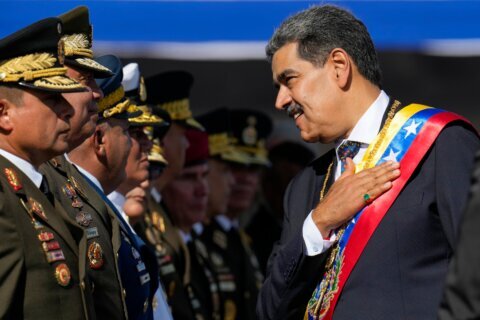
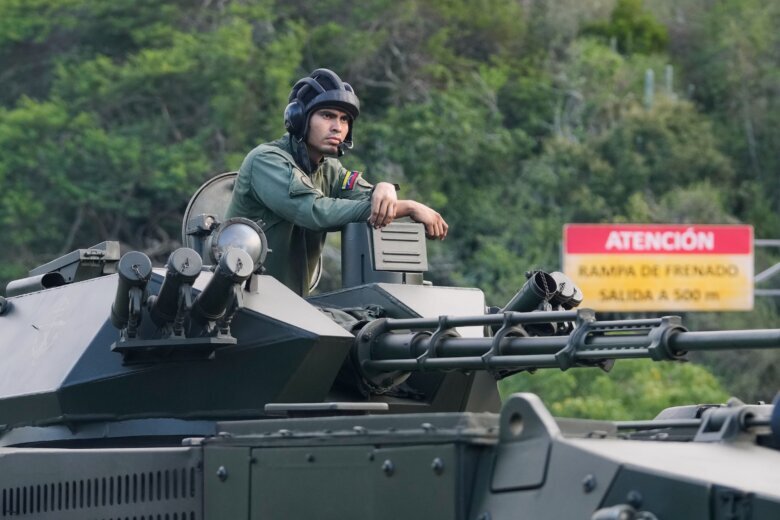
The account offered by Chairman of the Joint Chiefs of Staff Dan Caine of “Operation Absolute Resolve” provides the most detailed official explanation to date of how the United States military apprehended Venezuelan President Nicolás Maduro.
It also raises profound legal, geopolitical and credibility questions that extend well beyond the tactical success described by U.S. officials.
Caine framed the mission carefully and repeatedly. This was, in his words, “an apprehension mission ordered by the President of the United States in support of a request from the Department of Justice,” executed with “discretion, precision and integration.”
He emphasized that the objective was not assassination but arrest, explicitly noting that planners sought to “minimize the harm” to the indicted personnel so they could be brought to justice.
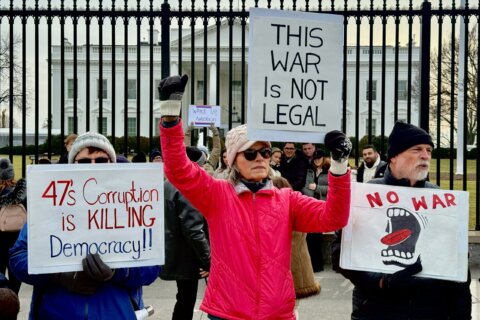
Yet the broader context matters. The operation termed “Absolute Resolve” took place inside Venezuela, a sovereign nation, without public evidence of consent from its government or international authorization. That alone places the operation in legally contested territory under international law, regardless of how precisely it was executed.
A military operation framed as law enforcement
Caine’s description underscores a deliberate blending of military force, intelligence capabilities and law enforcement objectives. The operation, he said, was the result of “months of planning and rehearsal” and decades of experience integrating “air, ground, space and maritime operations.”
More than 150 aircraft were launched from 20 bases across the Western Hemisphere. Intelligence agencies, including the CIA, the National Security Agency and the National Geospatial-Intelligence Agency, provided what Caine called “unmatched intelligence capabilities,” developed through years of counterterrorism manhunting.
That framing is significant. It suggests the United States is increasingly willing to use its global military apparatus to enforce judicial outcomes abroad, even against sitting heads of state. While Caine portrayed this as a disciplined, tightly controlled operation, critics will argue it sets a precedent that other powers could cite to justify similar actions.
This brings up Moscow’s war against Ukraine and Beijing’s threat to invade Taiwan. The U.S. has likely lost its moral authority to lecture them about democracy.
Conflicting accounts and credibility gaps
The most serious fault line emerging from Operation Absolute Resolve is not tactical, but informational.
Caine stated that Maduro and his wife “gave up and were arrested,” that U.S. forces acted in self-defense when fired upon, and that there was “no loss of U.S. life.” What he did not address directly were casualties among Venezuelan and allied forces.
According to reporting by The New York Times, approximately 80 Venezuelan security personnel were killed during the operation. Separately, the Cuban government has said 32 Cuban officers, described as part of Maduro’s protection detail, were killed. These figures, if accurate, stand in stark contrast to the Trump administration’s public narrative of a tightly contained arrest operation with minimal collateral impact.
The absence of those details from official U.S. briefings deepens concerns about transparency and raises questions about whether the administration’s account fully reflects conditions on the ground. For a mission described as designed to minimize harm, the reported scale of casualties among Venezuelan and Cuban forces could significantly alter how the operation is judged internationally.
The cost could be extensive
The risk now is retaliation, not in neat, symmetrical ways, but across the gray zone where Venezuela and its allies operate best. A sovereign state was penetrated, its president seized and members of his security detail reportedly killed. That creates both motive and justification for response.
Retaliation may not come as a conventional military strike but through asymmetric means: cyber operations against U.S. infrastructure, intelligence targeting of diplomats and military personnel, proxy actions by aligned groups, or covert activity carried out by partners such as Cuba, Russia or Iran, all of whom have existing intelligence, security or strategic ties to Caracas.
Once the threshold of sovereignty is breached, deterrence becomes unstable. The question is no longer whether Venezuela and its axis can respond symmetrically, but where, when and how they choose to strike back.
Get breaking news and daily headlines delivered to your email inbox by signing up here.
© 2026 WTOP. All Rights Reserved. This website is not intended for users located within the European Economic Area.