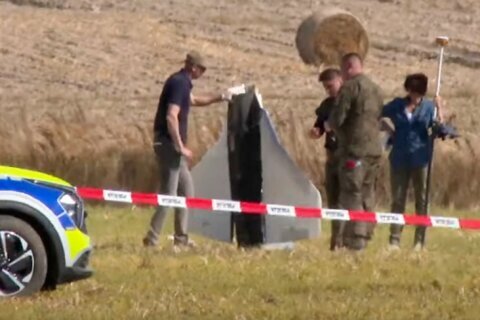
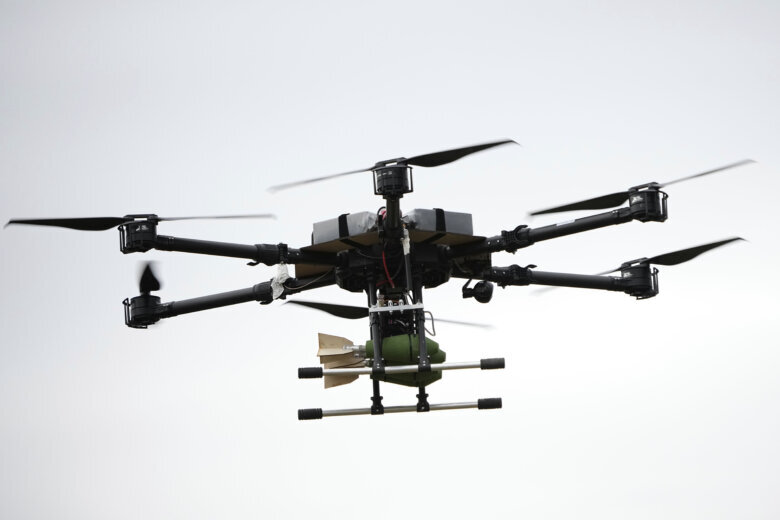
For months, Russia unleashed waves of Iranian-made Shahed drones against Ukrainian cities. Small, slow and flying low, they often slip under radar. But they have one weakness: the unmistakable buzz of their gasoline engines. Ukraine has turned that sound into a weapon.
Across the country, thousands of low-cost acoustic sensors, some originally built from smartphones bolted to 6-foot poles, now form a vast listening network. Trained with artificial intelligence to recognize the Shahed’s signature hum, these sensors detect drones that radar can’t see.
The data is fed, in real-time, to mobile teams armed with heavy machine guns and anti-aircraft cannons. Instead of million-dollar missiles, defenders are using bursts of relatively inexpensive projectiles to bring the drones down.
Now, Europe is buying in
After 19 Russian drones crossed into Poland earlier this month, President Volodymyr Zelenskyy offered Warsaw Ukrainian training in what he calls the “hunter-killer” approach. Poland’s defense ministry confirmed advanced talks are underway. Lithuania is forming its own mobile anti-drone groups. Latvia is installing similar acoustic sensors. And European Commission President Ursula von der Leyen has pledged a 7-billion euro “Drone Alliance,” with Ukraine to help build a continental “drone wall” along NATO’s eastern flank.
This shift reflects a hard lesson: Traditional air defenses alone cannot handle the drone threat. Fighters and long-range missiles are too few and far too expensive. Ukraine has demonstrated that low-cost technology and clever moves can neutralize the relentless drone swarms across the entire country.
As revolutionary as it seems, this tactic is not new. Minus the modern digital elements, multiple systems, including one that looked like an array of giant tubas, were deployed more than 80 years ago during World War II to detect enemy warplanes.
The results today are striking
In one assault, Ukraine’s air defenses destroyed 80 of 84 incoming drones. In another, volunteers and territorial units shot down 87 drones in a single night. U.S. military commanders have praised the system as a low-cost defeat solution that NATO itself should study. According to Ukrainian military officials, personnel can learn to shoot drones with mounted guns in as little as six hours of training.
Economics is just as important as tactics
A Patriot interceptor costs up to $6 million, while a Shahed drone costs about $30,000. By flipping that cost curve, Ukraine has found a sustainable way to defend its skies. Building the entire acoustic sensor network costs less than two Patriot missiles.
As Europe scrambles to harden its skies, Ukraine’s innovation is moving from a wartime improvisation to a model for the future. In the words of one Lithuanian official: “It was too costly to use fighters and missiles, so we’re pushing cheaper and smarter solutions.”
Get breaking news and daily headlines delivered to your email inbox by signing up here.
© 2025 WTOP. All Rights Reserved. This website is not intended for users located within the European Economic Area.