The strategic landscape confronting the United States is growing more volatile, while being marked by digital infiltration, geopolitical flashpoints, and internal policy incoherence.
At the core is a rising cyber threat from China, whose state-linked groups, like Volt Typhoon and Salt Typhoon, have reportedly embedded within critical U.S. infrastructure — not for immediate disruption, but to enable future sabotage of command, control, and communications systems.
The shift signals a long-term strategy of digital positioning for geopolitical leverage, placing U.S. national security at risk during any crisis or conflict escalation.
Simultaneously, the Middle East is once again demonstrating its capacity to entangle great powers in rapidly evolving conflicts.
Israel’s military actions in Syria, framed as defensive operations to protect the Druze and counter Iranian proxies, are drawing condemnation from Iran and risking a wider confrontation. Washington’s attempts to rein in the conflict are proving limited, as U.S. influence wanes in the face of Iranian defiance and Israeli determination.
The risk is not only further destabilization but also strategic entrapment, where the U.S. is forced to respond militarily or diplomatically in an escalating environment.
At home, strategic confusion deepens the problem.
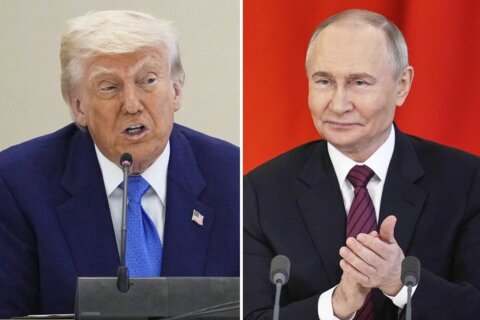
President Donald Trump’s policy reversals — particularly on Ukraine — have unsettled both adversaries and allies. These mixed signals, combined with divisions within Europe over how to deal with Russia, are eroding Western unity.
The policy inconsistency is more than a communications issue; it’s a strategic vulnerability that adversaries like China and Russia are actively exploiting.
Looking ahead, the U.S. role as a global stabilizer is at risk. The convergence of these threats — cyber infiltration, regional conflict, and domestic discord — could fatally weaken U.S. deterrence if not urgently addressed.
Experts warn that without a coordinated strategy blending resilience at home with clarity abroad, the U.S. will continue to lose credibility and maneuvering space.
The stakes are high: rivals are watching for cracks, and even a small misstep could tilt the international balance in favor of authoritarian challengers ready to rewrite the rules.
Get breaking news and daily headlines delivered to your email inbox by signing up here.
© 2025 WTOP. All Rights Reserved. This website is not intended for users located within the European Economic Area.