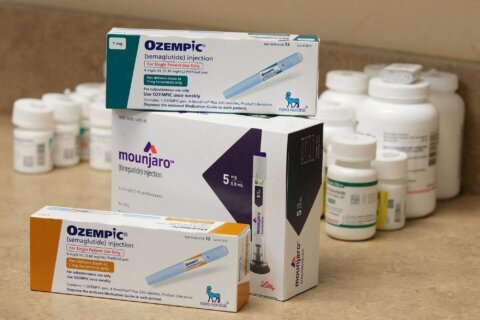
As GLP-1 medications grow in popularity not just for treating diabetes but also for weight loss, some people are turning to alternatives that health experts warn may carry risks.
Amelia Baker, a licensed and registered dietitian at Georgetown University Hospital, told WTOP that GLP-1 medications can be effective for weight loss by helping “suppress a hormone that is associated with hunger.”
However, Baker said the medications are expensive and are not covered by all insurance plans.
That is where the danger can start, she said, when people seek compounded versions of GLP-1 medications, often advertised through medical spas, online clinics or telehealth providers rather than prescribed through a traditional primary care doctor or specialist.
“What we’re signing up for when we commit to a compounded medication is a medication that’s not cleared by the FDA,” she said.
According to the Food and Drug Administration’s website, compounded medications are not reviewed or approved in the same way as brand-name or generic drugs. The agency said that “compounded drugs are not FDA-approved. This means that FDA does not verify the safety, effectiveness or quality of compounded drugs before they are marketed.”
The FDA notes that compounded drugs can be legal when produced by licensed pharmacists or physicians who follow specific federal and state laws.
In some cases, compounded medications are allowed when a patient cannot be treated with an FDA-approved drug. An example would be a patient with an allergy to a specific dye who needs a medication made without it.
The FDA also said that compounders may prepare compounded versions of a drug that appears on the agency’s drug shortages list, but only if the compounded product meets conditions outlined in federal law.
Baker said patients should always confirm whether a medication recommended to them outside a doctor’s office or hospital system is FDA-approved or compounded.
“Full stop. The safety mechanisms that have been put in place by our medication system, the Food and Drug Administration, are just not there,” Baker said.
While Baker said she understands why people who cannot afford prescribed GLP-1 medications might feel excluded by the health care system and turn to compounded options, she said other evidence-based weight-loss approaches remain available.
“We still have gastric bypass, we still have medical nutrition therapy in a more intensive behavioral therapy sense,” she said.
Baker also said dietary changes can support weight loss without medication. Most Americans don’t eat enough fiber and boosting fiber intake, she said, can help stimulate the body’s natural secretion of GLP-1.
Baker said increasing fiber in your diet is a way to “to dip your toe into increasing your satiety.”
Foods that can increase GLP-1 naturally include oatmeal, flaxseed, blueberries, leafy greens like spinach, fish and avocados, Baker told WTOP.
Get breaking news and daily headlines delivered to your email inbox by signing up here.
© 2026 WTOP. All Rights Reserved. This website is not intended for users located within the European Economic Area.