Over a million veterans may now be eligible for education benefits they didn’t know they had, after the U.S. Department of Veterans Affairs withdrew its appeal in a case that challenged limits on education benefits for veterans who served continuously.
The step ends a legal battle that started in 2020, paving the way for 1.2 million veterans to be eligible for up to a year of extra collegiate benefits.
In a 2024 Supreme Court decision, Rudisill v. McDonough, the court ruled that veterans who accrue benefits under the Montgomery and Post-9/11 GI bills, because of their length of military service, are entitled to benefits under both bills and can use them in any order up to a 48-month cap.
But Kay Perkins, who served in the Air Force for six years, was told by the VA that she only had access to 36 months of benefits, because she didn’t have separate periods of service. Perkins works in the WTOP newsroom as a video and social media editor.
“‘You can only use one set of these benefits. If you choose to use one, you forfeit the other.’ And I had remembered being told something very, very different at basic training. I remembered being told explicitly that you could use both sets of benefits,” she recalled.
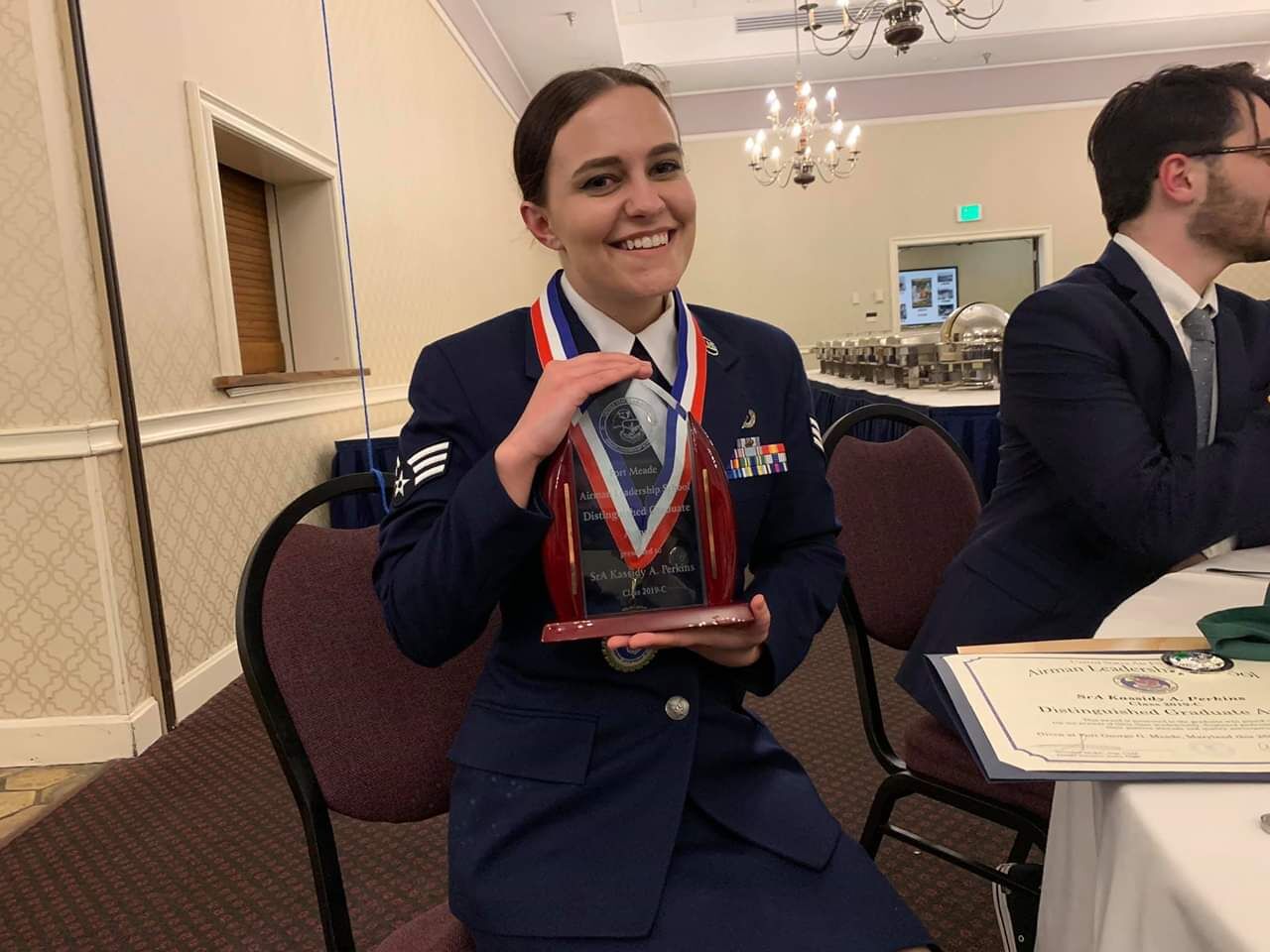
She challenged that claim in court, in the lawsuit Perkins v. Collins. In May 2025, a veterans court ruled Perkins was eligible for the full 48 months of benefits.
The VA initially sought to appeal that decision to the federal circuit, but recently withdrew the appeal.
“It is going to be a long time before we fully appreciate the harm this has caused veterans and their families by forcing them to pay out of pocket, by forcing them to take out loans, or by forcing them to forego education altogether because they were not given the benefits they were promised,” said Mary Grace Metcalfe, a partner at the law firm Troutman Pepper Locke, which worked on the case pro bono.
In a Feb. 27 email, the VA told new education beneficiaries that there’s no action required.
Pete Kasperowicz, a VA press secretary, told WTOP the VA is using mail, email and phone calls to tell veterans about the new benefits they may be entitled to.
The agency, he said, will reimburse veterans who have already paid out of pocket or taken out loans to pay for school.
The VA is prioritizing veterans who have less than three months of remaining entitlement and were enrolled in the last six months, Kasperowicz said, and it “updates prioritization to ensure that students currently in school are not left without benefits, and will implement an automated solution as quickly as feasible.”
“I’ve had people tell me that now they think that they can go to law school, or go to grad school or medical school; or that their kid can go to college, or they had already used their some of their benefits on their kid, and now they could go to school,” Perkins said.
“That’s a pretty crazy thing to send an email asking a question about a confusing policy, and then six years later to get the news that a million people get to go to college now or get to go to grad school now,” she added.
Between the Rudisill and Perkins cases, there are about 2.2 million veterans who are going to get benefits that “Congress had already promised them,” but they hadn’t received, said Lauren Hancock Miller, an associate at Troutman Pepper Locke.
“We have clients who served their country for more than 20 years, and they wouldn’t obtain the full amount of benefits simply because the VA said that you needed to have some sort of either break in service or reenlistment,” Miller said.
“So that position was really nonsensical, and beyond that, it was very contrary to the Supreme Court’s decision.”
Asked why the VA continued to deny benefits after the initial ruling in Perkins v. Collins came out, Kasperowicz said, “With or without the Perkins decision, veterans were eligible for 36 months of benefits under Chapter 33, and VA has continued to grant those benefits to ensure veterans were able to attend school. In the wake of the Perkins decision, VA has worked for months with both political and career VA staff to develop the training, policies and procedures needed to appropriately grant additional benefits afforded by this ruling.”
Any veterans who think they may be eligible but haven’t received a notification should contact a veteran service organization, Metcalfe said. The VA has also set up an FAQ.
“This is a nonpartisan issue,” Metcalfe said. “This is an American issue, and we have been extremely fortunate in the outpouring of support from all corners of the country in pursuing benefits as Congress intended.”
Get breaking news and daily headlines delivered to your email inbox by signing up here.
© 2026 WTOP. All Rights Reserved. This website is not intended for users located within the European Economic Area.