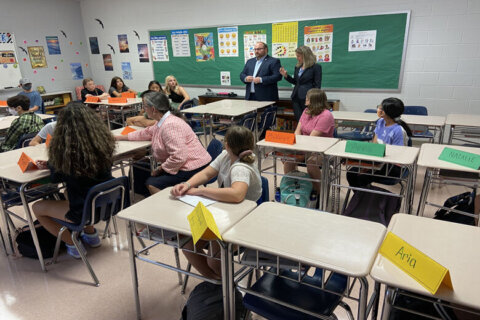
Martin Moreno was volunteering at Virginia’s Cardinal Elementary School on a recent Friday afternoon when he was asked a familiar series of questions.
The two students he was working with, one from Mexico and the other from Guatemala, inquired about his favorite soccer players and where he’s from.
Moreno and his friends help during the hourlong after-school program that allows students to interact with art. After the introductory questions, a girl he was working with asked, “¿Conoces a la migra?”
The interaction, Moreno said, is the latest in a series of conversations he’s had with fellow students about fears and anxieties surrounding U.S. Immigration and Customs Enforcement raids and deportation efforts. Those feelings, he said, extend to his classmates who were born in the U.S., but are still worried about being bullied or having their family separated.
Moreno attends Yorktown High School in Arlington.
“It’s terrifying hearing the stories … including people in my grade and younger kids, talk about ICE, the fear they have, and how they don’t want to be deported,” Moreno said. “All these sort of things are traumatizing. For the past few months, it’s just been terrible.”
The interaction with the elementary schoolers caught Moreno off guard. But with the kids seemingly enjoying the art exercises, he didn’t want to ask them any follow-up questions.
When the students finished the activity, Moreno asked them whether they felt safe where they are.
“These kids are 8 years old,” Moreno said. “They do know about the fear of being deported, and not just being deported, but ICE and all these sorts of things. They’re really interesting, the way they talk about it and the things they know.”
According to statistics from the Department of Homeland Security, over 520,000 people have been deported as of October of this year. It’s all part of the Donald Trump administration’s efforts to expel millions of individuals who are in the U.S. without legal permission.
Though it’s difficult to pinpoint how many children have been separated from families that have been deported, migrant children and children of parents without legal status can be sent to shelters for nearly a year.
Moreno said he has spoken to teachers about the anxieties he’s heard about, but in most cases, educators aren’t “allowed to talk about personal things with students. Therefore, they can’t really help with that.”
When he hears directly from someone about a similar worry, he recommends a distraction and urges them not think about it.
“But it seems like they’ll always have this trauma and they can’t stop talking about it,” Moreno said.
The conversation at Cardinal Elementary motivated Moreno to write a story about his experience.
“It’s not just about the immigrants itself, it’s also about how the U.S. has always been a place for people to come, and now it feels like it’s not our place anymore,” Moreno said. “We’re seeing this a lot with kids. Kids don’t even feel safe, or they don’t feel welcome in their own country.”
“As a country, it’s really devastating to see these things happening,” Moreno said.
Get breaking news and daily headlines delivered to your email inbox by signing up here.
© 2025 WTOP. All Rights Reserved. This website is not intended for users located within the European Economic Area.