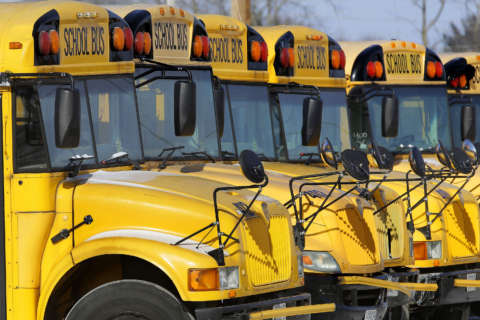
From saving on school supplies to the impact of federal cuts, the WTOP team is studying up on hot-button topics in education across the D.C. region. Follow on air and online in our series, “WTOP Goes Back to School” this August and September.
This video is no longer available.
Even though it feels like summer just began, kids will be heading back to the classroom shortly and they will likely need new supplies and gear. As you go back-to-school shopping, you may be looking to save a little bit of dough while still getting the supplies your kids need.
Around 30% of back-to-school shoppers say that inflation is changing the way they shop, according to a new survey from Bankrate. While that is down from a few years ago because of wage growth outpacing inflation for many, the back-to-school season can still cost a pretty penny, especially if you have multiple children.
Ted Rossman, senior industry analyst at Bankrate, told WTOP that fears of tariffs affecting school supplies were not realized.
“Retailers have merchandise on the shelves. Pricing is pretty similar to what we saw last year,” Rossman said.
The National Retail Federation said the average kindergarten through 12th grade back-to-school shopper is spending $858. But Rossman said the bulk of that expense stems from electronics, such as tablets or laptops.
If your child already has some sort of computer or is provided one by school, Rossman said there are plenty of ways to save.
Rossman suggested setting a budget for your back-to-school shopping and including your child in the discussion.
“The essence of being a good shopper is sticking to a budget and comparison shopping and basically making those trade-offs that if you splurge in one area, you’ve got to cut back in another. That’s a valuable lesson for kids,” Rossman said, stressing this is a great moment for financial literacy for children even as young as kindergarten age.
He said it can also ward off arguments over more practical versus expensive items, showing they will have to cut back elsewhere if they want that really fancy backpack.
“I think you can involve your kids and hopefully make better decisions together,” Rossman said.
Take stock of school supplies that may already be lurking your house.
“My wife and I were laughing about how we have eight pairs of scissors around the house. We don’t need to buy any more scissors for back-to-school,” Rossman said.
If there are any items that you are not quite sure your student will actually need, delay buying it and ask their teacher once school starts if it will be essential or if can be bought at a later time.
“That can be a way to spread out your cash flow. A lot of these items will go on sale after Labor Day. So if you can push it off a little bit, that could be beneficial,” Rossman said.
For back-to-school clothing, a great way to save is by looking for quality hand-me-downs from “Buy Nothing” groups on Facebook.
“I know my wife loves to get clothes and toys and school supplies from our local Buy Nothing groups for our two young daughters,” Rossman said, pointing out that it works great for younger kids who are constantly growing.
Rossman suggested stacking any discounts that are offered through traditional retailers — Walmart, Target and Amazon are already offering back to school deals — with any rewards credit cards that give cash back for purchases.
Be sure to take advantage of sales tax holidays in both Maryland and Virginia.
The Commonwealth’s three-day sales tax holiday begins Friday and runs through Sunday. School supplies that are $20 or less per item and clothing and shoes $100 or less per item are eligible.
Maryland’s tax-free holiday is the following week, starting Aug. 10 through Aug. 16. The first $40 for a book bag is tax exempt. Clothing or shoes priced at $100 or less are exempt as well.
The Maryland General Assembly only designated clothing, footwear and backpacks as eligible items for the tax-free period.
Get breaking news and daily headlines delivered to your email inbox by signing up here.
© 2025 WTOP. All Rights Reserved. This website is not intended for users located within the European Economic Area.