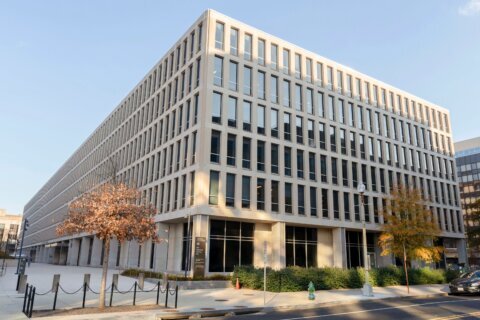
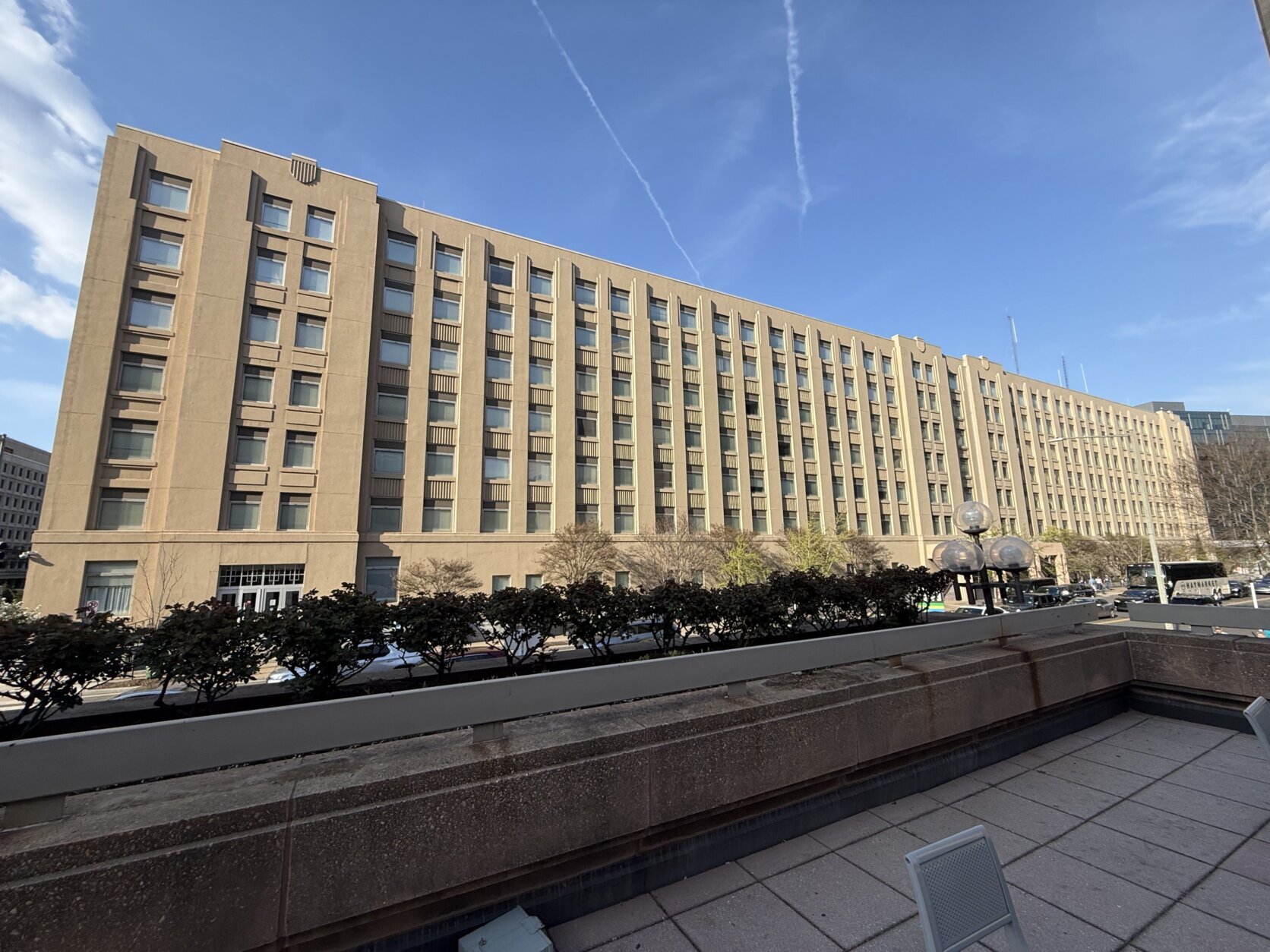
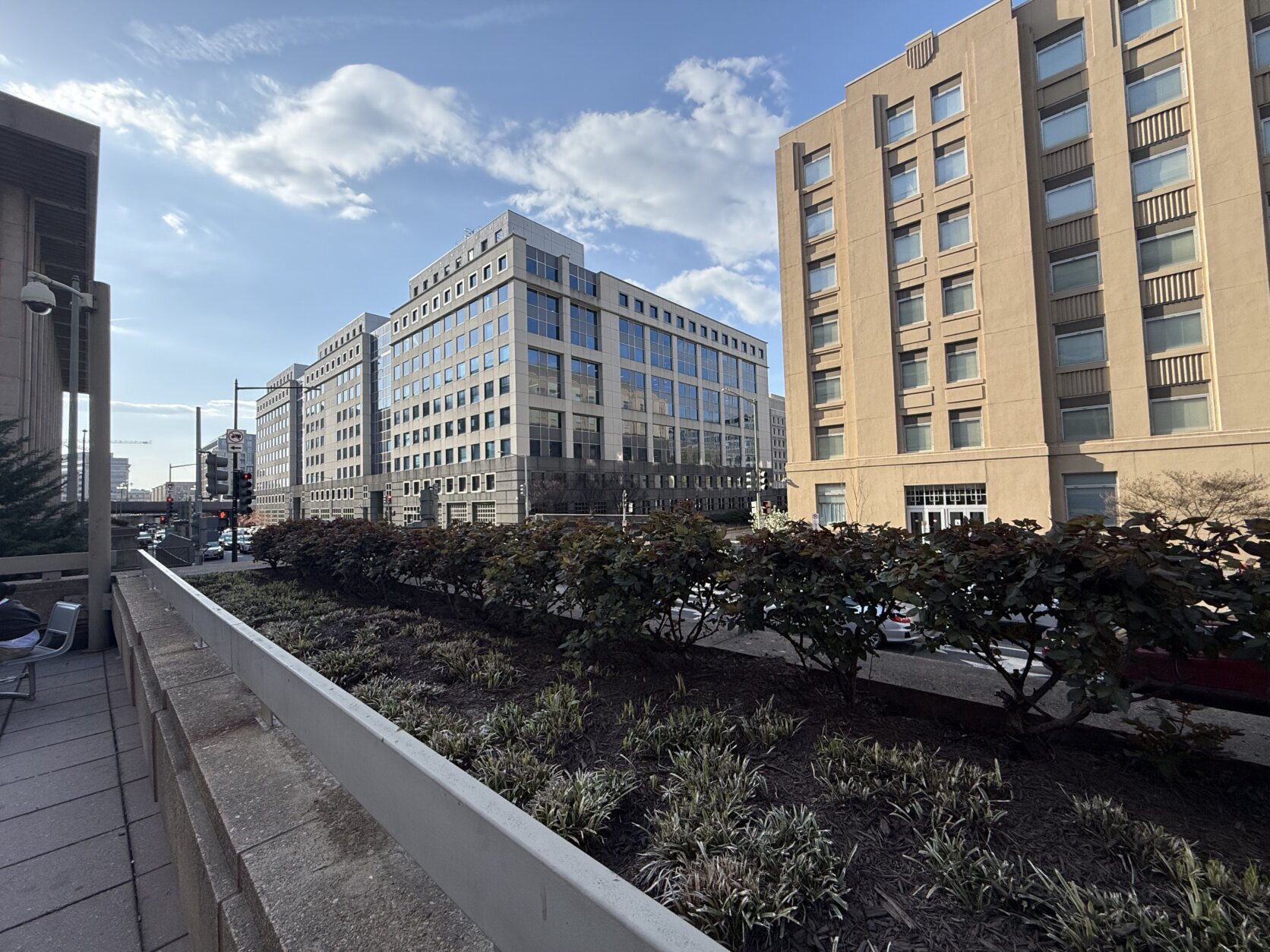
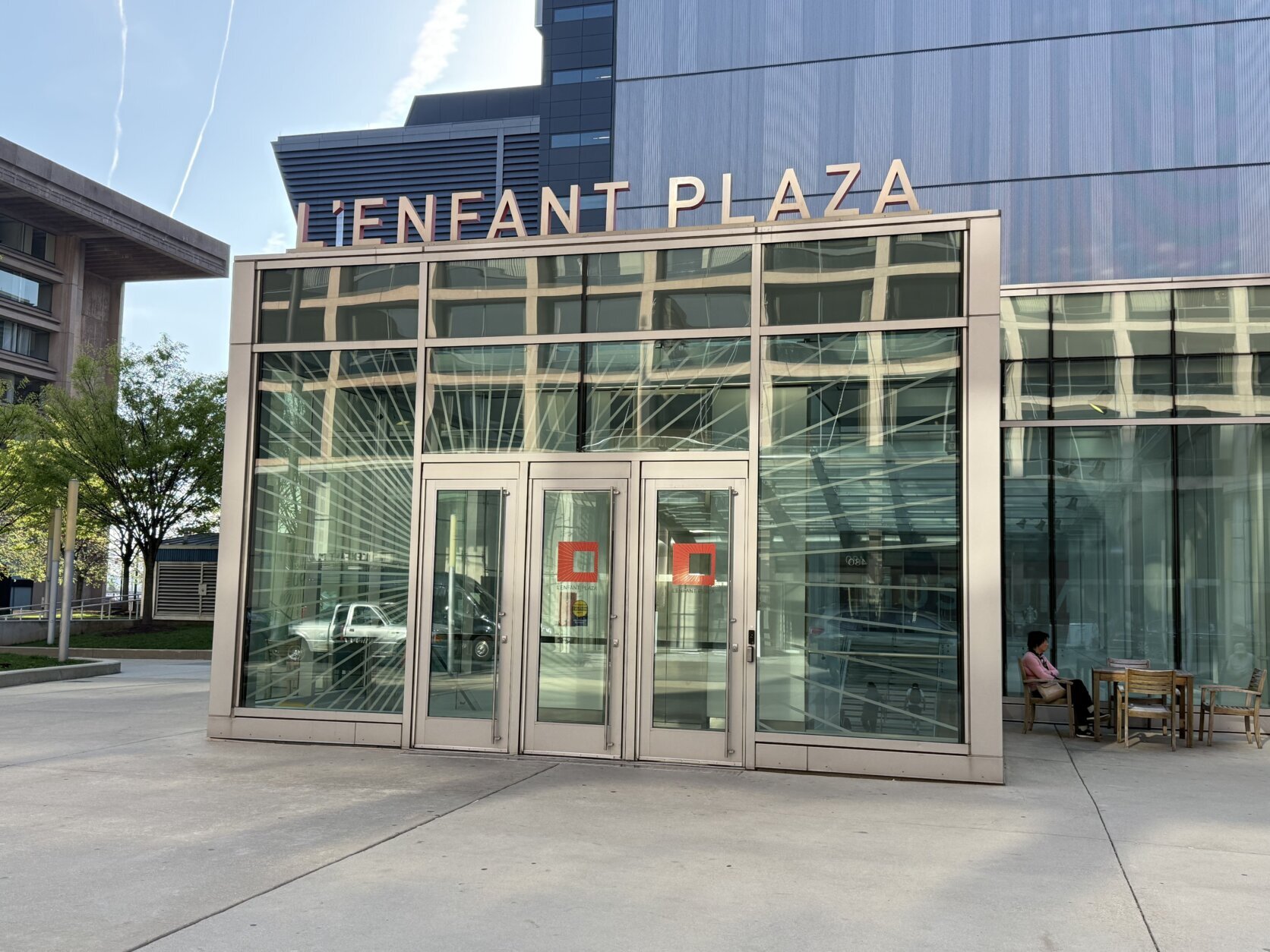
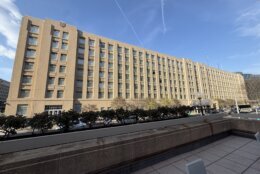
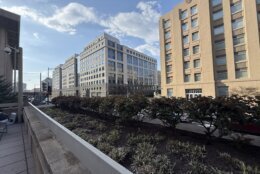
In an area of Southwest D.C. near L’Enfant Plaza that stretches between the National Mall and the waterfront lies a zone dominated by federally owned buildings.
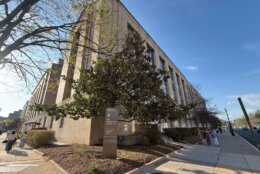
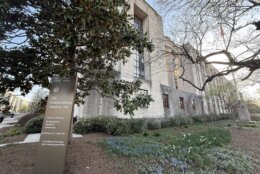
The landscape is defined by monolithic, often Brutalist‑style federal buildings, with wide streets and few ground‑level amenities. But the recent sale of one building to private developers, along with the listing of others, is sparking conversation about whether a new D.C. neighborhood could take shape.
Urban geographer Lisa Benton‑Short, a professor emerita at the George Washington University, believes moments like this have helped shape D.C. neighborhoods before.
She points to the transformation of the Navy Yard, where shrinking federal operations in the late 1990s and early 2000s freed up land that was later redeveloped.
“I used to live in Navy Yard, which was a huge release of federal property in the late 1990s and early 2000s as the Navy Yard significantly shrunk what it needed, and a lot of buildings and space became available and were purchased by private developers,” Benton‑Short said.
Now, the Navy Yard is home to businesses, retail, restaurants and entertainment venues, and anchored by Nationals Park, where the Washington Nationals play.
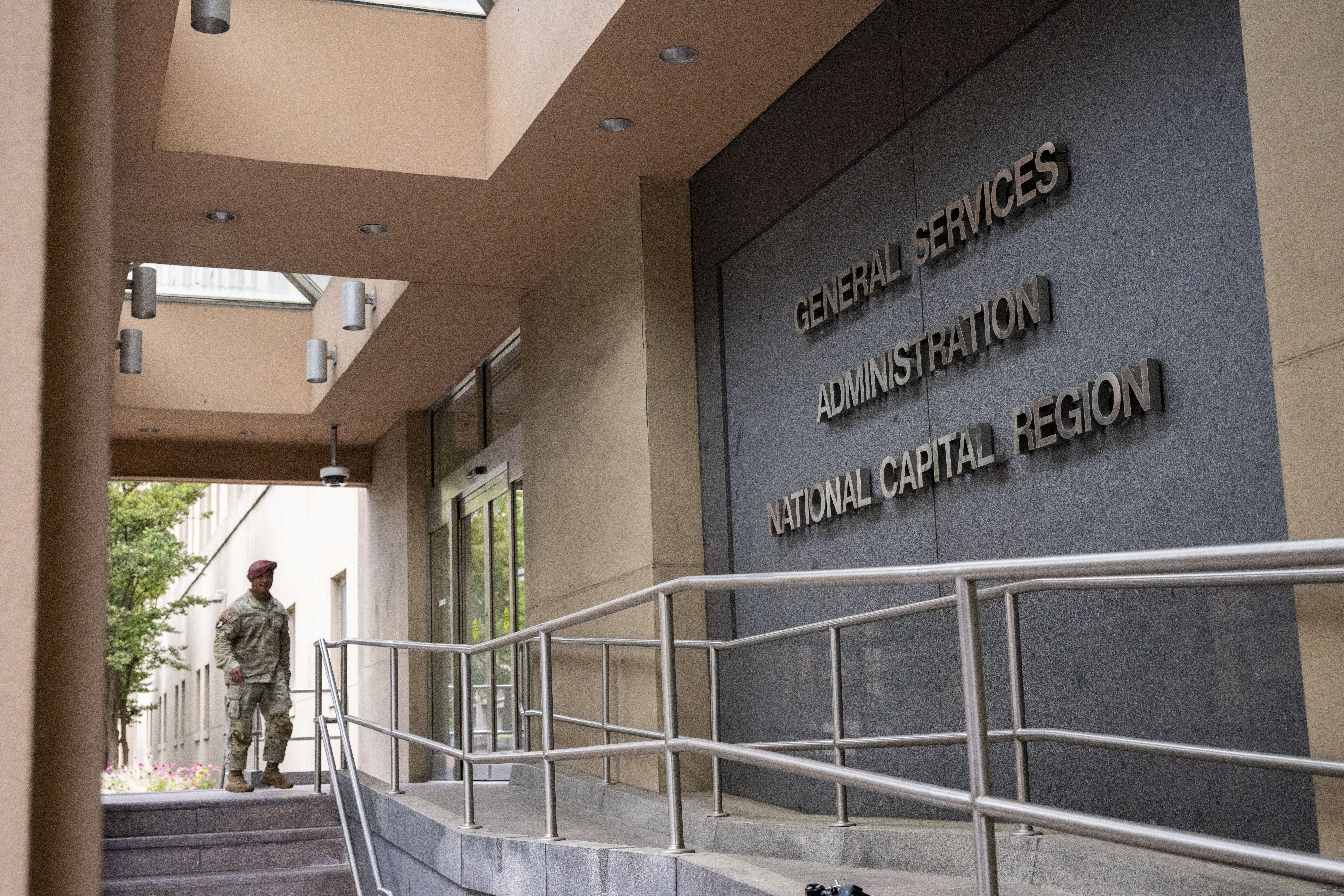
Recently, the General Services Administration announced the sale of the former Department of Homeland Security headquarters at 301 7th St. SW, its former regional office building that also once housed DHS operations. The building is now in the hands of a private developer and is expected to be converted into a mixed‑use development with housing.
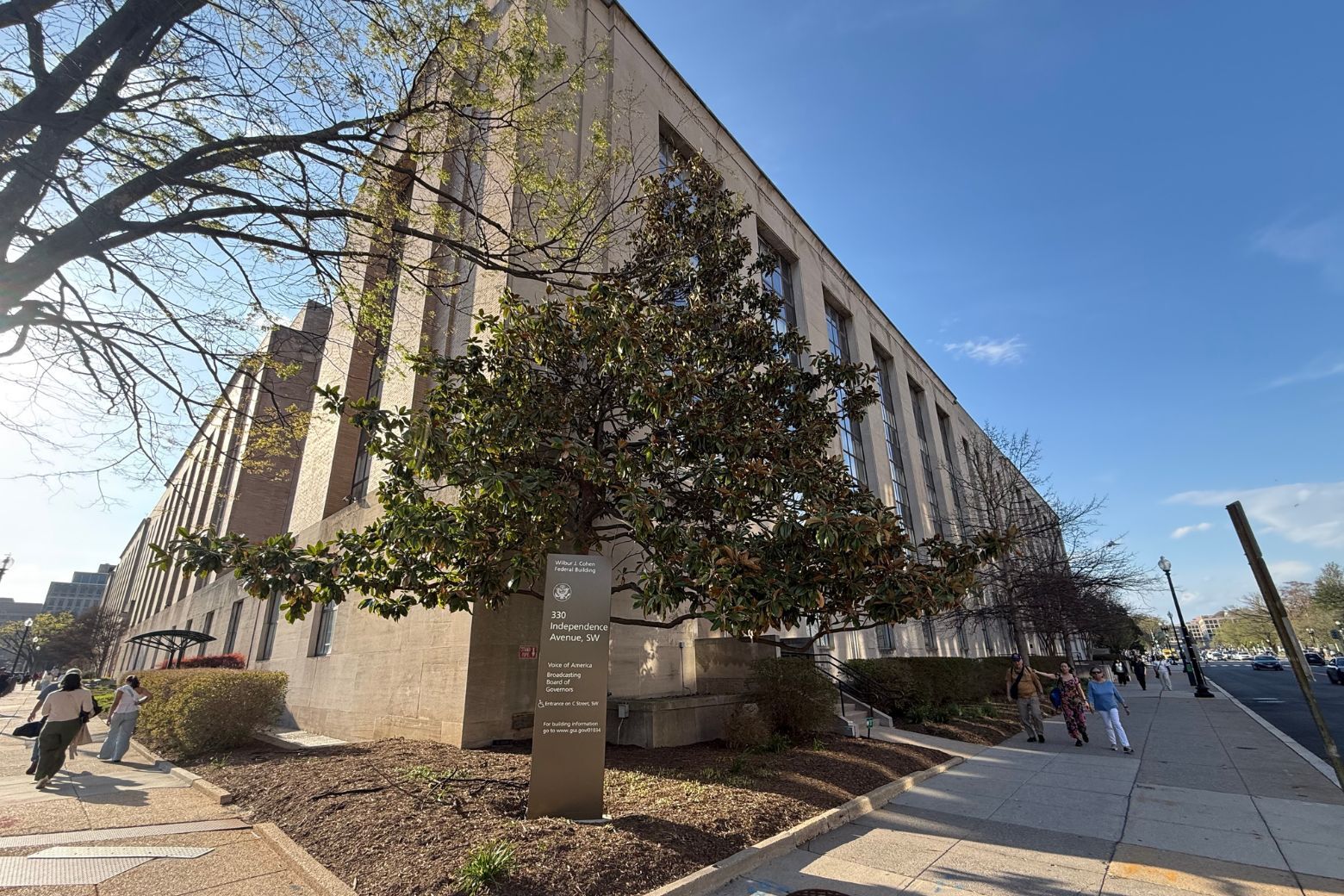
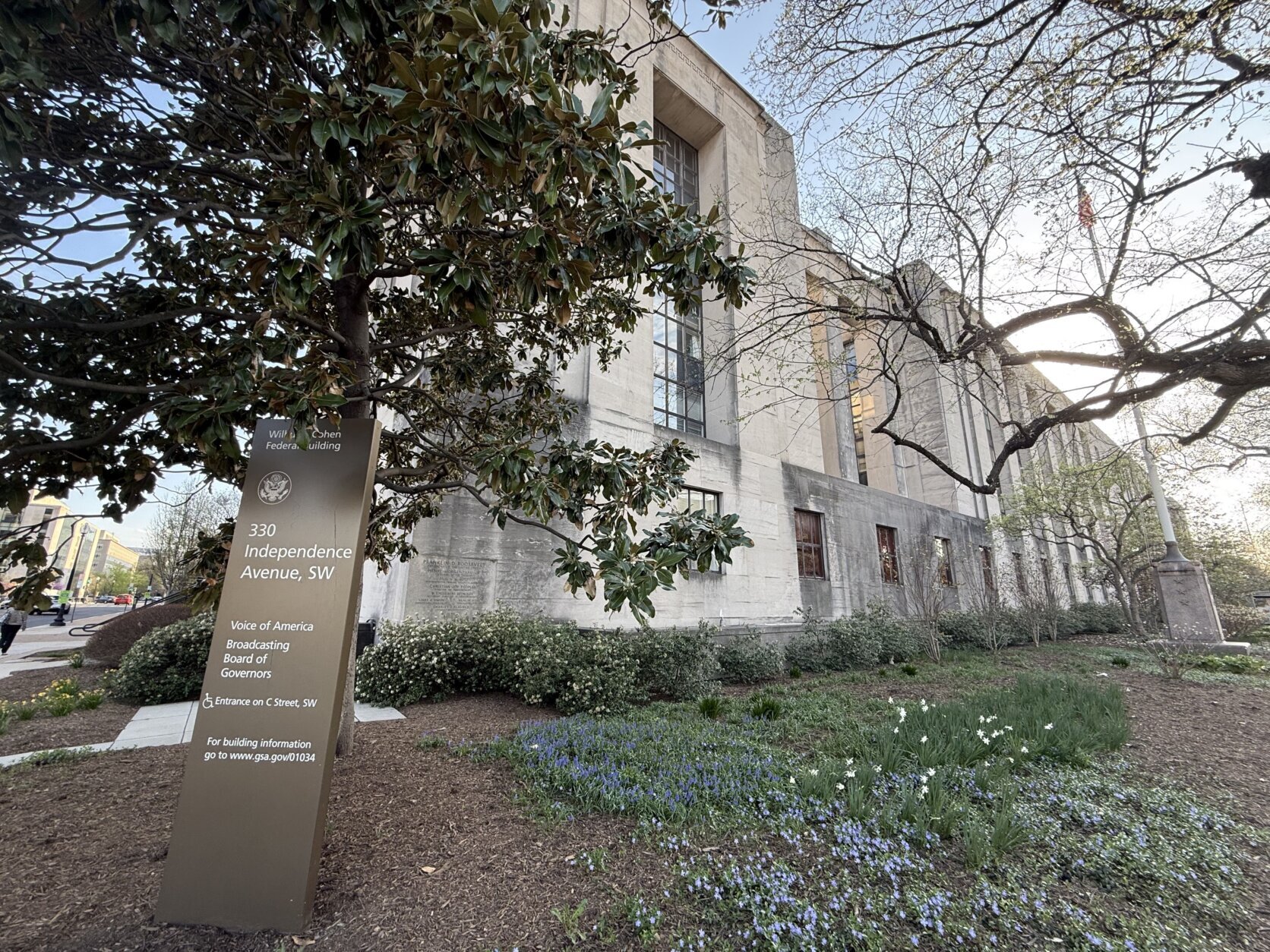
Listed on a GSA website for “accelerated disposition” are both the nearby Robert C. Weaver and Wilbur J. Cohen buildings.
The Liberty Loan Building on the western edge of so-called “Fedlandia” is listed as “under contract.”
With those potential sales, Benton‑Short said redevelopment in the area could help a city struggling with a housing crisis.
“D.C. is in desperate need of more housing, that’s for sure, particularly redevelopment that would bring housing, especially if it’s affordable housing. That would be really what D.C. needs more of,” Benton‑Short said.
But what remains unknown is whether any housing would include affordable options, especially in an area with close Metro access and walking-distance proximity to iconic landmarks and the waterfront.
She said history shows that whether this moment adds up to a new neighborhood depends on how redevelopment unfolds.
“What we really need to see is some large, comprehensive plan for federal spaces, particularly in and around the core,” she said.
But she said it does not appear that a clear plan has been presented, pointing out that D.C. has not seen a comprehensive master plan update since the early 20th century.
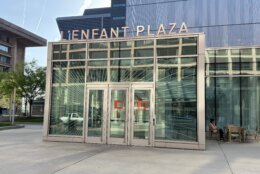
She believes that for a new neighborhood to emerge in an area currently without residential buildings, grocery stores and other everyday amenities, all stakeholders need to be part of a transparent planning process.
“Piecemeal planning is not going to get you the connectivity, nor the kind of thoughtful redesign that an area like this really needs,” Benton‑Short said.
She said redevelopment efforts can move forward with little public awareness, leaving communities reacting to plans instead of helping shape them.
“We could end up with Fedlandia being converted into upscale, very expensive, luxury residential areas, but do very little to help the housing crisis that’s in D.C.,” Benton‑Short said.
Get breaking news and daily headlines delivered to your email inbox by signing up here.
© 2026 WTOP. All Rights Reserved. This website is not intended for users located within the European Economic Area.