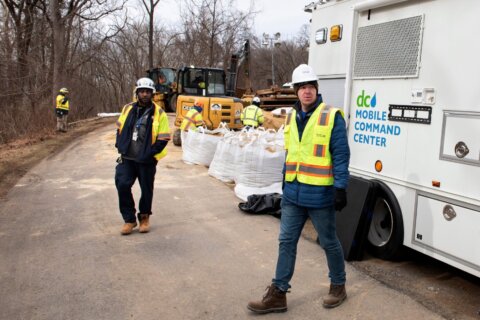
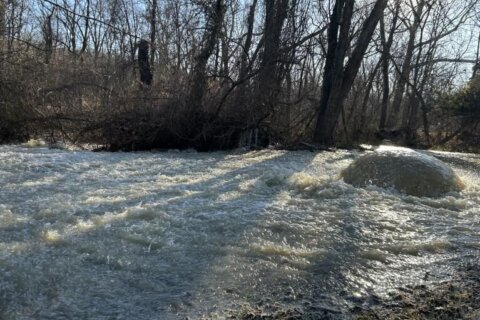
With one of the Potomac River’s drinking water intakes shut down after last month’s massive sewage spill, concerns are growing about how vulnerable the D.C. region is without a true secondary water source.
During a House Transportation and Infrastructure Committee hearing Tuesday, lawmakers pressed the U.S. Army Corps of Engineers to explain what’s being done to secure solid backup options for D.C.’s drinking water.
The Washington Aqueduct remains the only source of drinking water for D.C., Arlington and parts of Fairfax County in Virginia, and D.C. Del. Eleanor Holmes Norton said the region doesn’t have the resiliency it needs.
“With only one day of backup water supply, man-made or natural events that make the river unusable would put residents, the District government and the regional economy at risk,” Norton said.
Norton challenged the Corps after being told the study that Congress authorized to identify a secondary water source may be narrowed to only expanding existing storage.
“Expansion of the reservoir is not a secondary water source,” Norton said.
Lt. Gen. William H. “Butch” Graham Jr. told lawmakers the Corps is working on near‑term improvements, including adding storage at the existing Dalecarlia Reservoir, which is on federal land.
“The expansion of the Dalecarlia Reservoir would add an additional 12 hours of supply. That’s a 33% increase that’s achievable near-term,” Graham said.
Graham also said the search for longer-term alternate sources remains active, including the potential use of Travilah Quarry in Montgomery County as an additional reservoir. That comes despite indications from the Corps during a briefing to D.C. Water in February that the quarry may be off the table.
“We are not limiting the scope of this study, but we are looking for early, actionable elements that we can put to make the resiliency of the city’s drinking water safer as soon as possible,” Graham said.
Assistant Secretary of the Army for Civil Works Adam Telle pointed to the recent spill as a reminder of why redundancy is critical for the region’s drinking water system.
“This challenge in the Potomac River is one of the greatest ecological disasters of its type to ever occur in our nation,” Telle said. “We share your goal to ensure that the Washington, D.C. water supply is has the necessary redundancies, given that the seat of government is here in Washington. It’s a critically important goal.”
He added that ensuring the capital’s water supply has the necessary backup is both a public‑safety and national‑security priority.
Get breaking news and daily headlines delivered to your email inbox by signing up here.
© 2026 WTOP. All Rights Reserved. This website is not intended for users located within the European Economic Area.