EDITOR’S NOTE: WTOP marks one year of President Donald Trump’s second term in office with a look at the physical and political changes he’s brought to the D.C. region.
Only one year into President Donald Trump’s second term, the relationship between Washington, D.C. and the federal government has been tested in new ways, as a series of legal challenges have put fresh attention on the limits of home rule and who ultimately controls policing, public safety and governance in the nation’s capital.
The tension seen between the White House and the Wilson Building has centered on the federal government’s ability to step into local affairs. The federal government has long been able to get involved in D.C.’s governance, but legal experts said over the past year, those powers have been used more visibly and frequently since Inauguration Day.
The Trump administration has argued that its actions fall within a long-standing federal authority over the District, noting that limits on home rule were established decades ago and not created during the current term.
Supporters say the federal involvement was driven by public safety and security concerns, while critics argue the frequency and visibility of those actions raise new questions about precedent and local control.
2025 federal law enforcement surge
One flashpoint that received national attention was in August when the president announced a public safety emergency in D.C., which allowed the White House to take temporary control over D.C.’s police force.
Julius Hobson, a longtime D.C. political analyst, said that moment made the city’s limited autonomy clear.
“The home rule charter says the president could do that for 30 days, but it didn’t say anything about renewing. And he could have done that, but it started off really bad. Fortunately, the police chief and the U.S. attorney were able to negotiate some of that out and to get them out of the day to day,” Hobson said.
Home rule is fragile, he said, and that became apparent during those actions.
“It underscores the very limits of home rule that were always there, and most people didn’t realize or come to grips with the fact that home rule really is limited,” Hobson said.
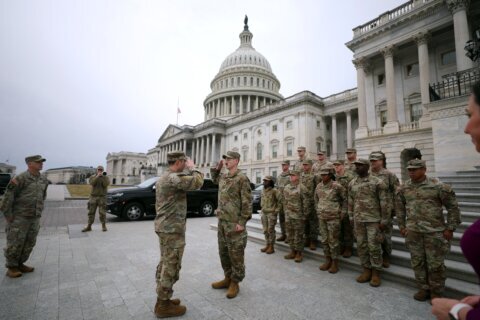
Another decision that saw legal challenges was the increased presence of D.C. National Guard troops. In Washington, the president and secretary of defense have authority over the guard, the city does not.
Meryl Chertoff, an adjunct professor of law at Georgetown University Law Center, said the presence of the guard during the president’s crime emergency and beyond has been one of the most notable changes residents have seen.
“The most obvious, visually, to people living in the District is the presence of federal law enforcement agents and the National Guard,” she said. “Because of D.C.’s limited home rule and particular provisions in the D.C. charter, it has been somewhat difficult to challenge the legal basis for having those National Guard troops in D.C., if they are federalized troops.”
Legal challenges by the D.C. attorney general and others have focused not just on the guard’s presence but, according to Chertoff, also on how they have been deployed.
“One of the things that has been particularly disturbing has been the presence, not of D.C. National Guard doing federal missions, but the presence of National Guard troops from other jurisdictions — from West Virginia, Ohio, and places like that — that have been sent into the District,” Chertoff said.
She said D.C.’s status as a federal city, not a state, makes these deployments harder to challenge.
Congress steps in the way
It wasn’t only the executive actions that got attention. There were also moves by Congress, which Chertoff said she’s watching closely.
“My biggest concern in terms of what we are seeing now is actually not coming from the executive branch, but it’s coming from the Hill,” she said.
The House has been debating roughly a dozen bills that, if approved, would give Congress greater control over aspects of D.C.’s governance, and that is a dynamic Chertoff described as part of the broader legal challenges to home rule that have been seen.
While some bills have passed the House, none have been passed by the Senate.
With the court challenges, both Hobson and Chertoff said D.C.’s unique status limits how far lawsuits can go.
“The courts have been somewhat constrained by this peculiar position that D.C. is in, that it is the federal district and that there are limitations on what the courts have done. But more, there’s been a problem for the mayor. Unlike states where there is a governor standing between the mayor and the federal government, there is no layer between D.C. and the federal government,” Chertoff said.
Hobson believes the actions taken last year could also shape what future presidents decide to do.
“It sets a political and legal precedent with regard to the District of Columbia that future presidents can do the same thing anytime they want,” he said.
Chertoff said home rule ultimately determines how much control D.C. residents have over everyday decisions.
“Home rule in the District means that D.C. residents get to have the same say as the people in any other state over local matters — the matters that affect their lives every day, whether that’s transportation, policing (or) schools,” she said. “When the federal government comes in and bigfoots, that takes that control — that people across the rest of the United States have over their day to day lives — on questions like education, on questions of do you feel safe walking the streets of your own city?”
Chertoff warned that federal intervention can shift that balance.
“In the last year, home rule is very shaky. It’s always been on shaky ground, but it’s on greater shaky ground than ever before,” he said.
Get breaking news and daily headlines delivered to your email inbox by signing up here.
© 2026 WTOP. All Rights Reserved. This website is not intended for users located within the European Economic Area.