This video is no longer available.
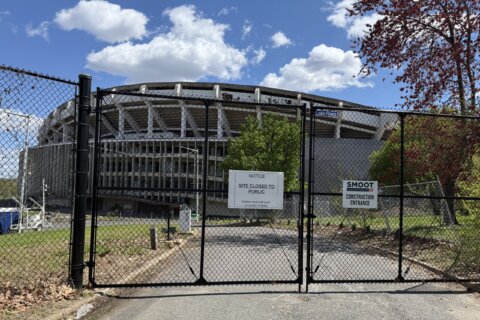
Impassioned speakers lined up Tuesday to let the D.C. Council know what redeveloping the RFK Stadium site would mean to them, while opponents pushed council members to negotiate better terms with the Washington Commanders. Another public hearing is scheduled for Wednesday with a first vote set for Friday.
More than 500 people have signed up to speak at this week’s hearings.
The new stadium is projected to cost $3.7 billion, including the development of 6,000 housing units — of which 1,800 will be designated as affordable housing — and retail space and parkland across the 174-acre RFK campus.
The District would contribute $1 billion, while the team would fund the remaining $2.7 billion.
D.C. Mayor Muriel Bowser first announced a stadium deal with the Commanders in April, with a July 15 deadline for council approval. But concerns from council members, including D.C. Council Chair Phil Mendelson, led to a delay and a renegotiation of terms with the team.
Ed Lazere, who’s on the executive committee of the No Billionaires Playground coalition, said during Tuesday’s hearing the subsidy over the life of the deal is actually much higher than $1 billion.
“We appreciate the steps that you have taken to shift some revenues from the team to the District, but so much more is needed. The mayor’s stadium deal would cost the District $8.4 billion over 30 years, and chairman Mendelson’s plan is just 12% better — $7.4 billion.”
Lazere said it’s nearly four times larger than any other stadium subsidy in U.S. history.
If the deal gets the seven votes needed to pass a first vote, a final vote is expected in September. Demolition and construction could begin by 2026, with the stadium potentially opening by 2030 if it gets the green light.
Fifth generation Ward 8 resident Ramona Barber spoke before the council Tuesday in favor of the deal.
“I have deep roots in this city and I can still remember the days when the D.C. interhigh football championship games were held at RFK. Those games brought the entire city together — families neighbors, alumni — all united in pride for our schools and our community.”
Barber said this deal, and the redevelopment of the site, is about more than football.
“It’s about building affordable housing that allows families to stay in the neighborhoods they’ve called home for generations. It’s about creating culture spaces where our stories are told, our talents are showcased and our communities feel seen. It’s also about boosting the local economy, creating jobs, driving revenue and giving residents more options for safe, year-round entertainment right here in D.C. We deserve that. Wards 7 and 8 deserve that.”
Under the revised proposal, Mendelson’s office estimates $414 million in revenue for D.C. over a period of 30 years, and another $260 million from revenue collected via nonstadium event day parking.
Ebony Payne, who sits on an Advisory Neighborhood Commission that represents the Kingman Park neighborhood, expressed concern about the addition of parking garages for the stadium crowds.
“We are fighting so that Kingman Park does not become Kingman parking lot. The proposal would direct over 5,000 cars directly to our neighborhood, and it would destroy our quality of life,” Payne said.
Mendelson’s office also announced a transportation improvement fund to the tune of $20 million per year. That money would fund any “Metro and highway enhancements” for the stadium site. Mendelson said the funds could go toward a second Metro station in the neighborhood to address future capacity issues.
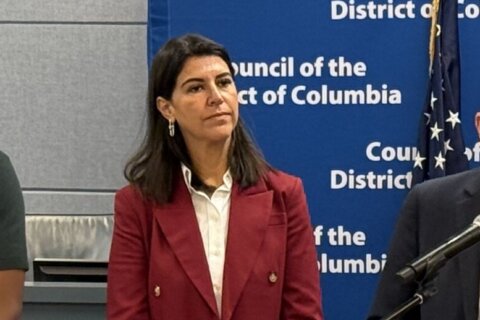
While Mendelson said it is important to hear from the public, he said he doesn’t expect testimonies ahead of the vote to lead to financial changes in the deal.
In addition to opponents speaking against the deal during the hearing Tuesday, more opponents gathered outside the Wilson Building while the hearing was taking place.
“We need a better deal because this ain’t it,” Ward 7 Advisory Neighborhood Commissioner Patricia Stamper said.
Stamper told the crowd of protesters the city’s portion of the funding for the stadium campus development would be better spent on more affordable housing, recreation sites and retail.
One D.C. advocate for recreation opportunities spoke in favor of the deal during the meeting, saying it would result in facilities to uplift the community surrounding the RFK site.
“The plan for the new stadium and new recreation facility proposed will help fellow Ward 7 and east-of-the-river youth build stronger and healthier relationships in their community,” said Andre Lee, president of the Senators Satchell Paige Little League.
Lee said there were parts of the deal his organization didn’t agree with.
“But we do think the good outweighs the bad. That’s why we strongly support bringing the Commanders home.”
One opposition group, “Homes Not Stadiums,” is pushing to establish a ballot initiative that aims to restrict the mayor from leasing or licensing the RFK Stadium land.
There’s also the threat of resistance from the federal government. President Donald Trump has said he may disrupt the deal if the Washington Commanders don’t return to their previous name, which was considered offensive to Native Americans.
Wednesday, officials with the city and the Commanders are expected to present information about the stadium deal’s economic impact to the council.
In posts on X, Bowser said, “RFK isn’t just about a stadium,” and “DC wants the Commanders home.”
Council member Robert White also said in a post on X, “We all want football back at RFK, but not if D.C. residents pay the price.”
WTOP’s Mike Murillo, Will Vitka, Jeffery Leon, Dan Ronan and The Associated Press contributed to this report.
Get breaking news and daily headlines delivered to your email inbox by signing up here.
© 2025 WTOP. All Rights Reserved. This website is not intended for users located within the European Economic Area.