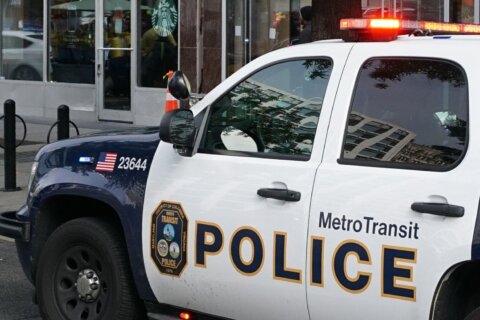
Editor’s Note: The murder of Sherry Crandell was the focus of Season 2 of WTOP’s American Nightmares podcast, originally released in 2021. Host Paul Wagner has just released two new episodes in the wake of the case being solved in November 2025. The episodes contain exclusive interviews with the local detectives and FBI agents who solved the case, and reaction from Crandell’s three children. Listen to the entire podcast now on all podcast platforms, including Apple and Spotify. Below, Paul discusses what it’s been like to cover this case for the past two decades.
One day a few years ago, I picked up the newspaper and, as I was thumbing through it, landed on the astrology page.
I don’t normally look at it, but it happened to be my birthday and my horoscope said, “You’ll be doing some sleuthing. There is a mystery you’re determined to solve.”
Well, that fit like a glove. I immediately inserted the quote on top of my X profile page, where it sits to this day.
I love a challenging mystery and cold case homicides are the lifeblood of my career.
In 1981, right out of college, I came to D.C. determined to be a reporter. It took me a while to get my feet on the ground, but I eventually landed in a place that would let me ply my trade — telling stories that mattered, mysteries that had baffled detectives and left grieving families looking for answers.
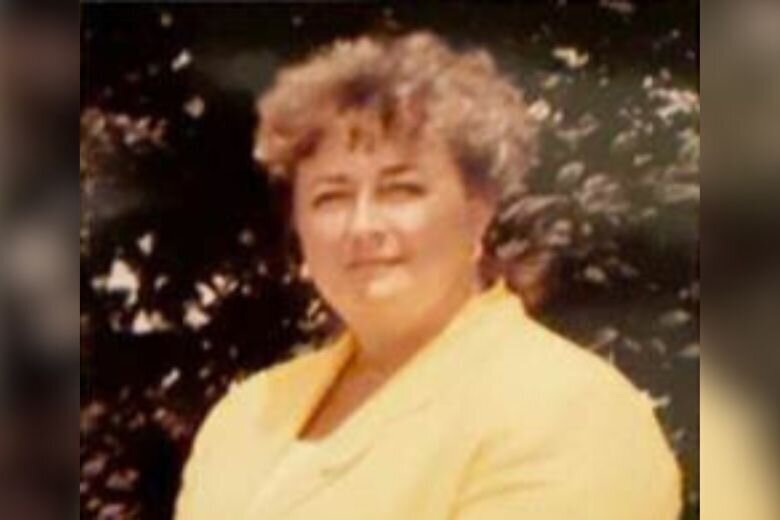
That’s when I met Tiffany Crandell and Detective Bernie Nelson. It was 2003, and I profiled the murder of Tiffany’s mother, Sherry Crandell, in a feature on Fox 5 in D.C. So many things stuck with me from that case; police had DNA recovered from the crime scene but couldn’t link it to anyone.
I put a spotlight on the case again in 2014 on the same station, but despite my hopes that someone would come forward with new information, nobody did.
By 2020, I had moved on from my job at Fox 5 and began thinking of telling Sherry’s story on a podcast. I hadn’t spoken to Tiffany in quite some time, but she was on board when I reached out and told her my idea.
Her brother Darren, though, pushed back. He was worried about social media and the mean things people might say. He didn’t want to do it. But after talking with Tiffany, Darren eventually came around to the idea and agreed to take part. Luke, the youngest member of the family, was also on board.
Detective Bernie Nelson, the lead investigator on the case, also needed convincing. He was skeptical, had never listened to a podcast and wondered who the audience would be.
Eventually, Bernie came around and convinced his supervisors at the Prince George’s County Police Department it was worth a shot. The department agreed to cooperate and I began to dig in on a case that had shadowed me since 2003. The podcast, of course, would eventually come to fruition as Season 2 of WTOP’s American Nightmares series.
Listen to Season 2 of the American Nightmares podcast now on all podcast platforms, including Apple and Spotify.
Jaw-dropping new information
I spent the summer of 2020 gathering interviews and writing the story. The first thing I learned was, that year, the department had decided to try and solve the case using genetic genealogy. The second thing I learned made my jaw drop.
For more than 20 years, the police had kept a secret; there was a witness to the crime. A member of the cleaning crew walked in on the attack after hearing screams coming from Sherry’s office.
The witness, Edna Brown, died well before I had a chance to interview her myself, but police had her statement and a description of the killer on videotape. Detective Nelson let me use it in the podcast.
Edna told investigators the man who raped and strangled Sherry was wearing a white lab jacket and had a stethoscope in his pocket. She said he was a man in his 40s with gray hair on top. She didn’t know if the man was hurting Sherry or helping her, so she kept quiet. Another member of the cleaning crew walked into Sherry’s office and called for help.
The story had legs. As I dug deeper, I found people who were willing to tell me about the DNA dragnet the police carried out at the hospital. Figuring the killer must have some connection to the hospital, Nelson and a squad of investigators began asking all the men who worked there to voluntarily provide a sample of their DNA.
It was controversial, and it didn’t move the case forward. The killer would remain unknown for years to come.
After partnering with WTOP and editing six episodes, with the help of WTOP Director of News and Programming Julia Ziegler, we had a heck of a story to tell. Season 2, which we named, “Murder in a Safe Place,” launched in February 2021 and immediately became a top podcast on Apple.
Listen to Season 2 of the American Nightmares podcast now on all podcast platforms, including Apple and Spotify.
After the first episode aired, I got a call from Tiffany, who told me she and her two brothers would like to meet with me. They were pleased with how the story turned out and wanted to thank me. So in the winter of 2021, at a restaurant in downtown Bethesda, I sat with the Crandell kids and talked for a while before Tiffany handed me a gift bag.
Inside was a thank you card and a figurine in the shape of a guardian angel. Other families had thanked me for telling their stories over the years, but I had never received anything like this.
That angel sits on my desk to this day.
It was almost five years ago that I had that meeting with the Crandell kids. I had always hoped we would get to do more podcast episodes on this case. In fact, Nelson promised me we would if the case was ever solved.
When he called me in November to tell me police were closing the “hospital case,” I felt a wave of emotion. I was happy for him, the most dogged detective I had ever known, that his work paid off after 27 years of nothing after nothing after nothing.
His decision to use genetic genealogy paid off. A team of genealogists from the FBI and Prince George’s County police solved the case.
And Nelson kept his promise. In the wake of the case being solved, we have produced two new episodes for the podcast. Those episodes are out now on all podcast platforms. Just search “American Nightmares” and listen to Season 2. Not only do listeners get to hear from Nelson, but the genealogists who helped him solve the case were made available for an exclusive interview in the podcast. The Crandells also spoke with me about how the closure of the case has impacted their lives. I also take a deep dive into the killer’s life and learn new information that hasn’t been reported anywhere else.
Baari Shabazz, a man who died in 2019, was positively identified as Sherry’s killer. The definitive link came from a close family relative whose DNA provided the key to the case.
The FBI team told the Crandells they were “energized” by the podcast. When the search looked grim and the team had hit a brick wall, they would think about Sherry and her kids.
When I met with FBI special agent Mark James and analyst Stephanie Mellinger, they also told me the podcast inspired them to keep going, keep reading obituaries and eliminating people from the family tree until they had their suspect.
It was gratifying, but as I sit here today, on the anniversary of Sherry’s death, I’m thankful for everyone who worked on the case. A “ton” of people, Nelson said, were determined to find answers.
Families will tell you it’s the not knowing that gnaws at you: Who did this? Why? What kind of person would do something so vicious?
After 28 years, the Crandells finally have some of those answers.
Listen to Season 2 of the American Nightmares podcast on all podcast platforms, including Apple and Spotify.
Get breaking news and daily headlines delivered to your email inbox by signing up here.
© 2026 WTOP. All Rights Reserved. This website is not intended for users located within the European Economic Area.