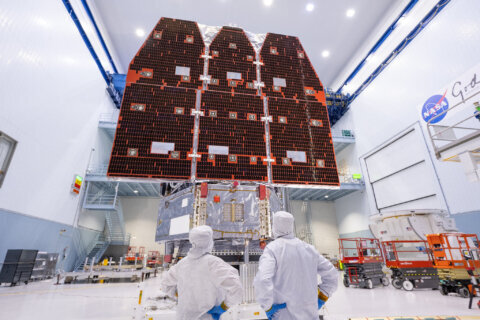
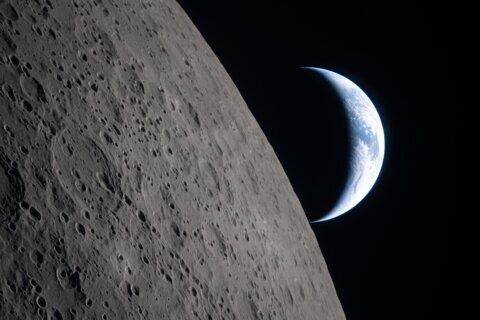
NASA is building a first-of-its-kind mission to explore another world, and part of it is happening in Greenbelt, Maryland.
The mission called “Dragonfly” aims to explore how the building blocks of life might come together in environments beyond Earth.
Dragonfly is a flying spacecraft that will be sent to Saturn’s moon Titan and is designed to travel from place to place studying the surface.
Chief of NASA’s Planetary Environments Lab Charles Malespin, who’s working on the mass spectrometer for the mission, said it’s unlike anything before.
“It’s an octocopter. It’s about the size of an SUV, so it’s huge,” he said.
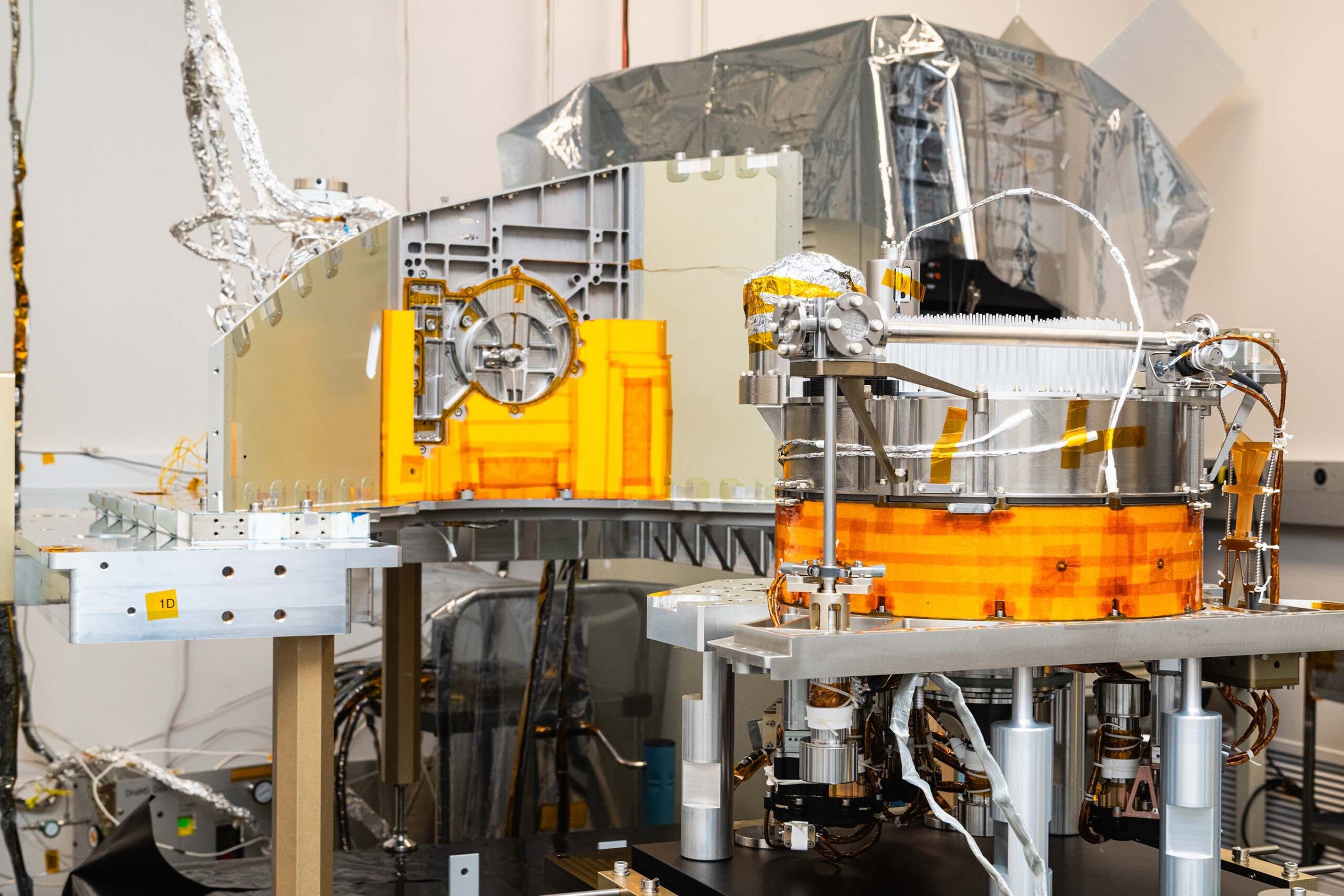
Inside a clean room at NASA’s Goddard Space Flight Center in Greenbelt, scientists covered head to toe in white hazmat suits are building and testing the hardware, including the mass spectrometer, also known as DraMS, that will analyze samples drilled from Titan’s frozen ground. The instrument being built there will help identify the chemical makeup of Titan’s surface.
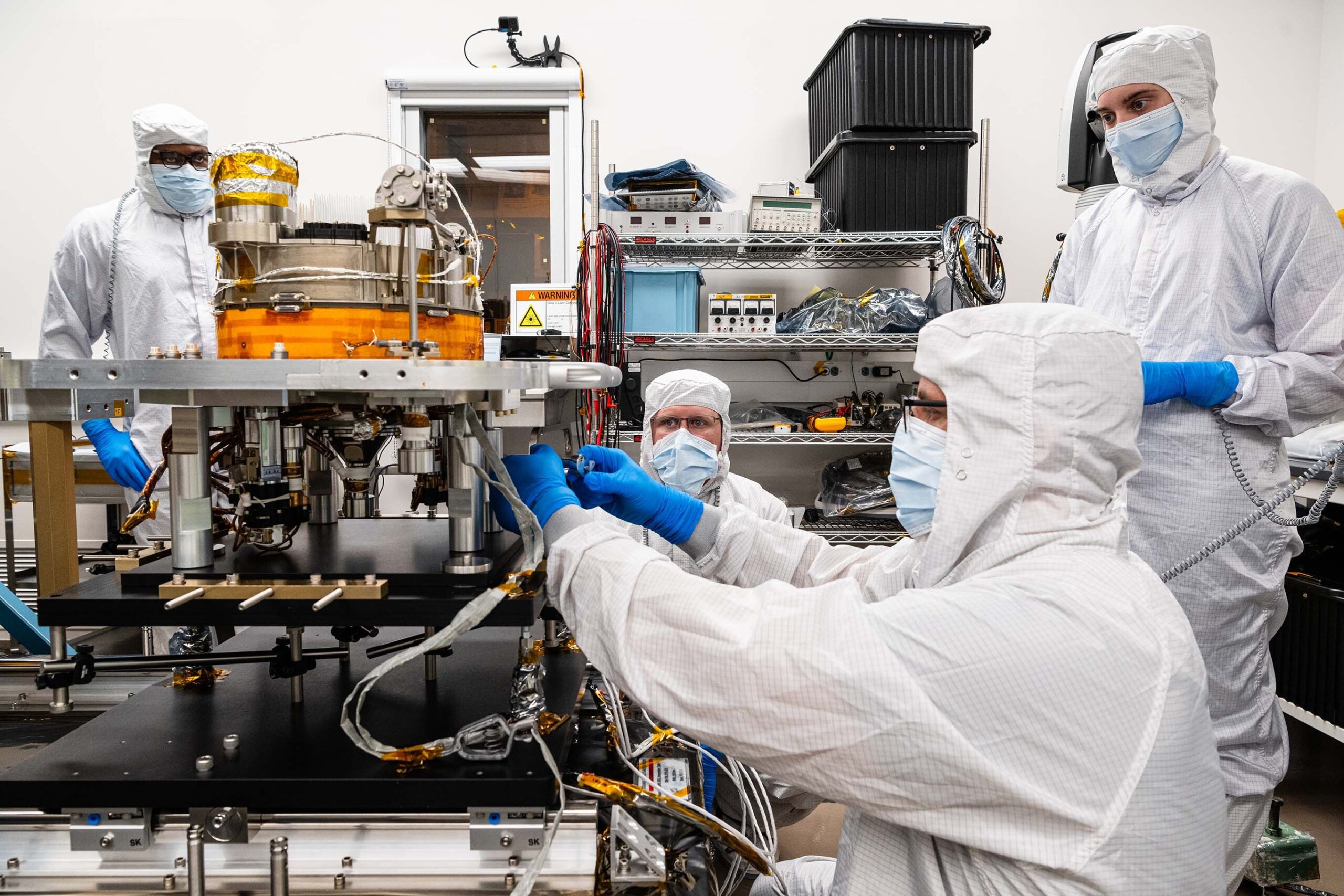
Malespin explained how the instrument works: “It’s essentially a chemistry suite built into one small instrument.”
Scientists said Titan is packed with organic material, the ingredients for life, but it’s also extremely cold — nearly 290 degrees below zero. Scientists said they believe Titan may resemble conditions similar to early Earth before life began.
“We’re not a life detection mission,” Malespin said.
Melissa Trainer, Dragonfly deputy principal investigator and DraMS instrument lead, agreed the mission is focused on chemistry, not finding life itself.
Instead, scientists are trying to understand what happens next and how chemistry could lead to life.
Trainer said Titan offers a rare opportunity to study that process.
“Titan is like the best example that we have that we can get to, of a global environment where you’ve got an active chemistry cycle, you have all the surface processing and those things that may have been the magic sauce on Earth, like billions of years ago. We could be seeing the early stages of that on Titan, or parts of that going on in Titan,” she said.
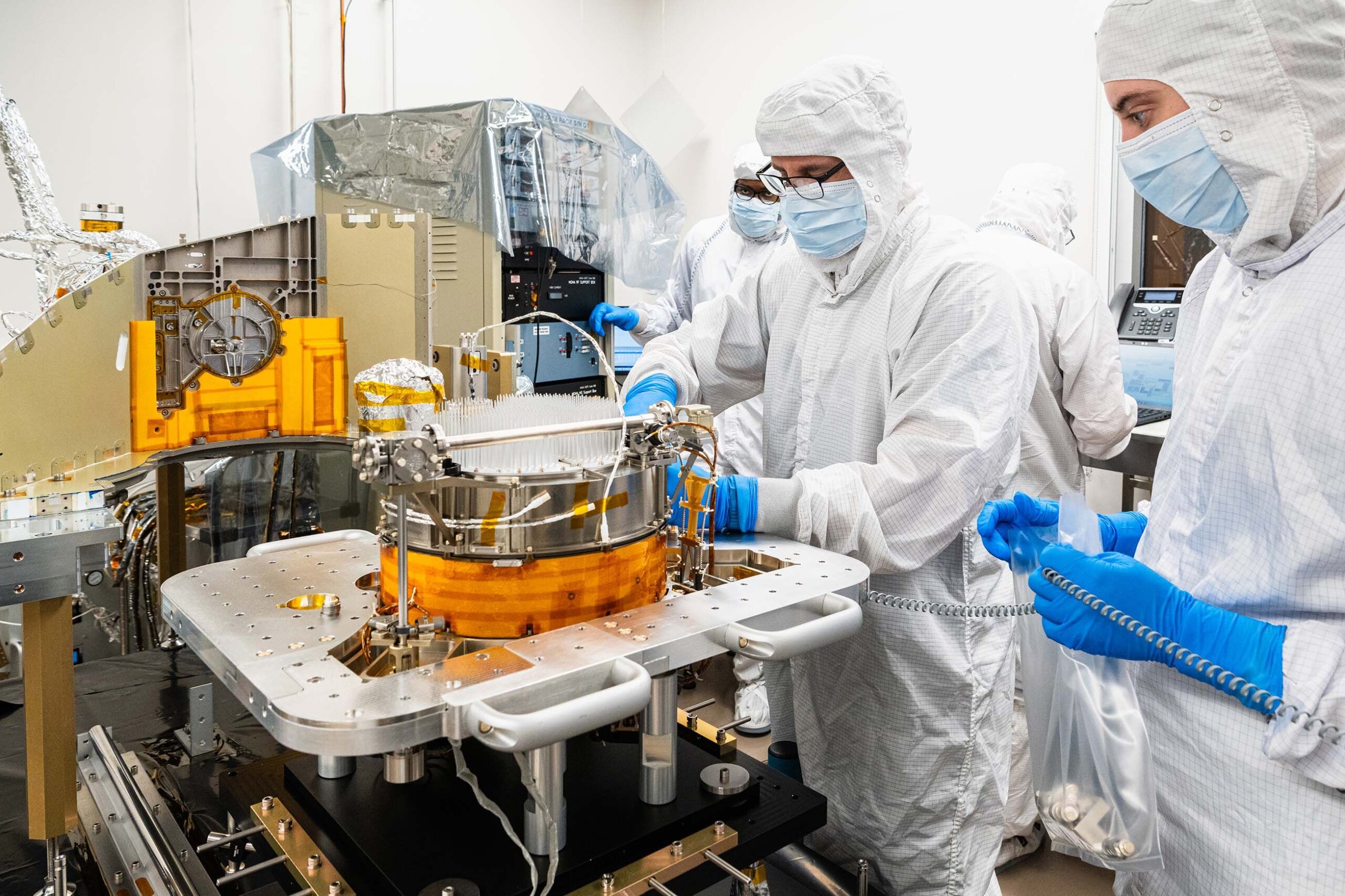
Malespin said a comet impact could heat Titan and create a kind of chemical soup, letting scientists see how those ingredients might come together.
“All we’re saying is that you have all the ingredients to start building and going up the chain to determine, if you had another catalyst, if you had a more conducive environment, then perhaps you could have life in this. Unless we have a little organism crawling on the camera,” he said.
Dragonfly’s development is led by the Johns Hopkins Applied Physics Laboratory in Maryland, with support from NASA centers, including Goddard.
Shannon MacKenzie, planetary scientist at the Johns Hopkins Applied Physics Laboratory, said Titan’s environment actually helps make that possible. She said Titan’s dense atmosphere will help Dragonfly move around.
“Titan’s atmosphere is much denser than Earth’s, and the gravity is lower, which makes it easier for a vehicle like Dragonfly to fly,” MacKenzie said.
That mobility is key to the mission’s success, MacKenzie said, allowing Dragonfly to study a range of different environments instead of staying in one place.
Dragonfly is expected to launch no earlier than July 2028 and will take about six years to reach Titan. Once there, it will fly, land and repeat, taking samples across miles of terrain to give scientists new clues about how life might begin.
Even without searching for life directly, the mission could reshape what scientists know about how life begins.
Get breaking news and daily headlines delivered to your email inbox by signing up here.
© 2026 WTOP. All Rights Reserved. This website is not intended for users located within the European Economic Area.