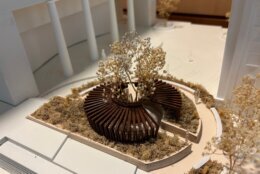
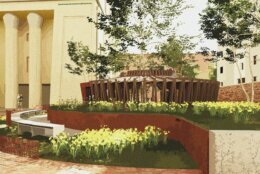
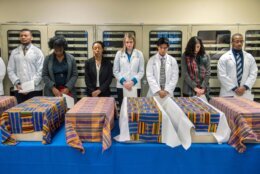
Virginia Commonwealth University will spend $3.6 million on a memorial for dozens of people, most of African descent, whose bodies were stolen from their graves, dissected by medical students and then dumped in a forgotten well.
The Richmond school’s board of visitors voted Friday to fund what VCU calls the East Marshall Street Well Project, an effort to right wrongs committed more than a century ago. Construction of the memorial and burial site are expected to start in summer of 2027.
“Years ago, VCU initiated this journey because we recognized a profound obligation to restore the human dignity of the people who were not afforded respect in their physical existence,” VCU President Michael Rao said in a story about the effort posted on the school’s website. “The East Marshall Street Well Project’s sacred mission is to ensure every life is honored with the permanence and reverence they deserve.”
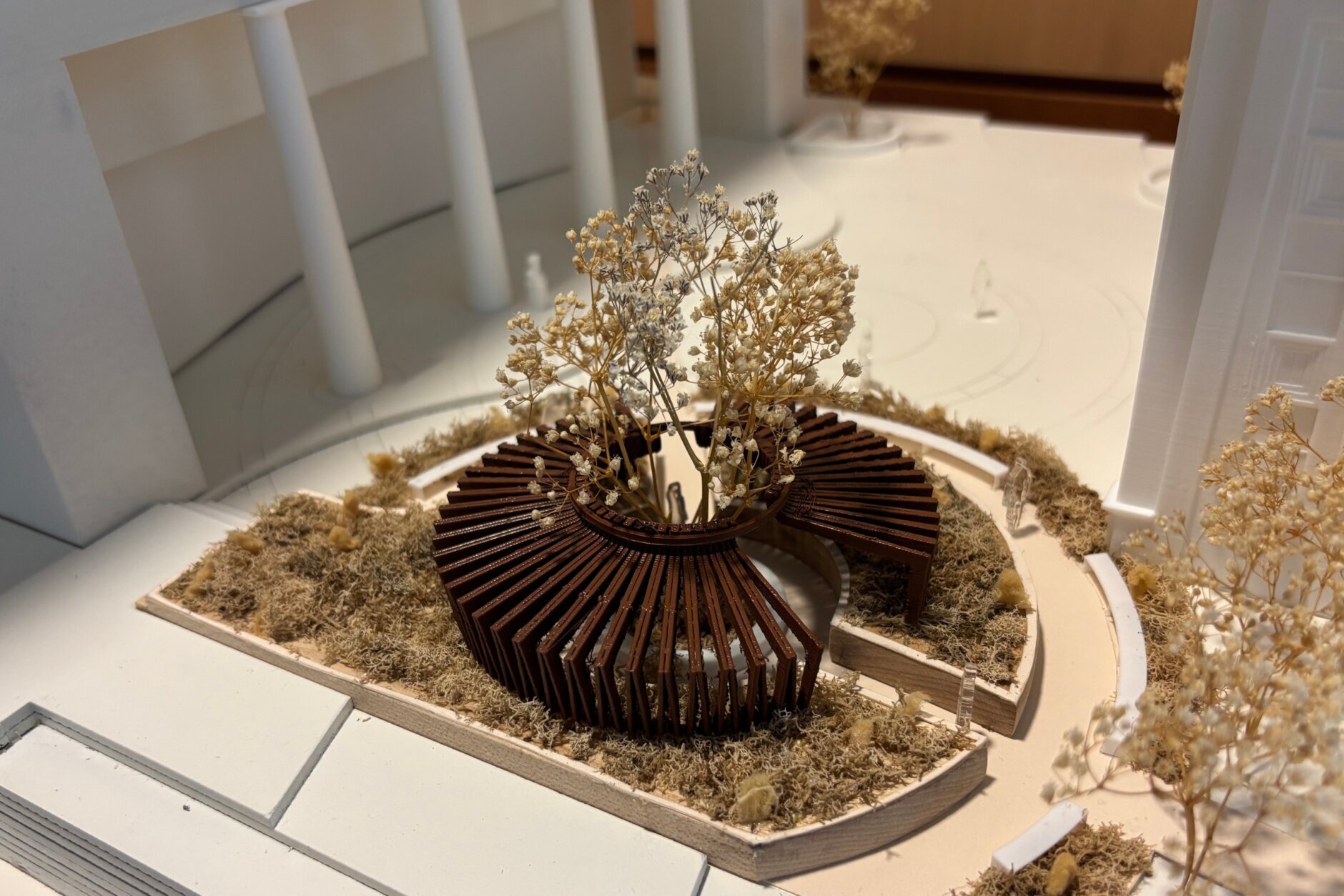
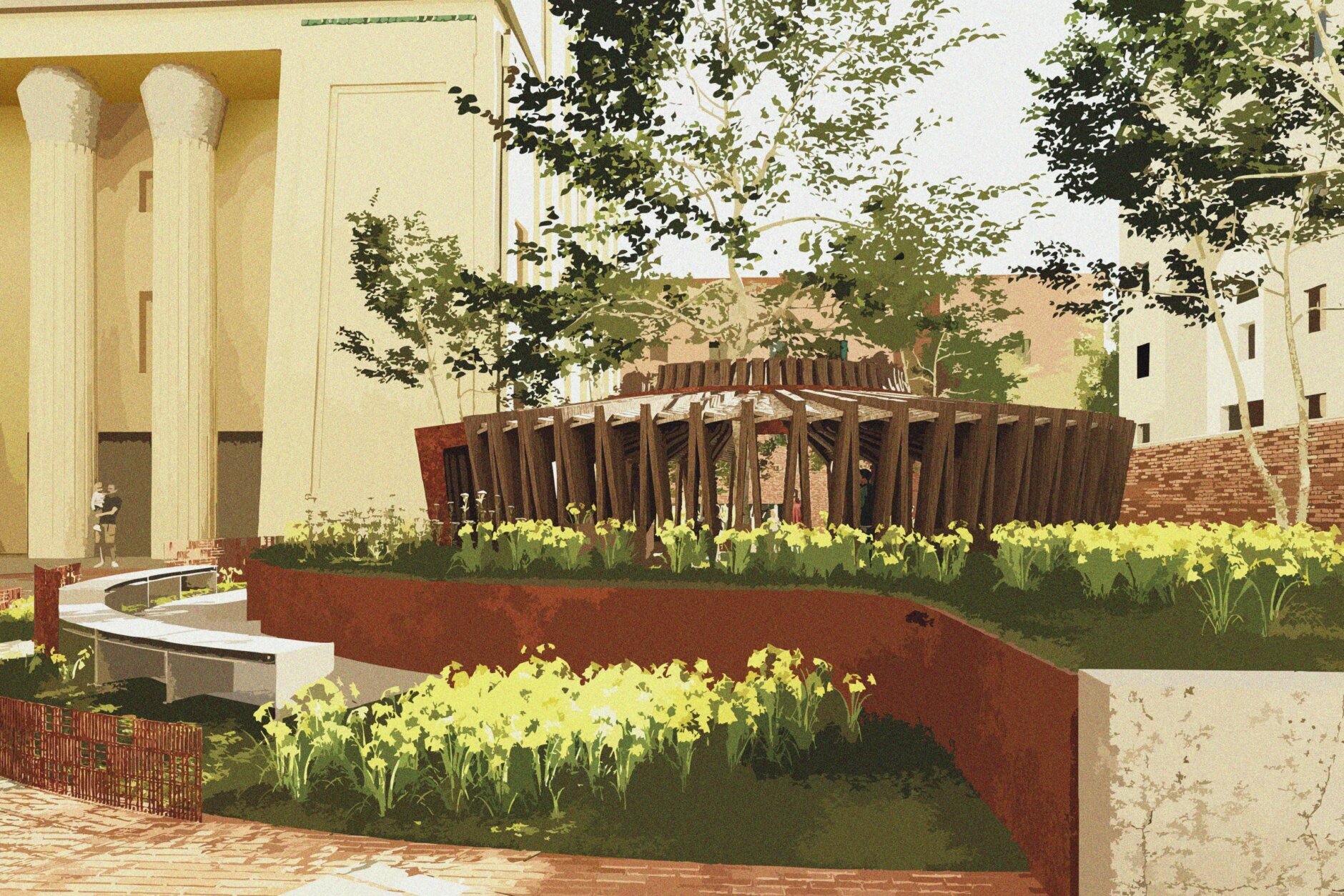
The circular memorial will feature a “unity chamber” inspired by the Toguna structures of Dogon culture in West Africa. Its design “is intended to encourage humility and thoughtful discussion by purposefully having a low roof to facilitate seated reflection,” said Stephen Davenport, assistant vice president for social and economic development in the VCU Division of Community Engagement and the administrative lead for the project.
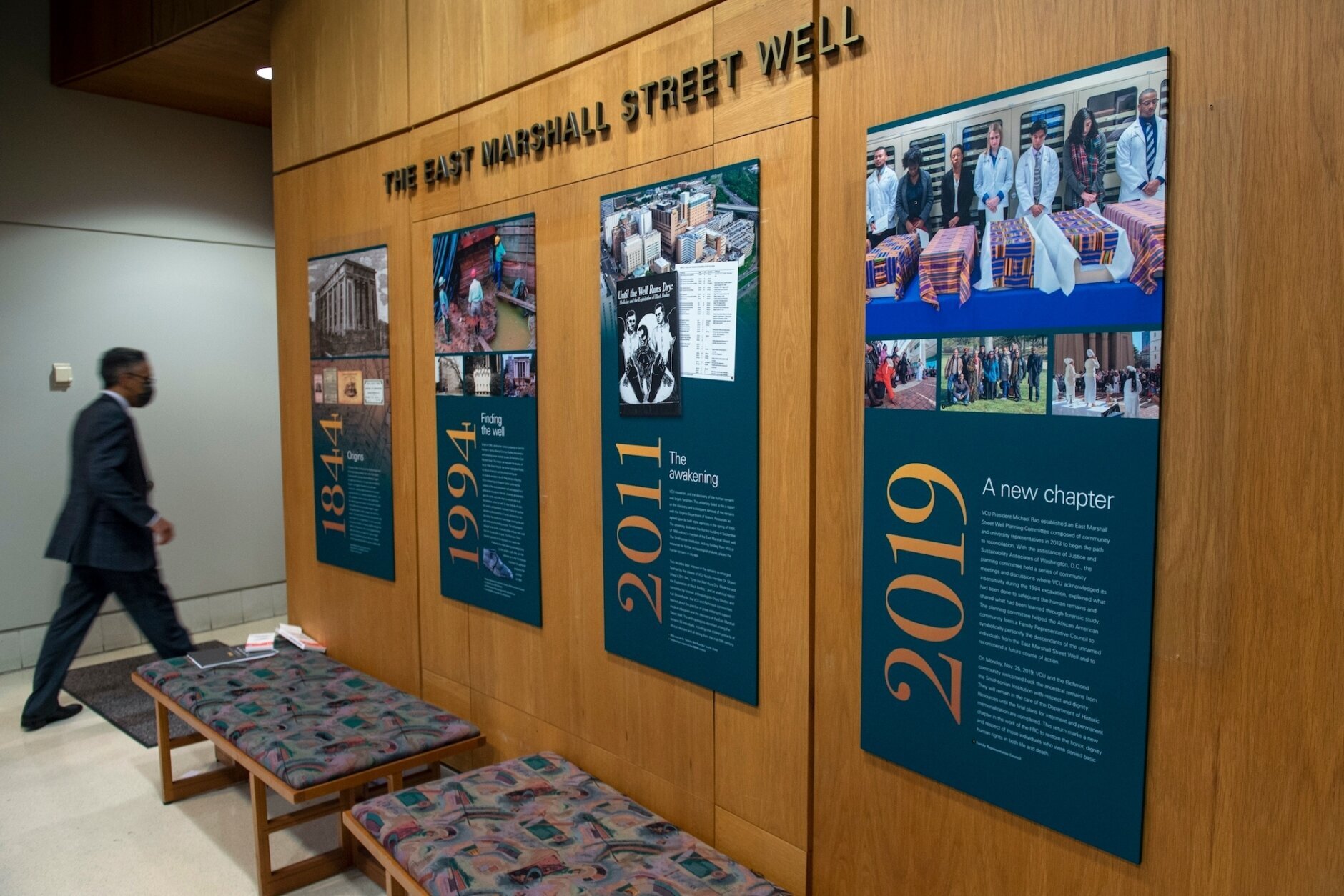
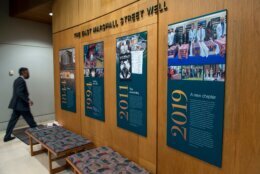
Workers in 1994 uncovered a brick-lined well containing human bones during construction of the Kontos Medical Sciences Building on the VCU medical center campus. Sifting through mud, researchers also found hair and skin, as well as remnants of leather shoes and glass bottles.
Based on archival records from the Medical College of Virginia, researchers believe the remains were dumped in the well between the 1840s and 1860s.
“A preliminary anthropological analysis of the recovered human remains showed some postmortem signs of dissection and amputation consistent with anatomical training and surgical procedure practice,” VCU researchers concluded in a paper published this year. “The constant demand for cadavers led to routine grave robbing practices, mainly targeting African American burial grounds, to supply the medical school.”
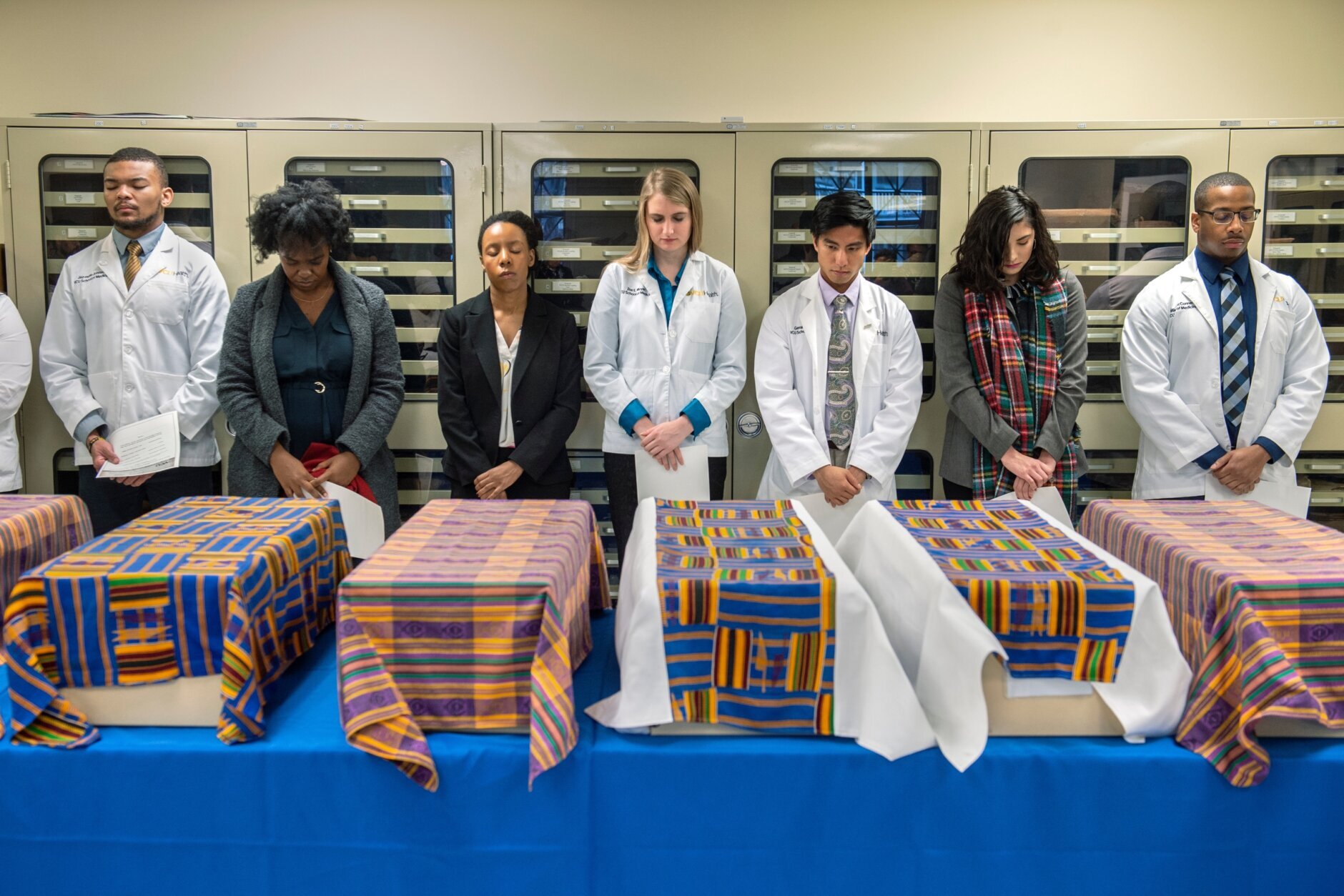
Archaeologists were given a short time to examine the burial site after the 1994 discovery. Before construction continued, the remains were removed by backhoes and sent to the Smithsonian National Museum of Natural History. Initial analysis estimated that a minimum of 44 adults and nine children were recovered from the well.
Interest in the remains was renewed in 2011 after the release of a film by a VCU professor and a separate report by two forensic anthropologists.
DNA study results released in February identified at least 43 distinct adults and three juveniles of “predominantly African heritage,” most likely from Central-West Africa. Several sets of remains bore traces of European ancestry.
Skeletal analysis “provided insight into the heavy labor endured by these individuals during their lives and the disregard for their bodies after death,” the study found.
The use of the bodies of people of African descent for medical research in Europe and the U.S. stretches back centuries. And it was frequently done without the expressed permission or knowledge of descendants.
In 2024, the University of Pennsylvania laid to rest the remains of 19 Black Philadelphians it kept for research, including studies once used to promote white supremacy through racist scientific theories.
The same school also discovered it had the bones of people who died in a 1985 police bombing of the headquarters of a Black liberation group in Philadelphia. City officials had assured the victims’ families that they had turned over all of the remains that were collected, according to lawyers who represented the families.
___
Associated Press reporters John Raby and Aaron Morrison contributed to this report.
Copyright © 2026 The Associated Press. All rights reserved. This material may not be published, broadcast, written or redistributed.