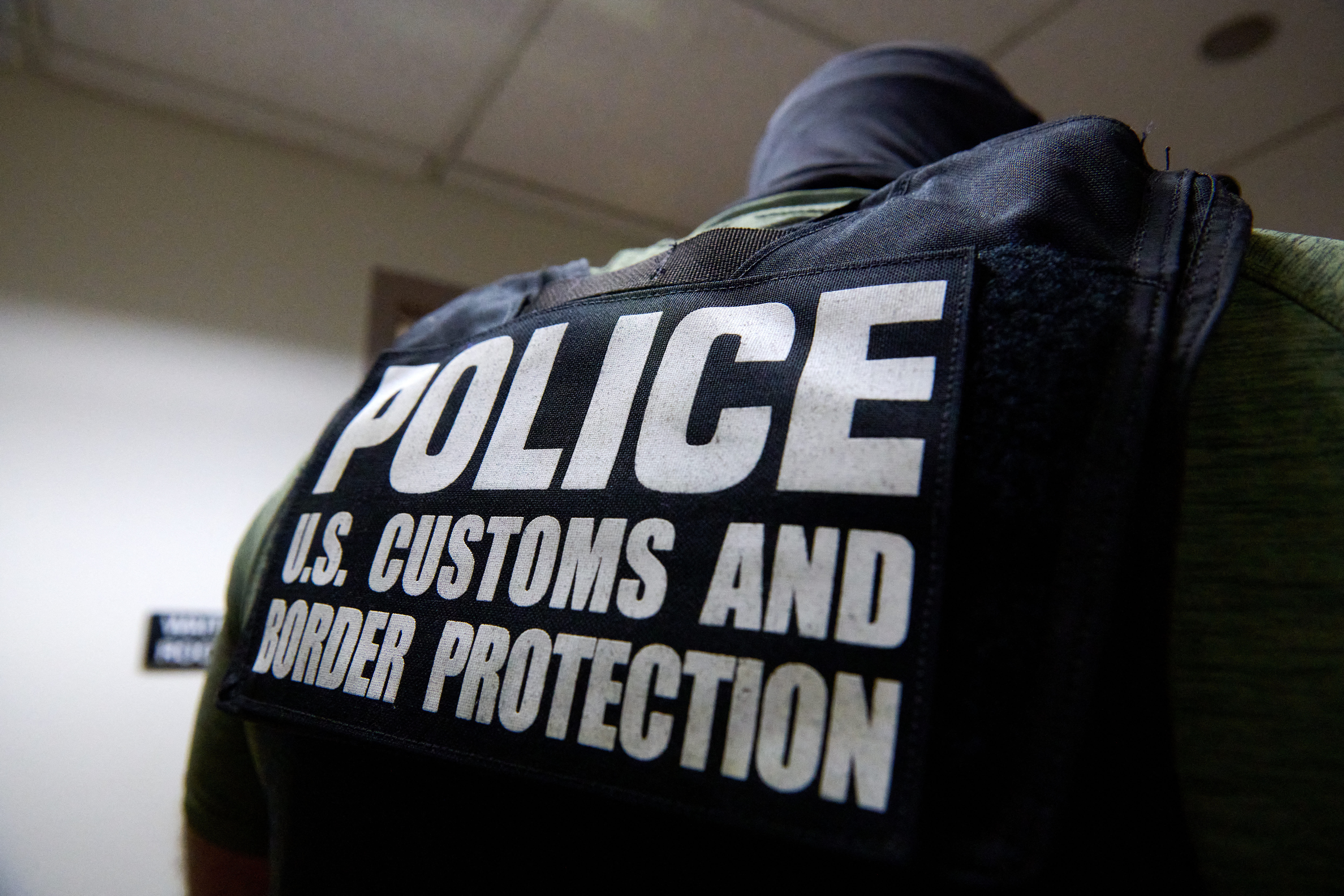
Federal immigration enforcement agents will need a judicial warrant before stepping into the nonpublic areas of Montgomery County buildings, under a law passed Tuesday by the Montgomery County Council.
The unanimous vote puts the County Values Act on track to head to County Executive Marc Elrich’s desk. He is expected to sign the bill, which would become law after 91 days.
The council also heard testimony on separate ICE-related legislation. The ICE Out Act would prohibit private companies from opening immigrant detention centers in the county. The Vehicle Recovery Act would make it easier for family members of detained individuals to recover vehicles left behind after arrests.
All three bills were introduced earlier this month.
The County Values Act
Bill 3-26, the County Values Act, prohibits federal immigration officers, including those with U.S. Immigration and Customs Enforcement, from entering county buildings without a valid judicial warrant. Agents are also barred from using county-owned parking lots and garages as staging areas.
In addition, the bill mandates clear guidance and training for county employees.
“The training, per the bill, must include sample scripts covering various scenarios involving potential ICE interaction,” Council member Kristin Mink said during Tuesday’s session. “These are very high-stakes, high-pressure situations, and we need to make sure that all of our staff feel fully prepared.”
Mink, who sponsored the bill, said it is modeled after a statewide law passed in Maryland last year, but makes clear that it covers all county-owned and county-controlled property.
The legislation also directs the Montgomery County executive to set up an online portal for staff to report any possible violations.
Reports collected by the county through the portal may be used by the county attorney’s office to enforce the new law, Mink said.
The ICE Out Act
The council is also considering a bill that would block privately owned companies from opening immigration detention centers in Montgomery County.
If passed, Bill 13-26, or the ICE Out Act, would cover both new construction and any attempt to convert an existing site.
Supporters who testified at the council hearing described the firsthand community impacts at local schools, religious organizations and workplaces.
“We don’t need more detention centers. We need this nightmare to end,” Nicole Isern, a resident representing Montgomery County Immigrant Rights Collective, testified.
“It is not possible for Montgomery County to exclude ICE and all its actions that harm so many of our residents. But this is an exclusion that is possible and flows from the commitment to the safety and well-being of all residents,” said Susan O’Callaghan Davis, a retired teacher and librarian.
Only one witness spoke against the bill, which is scheduled to be reviewed during an April 10 work session of the council’s Economic Development Committee.
Reclaiming vehicles after federal detentions
Another bill under consideration by the county council would give people more ways to prove they should be allowed to pick up a car, even if their name is not on the title.
Right now, if the registered owner is not available and family members are not listed on the car’s title, it can be nearly impossible for anyone else to retrieve the vehicle. Some supporters want the county to widen the types of documentation accepted by towing companies to include tax returns that show family relationships, or student IDs from local schools.
Supporters of the Vehicle Recovery Act told council members that ICE and other immigrant detentions have created a growing need for a legislative response.
“Since the beginning of this year, we have responded to over 50 abandoned cars,” said Ariel Woods, a Takoma Park resident who works with the Montgomery County Immigrant Rights Coalition.
If advocates don’t move quickly enough to prevent the vehicle from being towed, the car could sit in an impound lot for weeks or even be sold off, and families lose what might be their main way to get to work, doctors’ appointments or school.
“We’re trying to do it before the tow trucks get there,” Woods said. “One reason is that ICE is also trying to get these cars towed as fast as they can. One example is where they took the car and then parked in front of a fire hydrant and left the lights on so the battery was dead by the time the family got there. In another case, they put it in front of a fire station so that it had to be towed immediately.”
A joint committee work session is tentatively scheduled for April 15.
Get breaking news and daily headlines delivered to your email inbox by signing up here.
© 2026 WTOP. All Rights Reserved. This website is not intended for users located within the European Economic Area.