As the United States marks its 250th anniversary, WTOP presents “250 Years of America,” a multipart series examining the innovations, breakthroughs and pivotal moments that have shaped the nation since 1776.
AAR is proud to partner with WTOP to bring you this series.
More than 400 years before it was built, the Panama Canal was just an idea to connect the Atlantic and Pacific oceans by cutting a shipping lane through the narrow 51-mile Isthmus of Panama.
When it finally opened in 1914, it shaved weeks off global shipping routes and saved millions of dollars.
Before the canal, ships had to travel thousands of miles south to Cape Horn, at the tip of South America, where the two oceans meet.
Several nations tried — and failed — to build it.
France’s attempt in the late 1800s collapsed under the weight of mountainous terrain, rising costs and deadly disease.
“The French lost more than 20,000 laborers, engineers and nurses to yellow fever and malaria,” said historian and Theodore Roosevelt interpreter Joe Wiegand.
By 1903, then-President Theodore Roosevelt wanted the canal — and a stronger U.S. presence on the global stage.
Two routes were under consideration: Nicaragua or Panama, then a restive region of Colombia.
Roosevelt backed Panama.
The U.S. Senate approved the plan, but Colombia rejected it.
Soon after, Panamanians revolted. With support from Washington — and U.S. warships nearby — Panama declared independence. Days later, the new government approved the canal deal that Colombia had turned down.
Critics called it “gunboat diplomacy.”
George Washington University professor Noel Maurer, author of “The Big Ditch,” said Roosevelt changed history.
“Teddy Roosevelt intervened at a time when the canal looked like a disaster,” Maurer said. “He essentially created the nation of Panama. Without him, it likely would still be part of Colombia.”
The project was not without controversy.
Some critics alleged corruption tied to contracts worth $40 million at the time — about $1.1 billion today.
But Wiegand said Roosevelt cemented his foreign policy legacy.
“He believed in speaking softly and carrying a big stick — and that approach carried the day,” Wiegand said.
Construction took a decade.
This time, improved sanitation and engineering dramatically reduced deaths — to about 300 workers, far fewer than during the French effort.
The canal transformed global trade and military strategy.
“The Panama Canal cut the time needed to move naval assets between oceans by about two-thirds,” Wiegand said.
After six decades of U.S. control, the canal’s future shifted.
During the Carter administration, the U.S. agreed to return it to Panama. The transfer was completed in 1999.
Maurer said its strategic value to the U.S. had faded by the 1970s — but has since rebounded.
“In this century, it’s become important again, especially for exports like coal and liquefied natural gas headed to Asia,” he said.
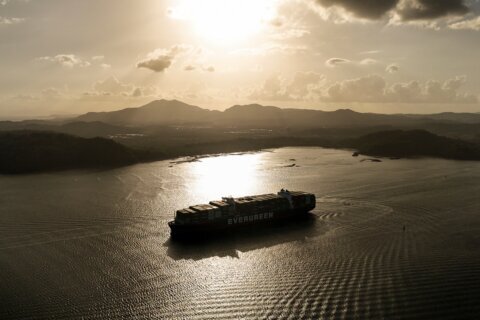
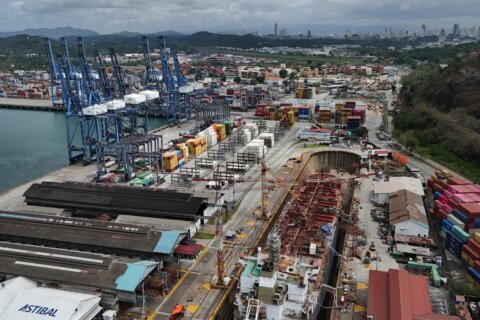
The canal has since been expanded to handle larger, modern ships.
More than a century after opening, it remains a critical artery of global commerce.
“It accounts for roughly 2% of U.S. GDP,” Maurer said. “That may not sound huge, but for a single infrastructure project, it’s enormously significant.”
Get breaking news and daily headlines delivered to your email inbox by signing up here.
© 2026 WTOP. All Rights Reserved. This website is not intended for users located within the European Economic Area.