With Department of Education Secretary Linda McMahon at the helm, the Trump administration’s plans to dismantle the federal agency are underway.
The Newest Developments
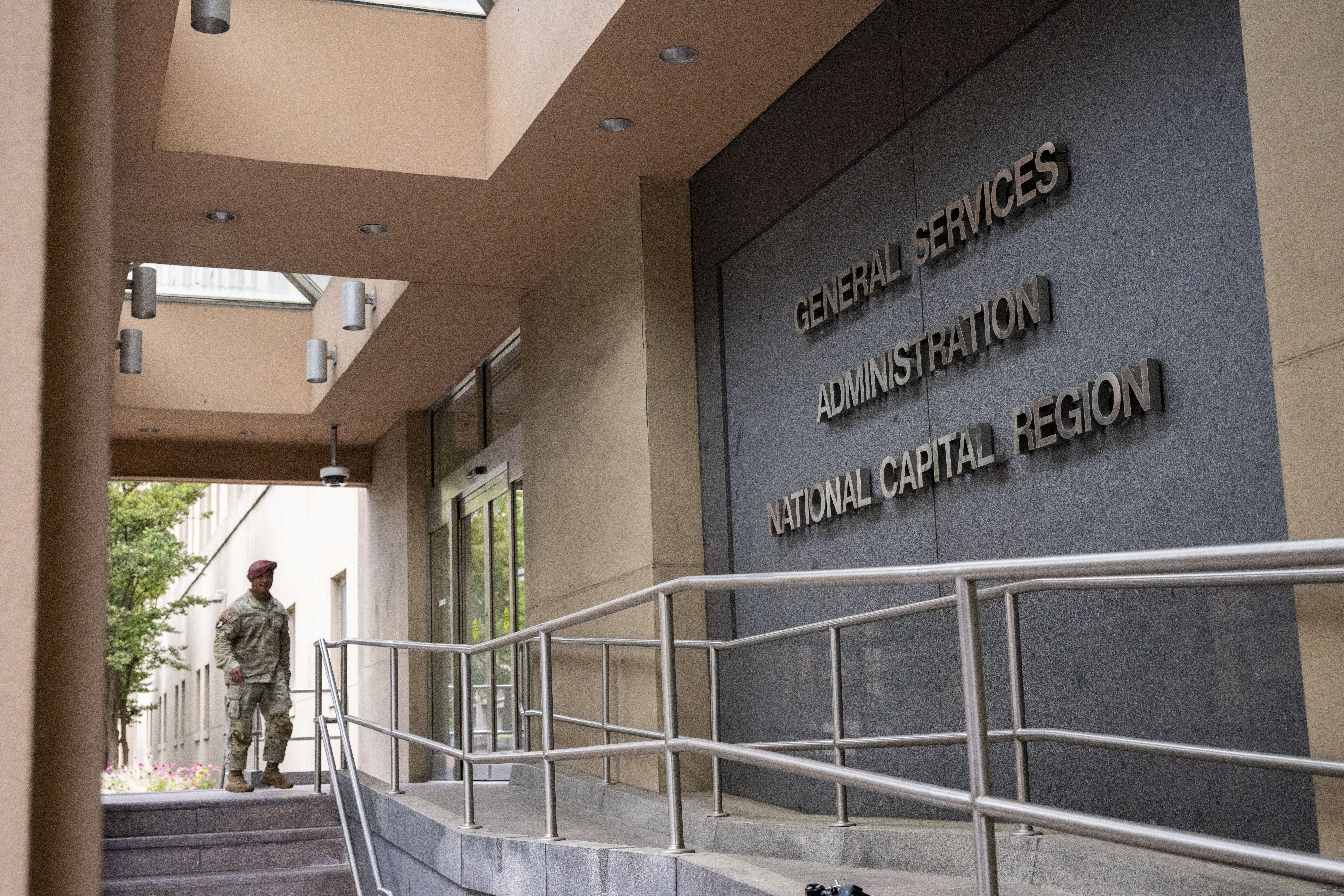
The Education Department announced Nov. 18 that certain programs will be moved to other federal agencies.
As part of these new partnerships, the Department of Labor will oversee elementary and secondary education, along with postsecondary education and workforce development programs like TRIO; Native American education programs will be moved to the Department of the Interior; the Department of Health and Human Services will oversee child care access and evaluate foreign medical school accreditation comparability; and the Department of State will manage international education and foreign language education programs.
“As we partner with these agencies to improve federal programs, we will continue to gather best practices in each state through our 50-state tour, empower local leaders in K-12 education, restore excellence to higher education and work with Congress to codify these reforms,” McMahon said in a press release announcing the changes. “Together, we will refocus education on students, families, and schools — ensuring federal taxpayer spending is supporting a world-class education system.”
Jeanne Allen, founder and CEO of the Center for Education Reform in Washington, D.C., said in a statement that the administration is fulfilling a promise to “disrupt a federal system that hasn’t worked for students in decades” and that “shifting power closer to communities is the right direction.”
But the process “won’t be seamless,” she predicts. “Moving programs to agencies with very different missions requires real communication with governors, state chiefs, community leaders and parents. They need clarity on their new flexibility, how funding can be better used and how to avoid stepping into new compliance pitfalls. These agencies are not going to hire hundreds of new staff and recreate the compliance machinery. The opportunity lies in administering programs cleanly and letting communities determine what works.”
Some say the changes will generate confusion and cause programs to be overlooked.
“Spreading services across multiple departments will create more confusion, more mistakes and more barriers for people who are just trying to access the support they need,” Randi Weingarten, president of the American Federation of Teachers, said in a statement. “It’s a deliberate diversion of funding streams that have helped generations of kids achieve their American dream. And it will undermine public schools as places where diverse voices come together and where pluralism, the bedrock of our democracy, is strengthened.”
Supreme Court Involvement
President Donald Trump signed an executive order March 20 that directed McMahon to “take all necessary steps to facilitate the closure of the Department of Education and return authority over education to the States and local communities while ensuring the effective and uninterrupted delivery of services, programs, and benefits on which Americans rely.”
U.S. District Judge Myong Joun in Massachusetts blocked the order with an injunction May 22, saying the layoffs would “likely cripple the department.” He ordered the department to reinstate any employees who were fired during mass layoffs in March, when half of the workforce was cut as part of what the department called its “final mission.”
A Supreme Court order July 14 paused Juon’s injunction.
In its March statement announcing the cuts, the Education Department said it would “continue to deliver on all statutory programs that fall under the agency’s purview, including formula funding, student loans, Pell Grants, funding for special needs students and competitive grantmaking.”
However, Juon wrote in his May ruling that the “massive reduction in staff has made it effectively impossible for the Department to carry out its statutorily mandated functions.”
According to a July 2025 National Association of Student Financial Aid Administrators survey of more than 500 higher education financial aid administrators, 72% of respondents — up from 59% of 900 respondents in May — have experienced “noticeable changes” in responsiveness, communication or processing times from the Education Department’s Office of Federal Student Aid since March.
There’s been heightened scrutiny of the department over the past few years, with the rocky rollout of the simplified version of the Free Application for Federal Student Aid in 2023 and 2024 and the legal battle over student loan forgiveness under the Biden administration — a new plan that the Supreme Court ultimately struck down.
Congressional Action
Beyond Trump’s executive order, other national Republican lawmakers — such as Rep. David Rouzer of North Carolina, Rep. Thomas Massie of Kentucky, Sen. Rand Paul of Kentucky, Sen. Mike Lee of Utah and Sen. Bernie Moreno of Ohio — have introduced or reintroduced legislation this year to eliminate the department, which only Congress can do since Congress created it.
Here’s what eliminating the Education Department might mean for K-12 and higher education.
What the Department of Education Does and Doesn’t Do
Created in 1979 as a cabinet position under President Jimmy Carter, the Education Department disburses Title I funds to elementary and secondary schools with large low-income student enrollments; collects data on schools; oversees the recognition of accrediting agencies and programs that support higher education institutions; protects students against racial and sex-based discrimination; and manages student financial aid assistance programs, including loans and grants.
The department does not set curriculum or manage what is taught in classrooms; set or enforce state academic standards; establish schools or colleges; or set graduation requirements.
The department awarded $120.8 billion in federal loans, grants and work-study funds in fiscal year 2024 to more than 9.9 million college and career school students, according to an unaudited annual report by Federal Student Aid. Numbers for fiscal year 2025 haven’t been released yet.
Will the Education Department Be Abolished?
Although it’s unclear, it’s not a new idea.
“Republicans have campaigned on getting rid of it and killing the agency since it was created,” says Gloria L. Blackwell, CEO of the American Association of University Women, a nonprofit that advances equity for women in higher education.
That opposition historically arises from a belief that authority to regulate education belongs with the states, since it’s not specifically given to the federal government by the Constitution.
Americans are divided on whether to close the Education Department. In a Morning Consult/EdChoice survey released May 21, 49% of adults somewhat or strongly opposed closing the department, 36% somewhat or strongly supported shuttering it and 15% said they didn’t know or had no opinion. Support for abolishing the department was five percentage points higher among school parents than adults in general.
“Scrapping the Department of Education would be chaotic, complicated, and it would surely result in damage to the smooth running of important programs for K-12 students and those at colleges and universities,” says Kevin Welner, director of the National Education Policy Center and a professor at the University of Colorado Boulder School of Education. “But moving people and programs from the Department of Education to other departments doesn’t in itself change what the federal government does. It’s those other proposals that change what the government does that are likely to be more impactful.”
What Happens to K-12 Education Without the Education Department?
Special Needs Protections
Dissolving the department doesn’t necessarily eliminate the federal education laws that states must follow, notes Weade James, senior director of K-12 education policy for the Center for American Progress, a public policy and research advocacy organization.
For example, two notable policies would remain on the books, so long as Congress continues appropriating money for them: the Elementary and Secondary Education Act, which provides federal funding for K-12 schools; and the Individuals with Disabilities Education Act, which ensures students with disabilities are offered a free education tailored to their needs.
For IDEA funding, the federal government gives money to states based on a formula that factors in the number of students with disabilities. States then distribute that money to local school districts to provide special education services to eligible students, with the expectation that states will also contribute their own money to cover the full cost of services.
About 12% or 13% of the money used for students with special needs comes through federal IDEA funding, Welner says. If the Education Department is dissolved, this money would go to states as block grants — but the federal accountability for compliance could disappear, some say.
“What that means is (school) districts will be responsible for using that money however they choose, and hopefully it is the right way to serve students with disabilities,” James says. “There would be no oversight to ensure that those dollars are actually following and meeting the needs for students with IEPs and 504 plans.”
[College Scholarships for Students With Dyslexia and Other Learning Disabilities]
Title I Funding
Students from low-income families receive help through Title I of the ESEA. During fiscal year 2024, $20.5 billion was allocated for Title I funding. This money is typically used for educational technology, remedial instruction materials, internet and mental health services, among other things.
Similar to the IDEA, Title I funding would initially move to block grants if the Education Department were dissolved, likely causing confusion in states and school districts, resulting in delays or failures in getting money where it should go, Welner says. It could also hurt test scores, attendance and graduation rates, and student behavior and engagement, he says.
“There’s a desire to get rid of some of the red tape and make it easier for states to use the money in a way that makes sense locally, but when that happens, we end up seeing the money not getting to the students who need it most,” he says. “There’s a reason we have support systems in place for students. If you take them away, students will lose opportunities to learn.”
Welner says if the Education Department is abolished, Title I funds will likely be slashed and states will have to replace that money.
Civil Rights Protections
Dissolving the Education Department could result in certain programs moving to different agencies, James says. For example, the department’s downsized Office of Civil Rights, which enforces federal laws against discrimination on the basis of race, color, sex, disability or national origin in schools, could move under the direction of the Department of Justice.
“This would require parents to have the resources to pursue litigation to resolve any complaints,” she says. “That will create a lot more challenges for families to address civil rights disputes.”
With the most recent workforce reduction, the department’s Office of Civil Rights is reportedly “severely impacted,” James says. “Cuts to OCR staff and legal scholars responsible for protecting the civil rights of American students means that schools will have more leverage to discriminate against children without any oversight or accountability.”
What Happens to Higher Education Without the Education Department?
Federal Aid Programs
Abolishing the Education Department doesn’t mean federal student aid programs would end, experts say. These programs could be overseen by another federal agency or dispersed to states. Federal student loans, for instance, may be moved to the U.S. Department of the Treasury or shifted to private, for-profit organizations.
Pell Grants — federal awards based on financial need — are unlikely to be affected, given their bipartisan support. But Congress may vote to slash funding for federal college access initiatives, such as work-study or public service loan forgiveness, Blackwell says.
Other experts argue that dissolving the agency won’t affect much. Many federal education programs predate the department, including ESEA — since renamed the Every Student Succeeds Act — and the Higher Education Act, says Frederick M. Hess, senior fellow and director of education policy studies at the American Enterprise Institute, a public policy think tank in Washington, D.C.
“We could eliminate this department and have no impact on spending levels for these programs,” he says. “The department is really just a home for some bureaucrats and bureaucratic machinery.”
Institutional Funding
The intention of the higher education proposals is “to actually free up money from going directly to the institutions themselves and allow a much more competitive environment for higher ed that don’t have the money to pay to the lobbyists to get some of the direct assistance that some of the larger or specialty universities get,” Allen says.
In the long run, she says, “an ambition, which every administration frankly has had, (is) to reduce the burdens and the bureaucracy on spending that eat up a lot of the money, open up the opportunities for a variety of different kinds of learning outside of your two- and four-year schools, and really insert some innovations that tie higher ed much more closely to workforce pathways or outcomes.”
However, some experts argue that eliminating the Education Department could create more challenges for institutions that rely more heavily on federal money, such as historically Black colleges and universities.
“If there’s uncertainty, if there’s delays in financial processing, then these colleges that require some type of funding for their infrastructure — just their general running of their institutions — could be at risk,” Boxer says. “When that happens, it has a top-down effect. College enrollment and access could drop.”
[Read: Is College Worth the Cost? Factors to Consider.]
How to Navigate Changing Education Policies
Blackwell encourages families to stay informed and educate themselves on policy changes.
“Don’t hesitate to reach out and ask questions,” she says. Over “the next few years, certainly this is going to be changing and they need to make sure that they are doing what’s best for the future of their education and also for their professions down the road.”
Farrell emphasizes that only an act of Congress “can get rid of the Department Education fully so now is the time to engage with (your) elected representatives to make sure that that overreach of executive powers doesn’t happen and that there’s some congressional action to address this.”
“Really make your voices known about why government works when it comes to education and why it’s critical,” she says. “And they can do that in a lot of different ways, but it’s going to be really important that both the White House and Congress hear from parents and children themselves about how they view this.”
Searching for a college? Get our complete rankings of Best Colleges.
More from U.S. News
How to Use Affirmations to Support Your Child’s Learning
11 Things to Consider When Choosing a High School
What Could Happen if Pell Grant Funds Get Reduced
The Dismantling of the Education Department originally appeared on usnews.com
Update 11/19/25: This story was published at an earlier date and has been updated with new information.