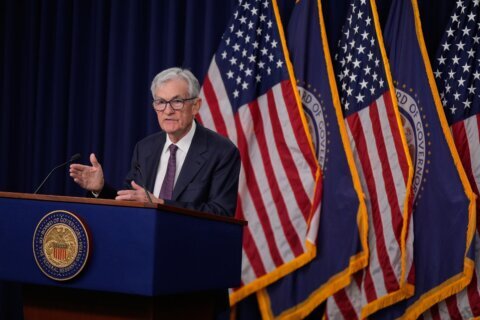
Stocks were set to open lower on Thursday, a day after the Federal Reserve announced a 0.25 percent interest rate hike that brought its target rate range to 1 to 1.25 percent.
The increase was in line with the previous 0.25 percent hike in March, and was widely expected on Wall Street. Prior to the announcement Wednesday afternoon, the U.S. futures market had been pricing in a greater than 90 percent chance that the Fed would raise rates once again, and the Standard and Poor’s 500 index produced no volatile moves after the announcement was made.
[Read: How to Invest in Bonds as Interest Rates Rise.]
But futures trading on the Dow Jones industrial average was down more than 0.4 percent in premarket trading today as tech stocks continued to show weakness. S&P 500 futures were down 0.7 percent and Nasdaq futures were off 1.15 percent.
Perhaps the most surprising part about the statement from the Fed was new language suggesting the Fed will begin the process of rolling off billions of dollars of assets currently held on its balance sheet.
“The Committee currently expects to begin implementing a balance sheet normalization program this year, provided that the economy evolves broadly as anticipated,” the Fed statement read.
But while the Fed chose to add language related to its bloated balance sheet, it provided little detail about timing. “It’s a little bit of a hawkish surprise,” says Kathy Jones , senior fixed income strategist at Charles Schwab. “The combination of a rate hike and shrinking the balance sheet equates to a tightening monetary policy at a time when inflation is lower than expected.”
[See: 9 Ways to Invest in a Post-Election Market.]
The Fed noted that inflation “is expected to remain somewhat below 2 percent in the near term” but will stabilize at around 2 percent in the longer term. The Federal Reserve currently has about $4.5 trillion of assets on its balance sheet.
For stock market investors, the combination of high employment and low inflation could mean even higher share prices ahead, says Krishna Memani, chief investment officer of OppenheimerFunds.
“Stock markets are definitely fully priced, but if the economy continues to grow at a 2 percent pace and inflation remains low, I think stocks can continue to go up with the growth in nominal GDP,” Memani says.
The S&P 500 dipped as low as 243.42 during Fed Chair Janet Yellen’s commentary, but quickly recovered to close Wedesday’s session down just 0.1 percent on the day.
More from U.S. News
The 10 Most Valuable Auto Companies in the World
The Best ETFs Retirees Can Buy
9 Investing Myths That People Still Believe
Stocks Open Lower After Hawkish Federal Reserve Comments originally appeared on usnews.com