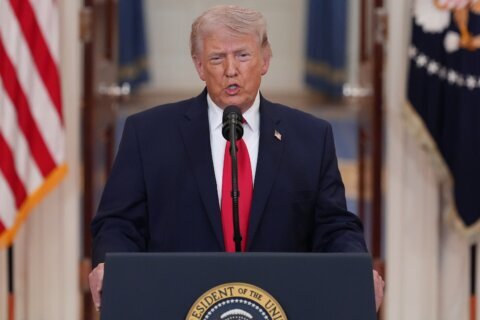
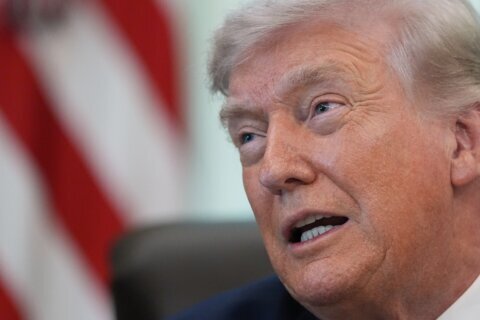
What we saw last night from President Donald Trump was not just a war update. It was an attempt to regain control of a narrative that is slipping, both on the battlefield and at home.
The core problem is this: The president is describing a war that is nearly over while managing a conflict that is clearly still expanding.
Critics say he should have made that pitch on Feb. 24 during his State of the Union speech. The war started four days later.
He opened by projecting dominance, declaring “swift victories,” a “dead regime” and a defeated Iran. But that framing runs directly into reality. Iran is still launching attacks, still threatening the Strait of Hormuz and still capable of imposing global economic pain.
U.S. intelligence assessments and reporting make clear the regime has not collapsed, and key elements of Iran’s nuclear capability remain intact underground.
That gap, between what is being said and what is happening, is the central tension of this moment.
The president then moved to justification, anchoring the war in past attacks: the killing of U.S. Marines in Beirut in 1983 and the killing of 17 sailors on the USS Cole in 2000.
That is a familiar playbook, linking the current fight to unresolved threats and past trauma. But strategically, it sidesteps the harder question Americans are asking now: what is the objective today, and what does success actually look like?
Because even in his own speech, the objectives are fluid. He says the war is nearly complete but also warns of escalation. He says Iran is defeated but threatens to strike power plants if it does not capitulate. He says the U.S. is close to finishing but signals another two to three weeks of fighting.
That is not a defined endgame. That is coercive pressure without a clear endpoint.
And that ambiguity is now colliding with economic reality. Oil prices surged again after the speech, global markets pulled back and allies are openly uneasy about both the strategy and the lack of coordination.
The president’s argument that the U.S. does not need the strait and that others should secure it marks a significant shift. It suggests Washington wants the benefits of stability without owning the responsibility for enforcing it.
That is a difficult position to sustain in a crisis centered on a global energy chokepoint.
The most telling moment, though, may have been the acknowledgment that Americans are confused. Because the speech was clearly designed to address rising public frustration over gas prices, over the risk of escalation and over the lack of clarity. Polling now shows a majority of Americans opposing the war and wanting it to end quickly.
But the explanation did not resolve that confusion. It may have reinforced it.
What the president delivered was not a road map. It was a mix of victory language, historical justification and conditional threats. He tried to present the war as both nearly finished and still requiring escalation. He tried to reassure markets while acknowledging rising costs. He tried to signal diplomacy while warning of destruction.
Those are competing messages, not a coherent strategy.
Get breaking news and daily headlines delivered to your email inbox by signing up here.
© 2026 WTOP. All Rights Reserved. This website is not intended for users located within the European Economic Area.