The health community is in an uproar following a Friday vote by a federal vaccine committee ending a decades-long recommendation that all newborns be immunized at birth against hepatitis B.
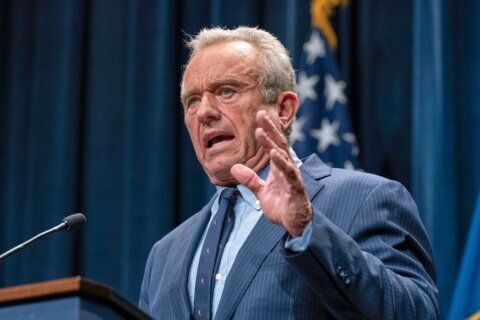
The Centers for Disease Control committee was handpicked by Health Secretary Robert F. Kennedy Jr., who generally opposes vaccines.
“This is a defining moment for public health in this country. It is for the first time that we can no longer count on our federal agencies to provide us scientifically sound information,” Michael Osterholm, a public health expert at the University of Minnesota, said after the announcement.
“Whatever we hear from this group has to be discounted.”
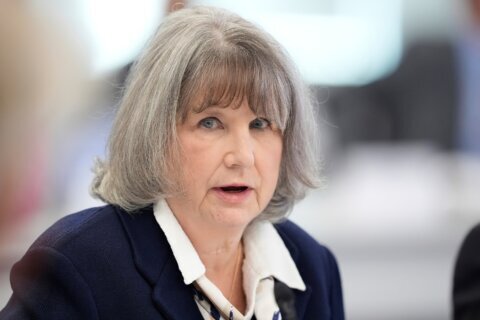
Apoorva Mandavilli, a science and global health reporter for the New York Times, joined WTOP’s Ralph Fox on Saturday to go deeper into the decision.
Read and listen to the interview below.
The transcript below has been lightly edited for clarity.
- Ralph Fox:
There’s been a lot of talk in the wake of this announcement. What’s the main concern about these changes?
- Apoorva Mandavilli:
Well, the main concern is that now a bunch of babies, many babies who are born every year to women who we don’t know if they are infected with hepatitis B, will not get this birth dose that would have protected them and prevented them from getting hepatitis B. And so you’re essentially putting babies at risk of getting infected. And when children get infected at a very young age, they have a very high rate, 90% plus, of becoming very sick with chronic hepatitis, which can lead to liver failure and even death.
- Ralph Fox:
Now the change, as I understand it, is that the vaccine would be administered after two months instead of at birth. Is that right?
- Apoorva Mandavilli:
That is correct. What they have said is essentially that (the vaccine should be given) no earlier than two months, and at that point, (vaccinators) would still need to consult the parents and a health care provider. So they have said when, or if, meaning even at that stage, parents can, after talking to their doctor, decide that they are not at risk.
As I understand it from the experts I talked to, the problem with that is that people don’t always know when they are at risk or their babies are at risk, because a lot of people who have hepatitis B don’t know that they have it. And so there are a lot of people walking around who may be infected, who can pass the virus on to others, including to babies, and don’t know it. But if you think you are low risk, these parents may decide not that their babies don’t need the protection.
- Ralph Fox:
For now, it’s just a recommendation — it still has to be approved by the CDC’s acting director. Is that right?
- Apoorva Mandavilli:
That is correct. It becomes an official recommendation of the CDC once the acting director (Jim O’Neil) accepts it. But I don’t think anybody expects that he will not, because he’s also aligned with the same goals as Secretary Kennedy, who picked these panelists, and so I think it’s most likely he will accept it.
- Ralph Fox:
Secretary Kennedy is known to be a vaccine skeptic. More changes to vaccine policy could be coming soon?
- Apoorva Mandavilli:
Absolutely, the past couple of days, we heard a lot of comparisons to countries like Denmark, a lot of statements that other countries don’t give as many shots or don’t have mandates. And we heard some not exactly legitimate concerns, from what I understand it, about things like aluminum salts that are added to vaccines to make them more powerful. So, I think on a really wide scale, we can expect to see some changes to the childhood vaccination schedule. And yesterday, President Donald Trump also said he is urging Secretary Kennedy to fast track the changes, aligning us with other countries. So I think we can see some changes fairly quickly.
- Ralph Fox:
Are there other concerns you’ve seen as far as vaccines are concerned in your reporting?
- Apoorva Mandavilli:
I think everything is on the table right now. I mean, what we saw in the last couple of days is that this is a panel that is quite skeptical of the way that we make recommendations for vaccines as we’re used to in this country. The panelists really don’t believe that there should be any mandates, even for entering school. And so, I think we’re potentially looking at a very, very different childhood vaccination schedule than we have known before.
- Ralph Fox:
Now, some of the states have reacted quickly. In Maryland, for instance, the Department of Health says they’ve reiterated the importance of administering the full vaccination series for Hep B for all infants beginning at birth. Does this potentially offset the recommendation, if many states do this?
- Apoorva Mandavilli:
I mean, this also happened with Western states. And this happened with COVID vaccines, when some states decided it doesn’t matter what the federal vaccine committee says, we think this is what you should be doing.
But states are the ones that set the mandates for things like which vaccinations you need to enter kindergarten. So for some states, this may not matter. But it does complicate things because we will now have a patchwork of states making all kinds of requirements, when before it was fairly uniform, what vaccinations kids needed to get to go into kindergarten or to day care. Now we’re talking about very different recommendations across the country, requirements across the country, and so it just makes it very complicated.
Get breaking news and daily headlines delivered to your email inbox by signing up here.
© 2025 WTOP. All Rights Reserved. This website is not intended for users located within the European Economic Area.