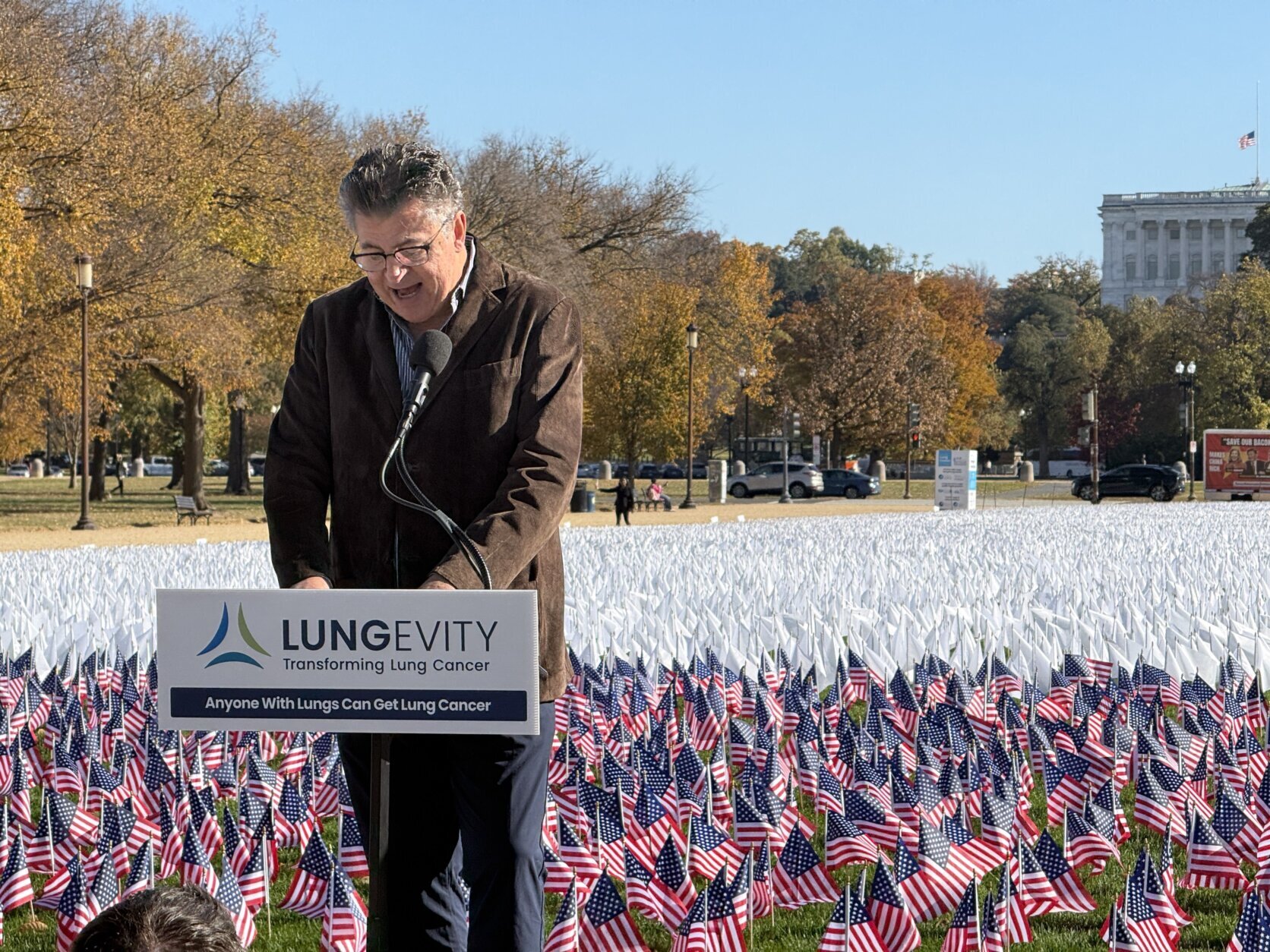
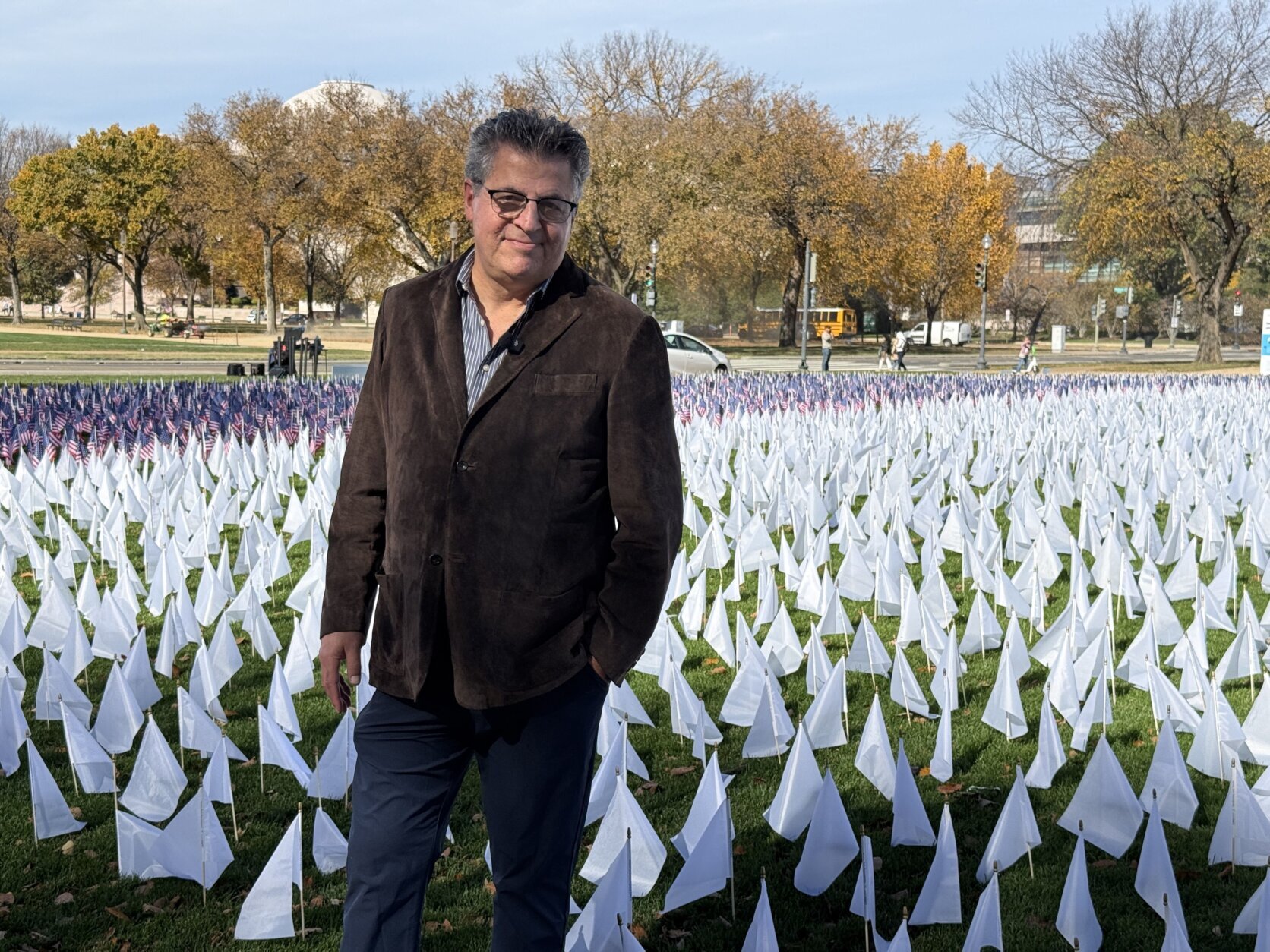
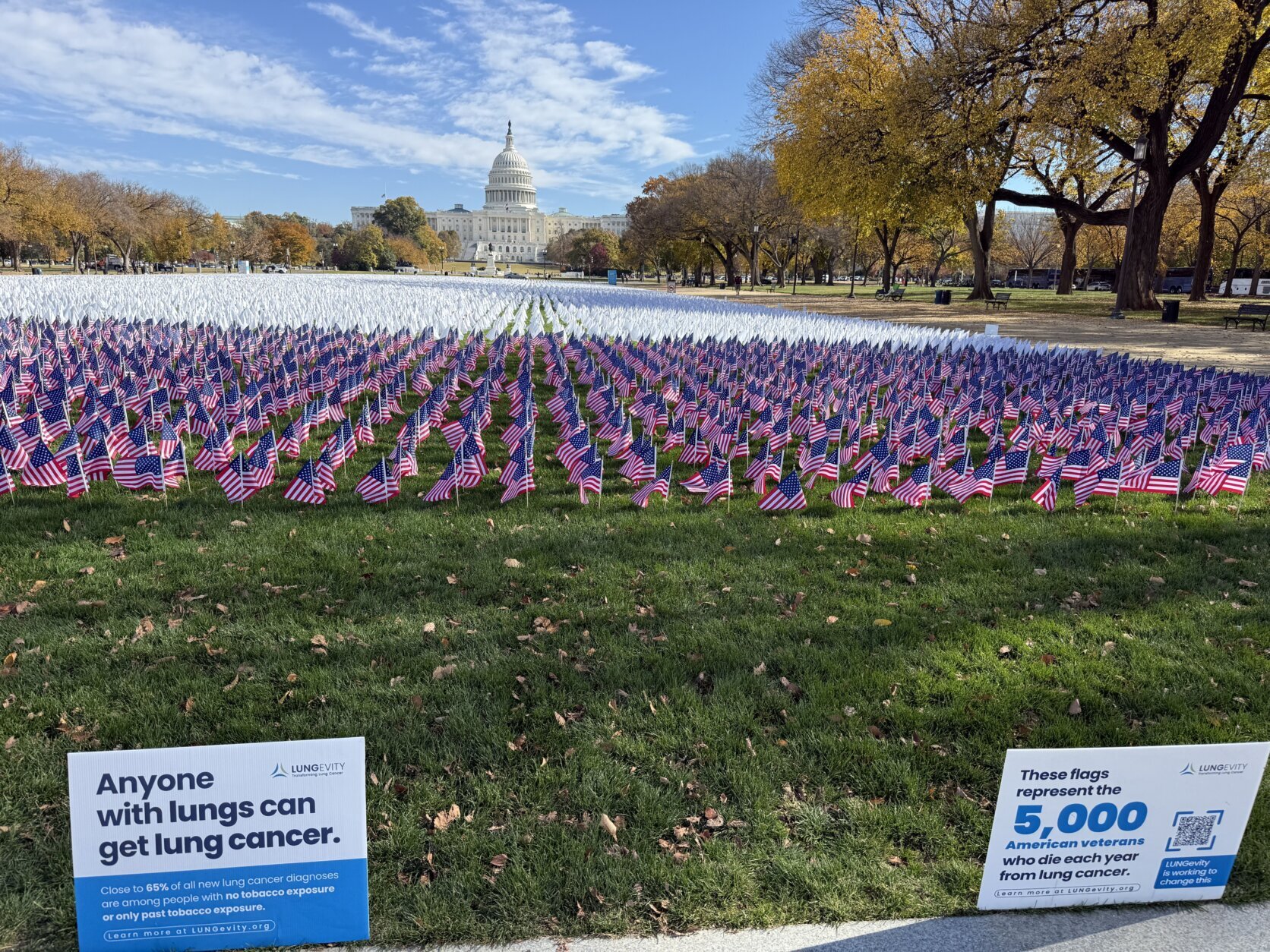
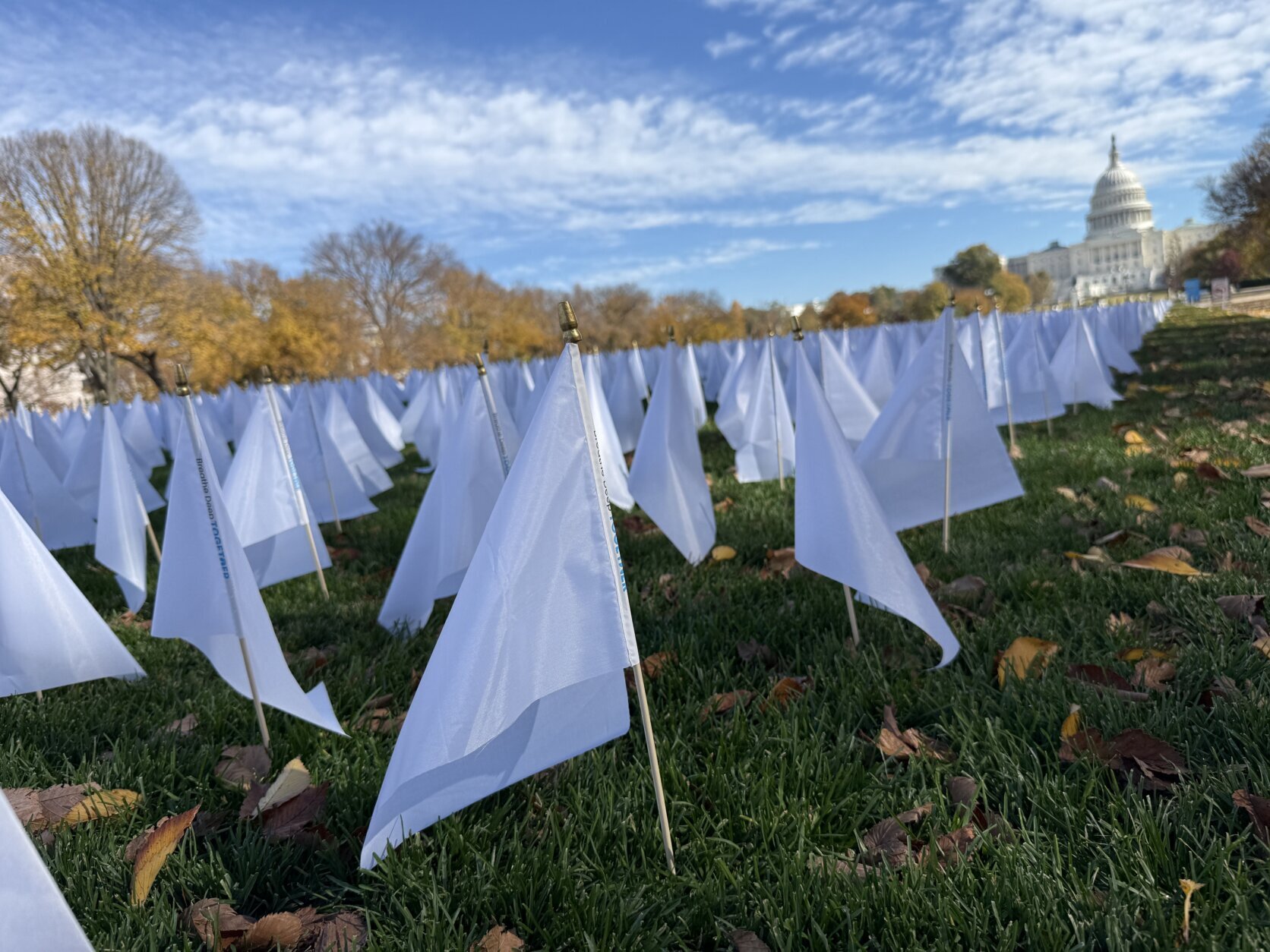
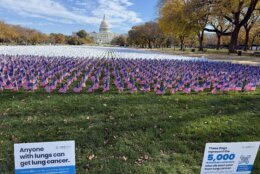
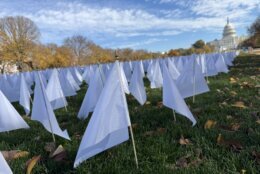
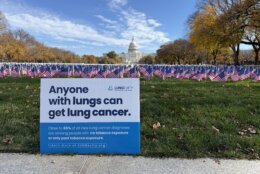
If you head down to the National Mall over the next two weeks, you’ll notice 60,000 white and American flags blanketing the lawn in front of the Capitol. It is an installation that hopes to hammer home the importance of early detection during Lung Cancer Awareness Month.
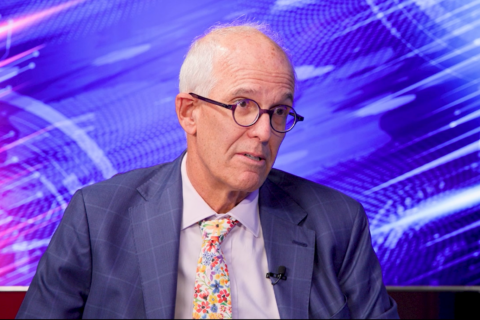
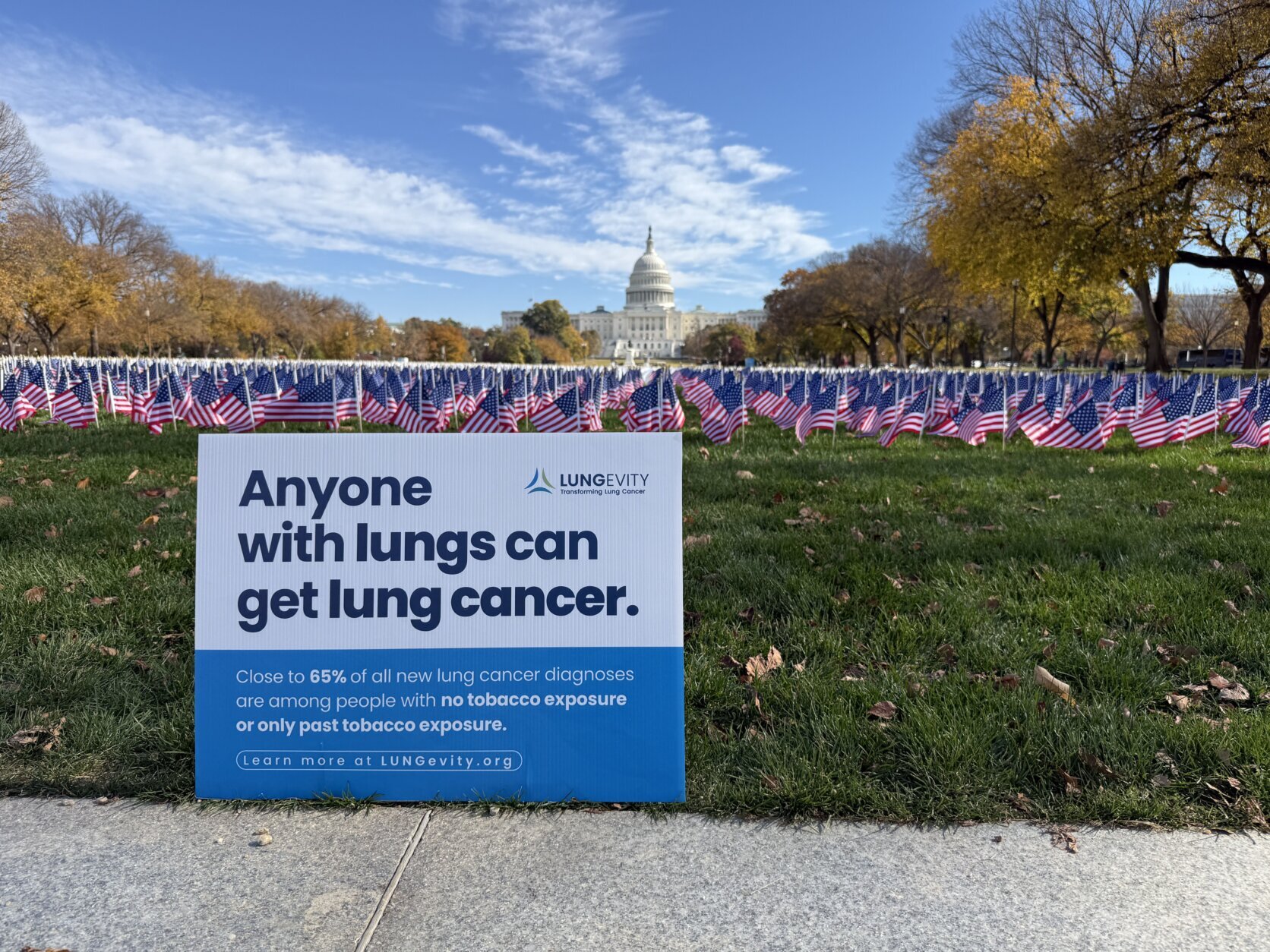
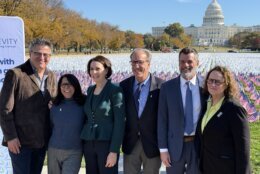
“Anyone with lungs can get lung cancer,” said Terri Ann DiJulio, a 20-year survivor of lung cancer who has received the diagnosis three times.
“I’m one of six people in my family to be diagnosed, and I’m the definition of early detection saves lives.”
Each of the 60,000 flags on the mall represents two deaths seen every year from lung cancer. That is more than colorectal and pancreatic cancers combined.
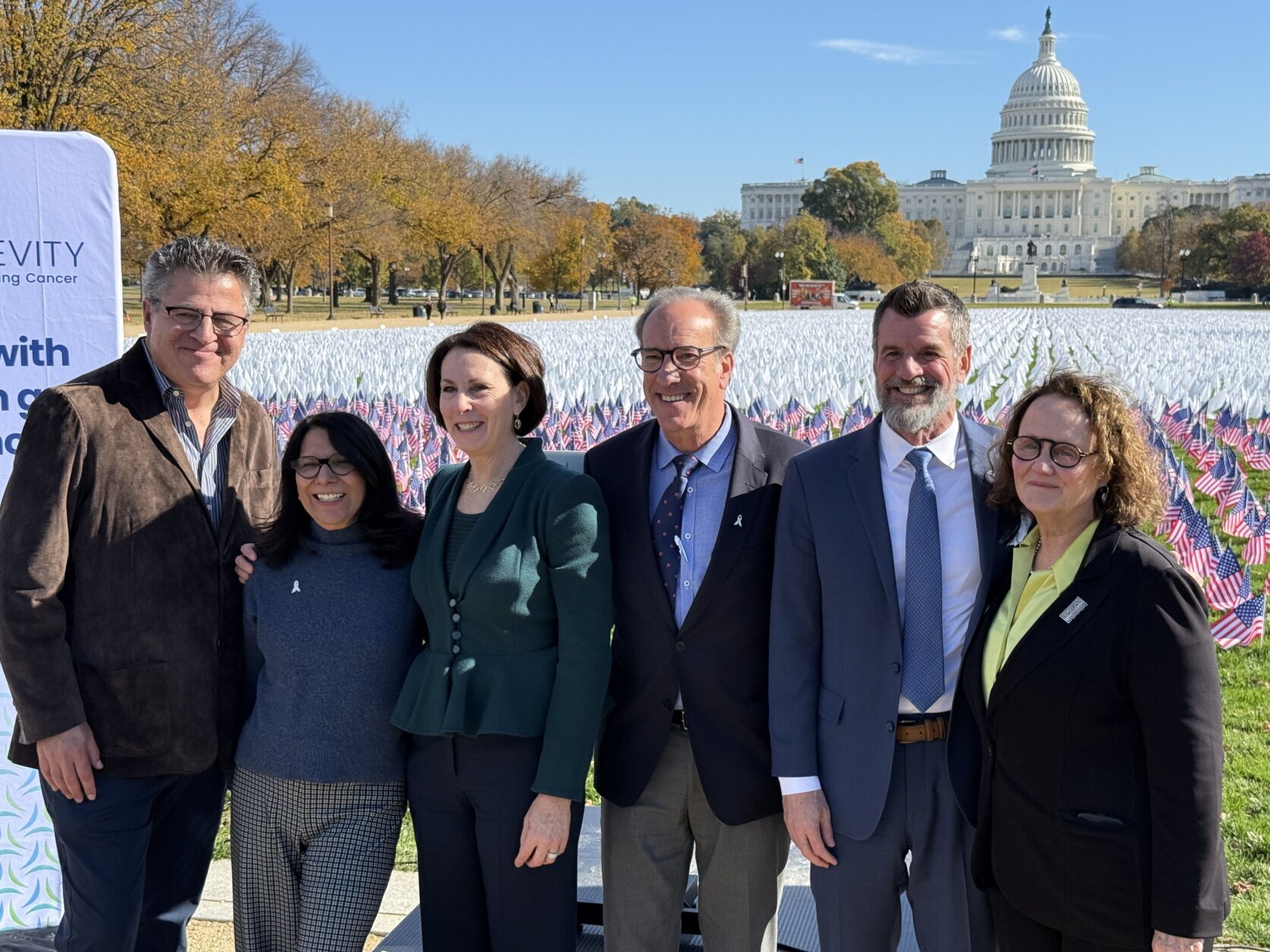
Another lung cancer survivor at the dedication of the Lungevity Foundation’s installation was WTOP’s own Neal Augenstein.
“I really didn’t think about it until I saw all of these flags, and it made me realize that it could have been me,” Augenstein said.
He received his stage four lung cancer diagnosis nearly three years ago on Nov. 22, 2022. He had cancerous tumors and cancerous lymph nodes in both lungs.
“Really, to be honest, I had thought I will never get lung cancer. I don’t smoke. I’m at no risk for it, but the fact is that I got lung cancer, I don’t know how,” he told WTOP.
Thanks to a one-pill-a-day targeted therapy and a robotic-assisted lobectomy Augenstein was declared cancer free just six months later.
The Lungevity Foundation hopes this mind-boggling number of flags and deaths is a reminder to any visitor about the importance of early detection even for people who do not have risk factors. Close to two-thirds of new diagnosis are among people with no or past tobacco use.
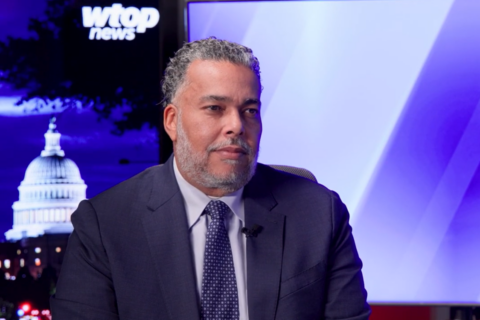
“If you catch lung cancer, for example, in stage one, you can have a greater than 90% chance of curing that cancer,” said Dr. Michael Gieske, director of lung cancer screening at St. Elizabeth Healthcare in northern Kentucky.
“Lung cancer, historically, has been a death sentence and we’re trying to change that narrative.”
Gieske described the screening as a non-invasive and quick CT scan.
“You’re in and out of the scanner within three minutes. It’s the highest yield test we have for the deadliest cancer that we have to deal with,” Gieske said.
According to the American Lung Association, nationally only about 18% of patients at high risk were screened.
The sea of flags is also a message to the federal government about the importance of continued research on the deadliest cancer in the U.S.
“I think there are multiple levels that we could do it. I think at the federal level, in terms of funding research and ensuring that we have awareness campaigns, public awareness campaigns, particularly to dispel a lot of the myths about lung cancer,” said Andrea Ferris, president and CEO of Lungevity.
And while the vast number of flags is still tragic, it is also a sign of hope for others that get the diagnosis.
“When my mother died from lung cancer in 2008, it would have been almost double the field. And so, thanks to advancements in research and now early detection, we had the opportunity to really change that,” Ferris said.
“My hope is that people look at these flags with hope. You know the fact that there are people now who’ve lived several years with the current lung cancer treatments,” Augenstein said.
“I’m doing great. My hope is that there’s a lot of people who feel empowered to get the good treatment and to look at the science and be really good patients and live a long life with lung cancer.”
The installation will be on the National Mall for the next two weeks. Lungevity will also host a lung health resource fair there this weekend.


Get breaking news and daily headlines delivered to your email inbox by signing up here.
© 2025 WTOP. All Rights Reserved. This website is not intended for users located within the European Economic Area.