(CNN) — A misplaced wire label, the vulnerability of a bridge and other mishaps in protocols likely caused the collapse of Baltimore’s Francis Scott Key Bridge after a large vessel struck it in the spring last year, according to the National Transportation Safety Board.
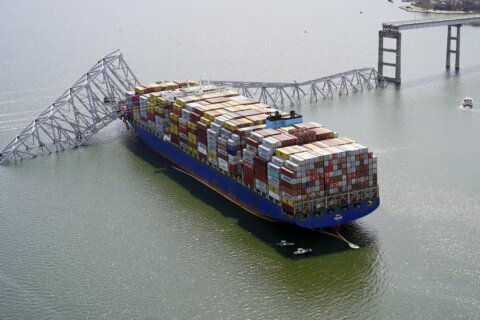
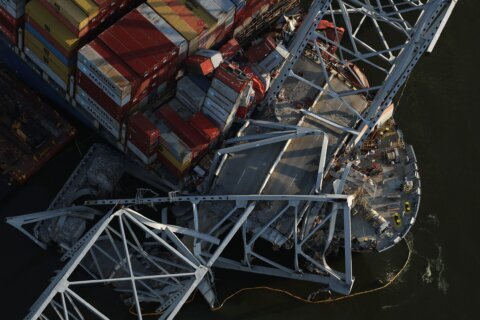
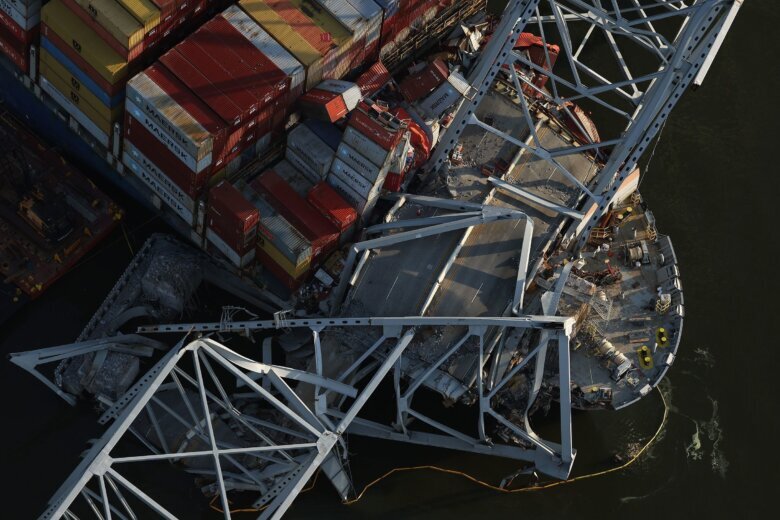
On Wednesday, the NTSB released a 259-page final report on the March 2024 incident, which details the events that could have caused an electrical blackout that led to the 213-million-pound cargo vessel veering and smashing into the bridge, killing six highway workers. The container ship Dali was leaving the Port of Baltimore and struck a pillar of the Key Bridge.
Other contributing factors to the cause of the incident were the crew’s inability to “recover propulsion from the loss of electrical power” and the limited time people could act due to the Dali’s proximity to the bridge, the report said. There was also a lack of effective and immediate communications to notify the highway workers on the bridge to evacuate.
The NTSB does not place blame but determines probable cause of transportation incidents. The final report on the incident was revised and issued with more than 20 recommendations finalized by the NTSB.
At a public meeting in November, the NTSB said it believed a wire label was put in the wrong place on a signal wire when the ship was built. That wire label, identifying the line, kept the wire from getting a good connection in a circuit breaker – which in turn ultimately caused the first blackout.
It’s one of many probable causes determined by the agency after about 20 months of investigation. The NTSB will issue recommendations to certain groups involved or adjacent to the incident, but the groups are not required to take on these recommendations, just strongly encouraged.
The loose wire would have been difficult to find
The improperly placed wire label was one of the key talking points among investigators during a public meeting in November. The wire label is a small silicone sheath made of thermoplastic material that was heat-shrunk around the wire.
As a result, according to NTSB’s investigator in charge Marcel Muise in November, the vessel lost steering, the ability to operate the bow thruster, key water pumps, and most of the vessel’s lighting and equipment essential for operations. That first outage lasted 58 seconds.
The crew onboard the Dali quickly found the tripped breaker, the NTSB said. Power came back within 58 seconds, but restarting a key pump that would have provided fuel to generators had to be done manually, and that didn’t happen. When the generators ran out of gas in their lines, the result was a second blackout.
However, there were thousands of wires on the Dali, and the one loose wire that caused this incident would not have been easily found by the crew. In November, NTSB Chair Jennifer Homendy compared finding a loose wire in the Dali to finding a loose bolt in the Eiffel Tower.
The bridge had other risks
The Francis Scott Key Bridge also had other risks that were never evaluated.
According to the NTSB, the bridge had nearly 30 times the acceptable level of risk for critical bridges of collapse if it were hit, based on guidance established by the American Association of State Highway and Transportation Officials. The Maryland Transportation Authority, which maintains the bridge, never evaluated that risk.
Earlier this year, the NTSB also identified 68 other bridges in 19 states spanning waterways frequented by cargo ships that, like the Key Bridge, were built before 1991 and do not have a current vulnerability assessment.
Transportation Secretary Sean Duffy said earlier this week he would meet with Maryland Governor Wes Moore to discuss the state’s handling of key projects, including the bridge, for which costs have risen.
Duffy sent a letter in September to Moore raising concerns over the budget and timeline. The Maryland Transportation Authority said the updated cost estimate to replace the Key Bridge is now projected to be $4.3 billion to $5.2 billion, with an expected opening in late 2030 – a two-year delay from the earlier estimate.
The report on Wednesday ends an over 20-month investigation.
The-CNN-Wire
™ & © 2025 Cable News Network, Inc., a Warner Bros. Discovery Company. All rights reserved.